
Predatory Loan Issues

foreclosure defense help in New YorkBAC Home Loans Servicing had brought a foreclosure lawsuit against Ramsay. BAC had moved for summary judgment claiming there were no issues of fact and therefore they should be entitled to summary judgment without the need for a trial. They also sought to strike Ramsay’s Answer and have a referee appointed to compute the sums due and owing BAC under the terms of the mortgage.

Ramsay contended BAC’s summary judgment application should be denied. Ramsay claimed there was predatory lending and discriminatory practices involved in making the mortgage by the original lender, Madison Home Equities.

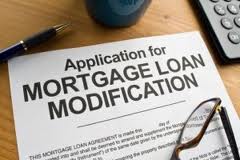
Justice Bernard Graham found BAC did not establish a prima facie case allowing them to obtain summary judgment in their foreclosure proceeding. Judge Graham had questions concerning the relationship between Madison Home Equities and BAC. A question arose as to whether their business relationship would support the allegations made by Ramsay concerning predatory loan practices. In addition the court found Ramsay had offered plausible, reasonable evidence BAC’s decision to deny the mortgage modification was based on incorrect calculations by them. Judge Graham found denial of the mortgage modification may have been unreasonable and Ramsay may have been entitled to said mortgage modification.

Conclusion

The judge carefully reviewed the facts of this case and rendered an important decision supporting homeowner’s rights in this foreclosure case.helping homeowners stay in their homes

How to Qualify For a Mortgage

To watch today’s video blog, please click on the link below:

http://youtu.be/S1VQNNwAYj0

Elliot S. Schlissel is a foreclosure defense attorney. Elliot and his associates have been helping homeowners stay in their homes for more than 45 years.  The lawyers at the Law Office of Elliot S. Schlissel help their clients obtain mortgage modifications, defend foreclosure lawsuits, and counter sue banks.  Elliot can be reached for consultation at 516-561-6645, 718-350-2802 or by email to schlissel.law@att.net.

Tips to Avoid Foreclosure

Please click on the link below to watch today’s video blog:

http://youtu.be/VEakIsUsJfk

Elliot Schlissel is a foreclosure defense lawyer.  He has been helping homeowners stay in their homes for more than 45 years.  He can be reached for consultation at 516-561-6645, 718-350-2802 or by email to schlissel.law@att.net.

Bank Has No Standing, Summary Judgment Denied

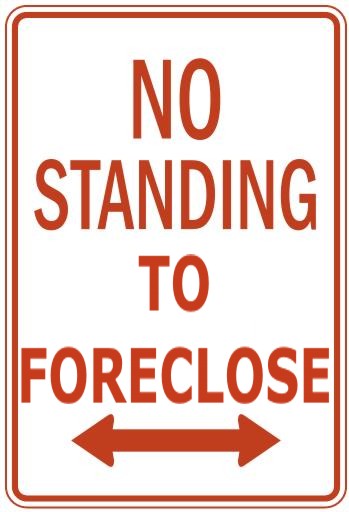
foreclosure defense for Long IslandersHSBC Bank, USA, brought a foreclosure case against Thomas in Kings County Supreme Court. Thomas submitted an Answer in the foreclosure legal action with affirmative defenses. The affirmative defenses stated HSBC was not the owner of the note and the mortgage at the time the lawsuit was initiated. Therefore, they lacked standing to bring the lawsuit.

Thomas had taken out several mortgages. HSBC, in its summary judgment motion, claimed it had standing as it was assigned Thomas’s mortgage pursuant to an assignment by MERS. It also claimed it was in possession of the note at the time the action was commenced. They claimed since Thomas had not made his payments on the notes which were secured by the mortgage on the property, they had the right to initiate the lawsuit and they should be granted summary judgment. (Summary judgment grants the moving party an order for the relief requested in the complaint without the need for a trial).

Notes Not Assigned

Ms. Thomas, in her opposition to the summary judgment motion, claimed the notes were not assigned. She claimed the notes were not negotiated since there was an allonge (which is an amendment to a note) which did not comply with the Uniform Commercial Code section 3-202(2). This section of the Uniform Commercial Code requires an allonge be firmly attached to the note.

Supreme Court Justice Wayne Saitta agreed with Ms. Thomas’s argument. He found the assignment of the mortgage was insufficient as it only assigned the mortgage and did not include the notes and underlying debt. The judge found HSBC did not establish the note was negotiated prior to the commencement of this action. The negotiation of the note required physical delivery of the note. Judge Saitta ruled HSBC did not have standing to bring the lawsuit and summary judgment motion striking Thomas’s answer and affirmative defenses was denied.

Conclusion

If you are sued, it is important to have a detailed review of all of the facts and circumstances in the case with an experienced foreclosure defense lawyer. There are many defenses available in foreclosure lawsuits. There are numerous statutes, state and federal laws which protect consumers and mortgage holders.assistance for homeowners facing bankruptcy

The Truth Behind Many Refinancing Scams

To watch today’s video blog, please click on the link below:

http://youtu.be/DVkNvzzxzyY

Elliot S. Schlissel is a foreclosure defense attorney.  He has more than 45 years of experience representing homeowners in mortgage modifications and foreclosure proceedings.  He can be reached for consultation at 516-561-6645, 718-350-2802, 1-800-344-6431 or by email to schlissel.law@att.net.

No Money Down Mortgages

foreclosure attorney on long islandIn 2008, there was a financial crisis in the United States. The economy wasn’t doing well, banks went out of business. Hundreds of thousands of Americans couldn’t meet their mortgage payments and their homes went into foreclosure. In 2014, six years later, we are still dealing with the aftermath of the issues created by giving mortgages to individuals who couldn’t afford to make the payments.

The no money down mortgage, to a minor extent, still exists in the United States. The no money down mortgage, which to a considerable extent, was responsible for the housing bubble that existed in the United States in 2008, does still exist in 2014. Although this type of mortgage is still available in the marketplace, it is hard to find.

What is a no money down mortgage? This is a mortgage where 100% of the purchase price of a house is financed. A no money down mortgage can allow people with virtually no assets to buy a house. However, these types of mortgages usually come with higher fees, and high interest rates.

Veterans’ Administration Mortgages

The Veterans’ Administration still has mortgage programs which allow veterans to purchase homes without putting money down. These programs, however, have funding fees of two or three percent. The fee is required to be paid in advance. This payment in advance actually creates a down payment of sorts.

There is also a program by the United States Department of Agriculture which offers no money down mortgage in rural areas. It should be noted that some suburban areas around large cities are still considered to be rural areas by the United States Department of Agriculture.

Credit Unions

While banks are for profit institutions, credit unions are not for profit institutions. An example of a credit union which offers a no money down mortgage is the Navy Federal Credit Union. The no money down mortgage given by the Navy Credit Union has a 1.71% funding fee. This funding fee must be paid at the time the mortgage is given.

What Mortgage is Right for You?

If you are in the market to buy a home, you should meet with a mortgage consultant. You should discuss your financial circumstances and make inquiry as to what type of mortgage is best for you and your family. This discussion should take into consideration your long term ability to make the mortgage payments to avoid having your home going into foreclosure.

helping homeowners stay in their homesElliot S. Schlissel is a foreclosure attorney. He represents individuals and families throughout the Metropolitan New York area whose homes have gone into foreclosure. Elliot and his staff of lawyers take the appropriate legal action to keep families in their homes and avoid losing their homes in foreclosure proceedings.

Fannie Mae Easing Mortgage Rules

mortgage modification attorneysFannie Mae is the largest mortgage government entity in the United States. In an attempt to bring more people into the housing market, it is in the process of taking action to expand the availability of mortgages with low down payment requirements. The new program by Fannie Mae will require mortgage insurance from private organizations on top of the down payment made by the purchaser.

Fannie Mae is a government backed entity which guarantees mortgages. It is regulated by the Federal Housing Finance Agency. Since the onset of the financial crisis in the year 2008, more than 3/4 of all mortgages in the United States have had some type of government backed guarantee behind it. Fannie Mae’s current requirements only allow borrowers to borrow up to 80% of the purchase price of the home. Under the new proposed program, Fannie Mae will back programs with down payments as low as 3% of the value of the home. However, all of these loans will require private mortgage insurance with regard to the portion of the 20% of the cost of the home that is not made as a down payment. The purpose of this new program is to bring more borrowers who have not accumulated significant amounts of savings back into the housing market.

Raising The Risk of Future Foreclosure

Studies have shown prospective home purchasers who make down payments of less than 20% have significantly higher default rates. When these homeowners default, their homes go into foreclosure. Low down payment loans were part of the problem which caused the huge mortgage crisis in 2008, which is still playing out today.

Conclusion

Helping prospective homeowners come into the housing market with smaller down payments gives more and more Americans access to the American dream, the ownership of a single family home. However, this program must be careful not to create a new mortgage bubble which may cause a deluge of foreclosures in the future.

foreclosure advocate for homeownersElliot Schlissel is a foreclosure lawyer. He fights foreclosure lawsuits and helps keep homeowners in their homes.

Mortgage and Foreclosure Schemes to Be Aware Of

To watch today’s video blog, please click on the link below:

http://youtu.be/MkK9tbxbO0U

Elliot S. Schlissel is a foreclosure lawyer.  He has been representing clients in foreclosure lawsuits and mortgage modifications for more than 45 years.  He can be reached at 516-561-6645, 718-350-2802, 1-800-344-6431 or by email schlissel.law@att.net.

Improper Service of a Summons and Complaint

Please click on the link below to watch today’s video blog:

http://youtu.be/5HCFfWKSuLk

Elliot S. Schlissel is a foreclosure defense attorney.  He and his associates have been helping homeowners fight foreclosure lawsuits for more than 45 years.  He can reached at 516-561-6645, 718-350-2802, 1-800-344-6431, or by email to schlissel.law@att.net.

Adjustable Rate Mortgages vs. Fixed Rate Mortgages: Which One is Better For You?

mortgage modification attorneysHome ownership is still the American dream. Today, obtaining a mortgage to purchase a home has gotten to be a lot more difficult. Questions arise as to which type of mortgage is the better route for a prospective homeowner to take. The adjustable rate mortgage or the fixed rate mortgage?

Adjustable rate mortgages are riskier than fixed rate mortgages. An adjustable rate mortgage allows you to go into the mortgage with a lower interest rate for a period of time. The risk is that the interest rate, over time, will go up and become unaffordable. The most common type of adjustable rate mortgage has a fixed interest rate for the first 5 years. However, every year after the first five years, the rate changes on an annual basis. The interest rate is governed by the Federal Reserve Boards “Consumer Handbook on Adjustable Rate Mortgages.” When obtaining an adjustable rate mortgage, the prospective homeowner takes the risk as to whether interest rates will increase over time. If this happens, the monthly mortgage payments may increase to a level that the homeowner will become unable to make the monthly mortgage payments.

Adjustable Rate Mortgages Start With Lower Payments

The adjustable rate mortgage gives the homeowner a lower interest rate in the beginning which allows the homeowner to have additional funds to pay off debt and to accumulate some savings as a cushion. There are caps which are utilized by financial institutions regarding adjustable rate mortgages. These caps usually allow the mortgage to go up no more than 2% per year and 5% over the entire period of the loan.

When Do Adjustable Rate Mortgages Make Sense?

An adjustable rate mortgage makes sense if you are planning on holding your home only for a short period of time. If you are planning on holding your home 5 years or less, the adjustable rate mortgage would be a better deal. If you plan on holding your home for a longer period of time, the fixed rate mortgage is most likely the more conservative way to go and involves a lot less risk. Unfortunately, many homeowners presume they are going to move, relocate, sell and buy, within the five year period and then their plans change. At that point they are stuck with an adjustable rate mortgage unless they refinance all over again.

Fixed Rate Mortgages

A fixed rate mortgage is a mortgage that has a payment that remains the same over the entire period of the loan. These mortgages are usually for terms of either 15 or 30 years. Approximately 75 to 80% of the homeowners who take out mortgages, take fixed rate mortgages on their homes. It gives the homeowners the security of knowing what their mortgages rates will be over long periods of time. It allows them to make plans for the future and gives them the security of not facing higher mortgage payments down the road. Families who have fixed rate mortgages are usually looking to avoid the long term risks of losing their homes in foreclosure proceedings.

homeowner advocates on long islandElliot Schlissel is a foreclosure defense attorney representing homeowners throughout the Metropolitan New York area.

Foreclosure Defense in Valley Stream, Lynbrook, Baldwin, Malverne, Freeport, Oceanside, Long Beach, Elmont, Lakeview, West Hempstead, Hempstead, Merrick and Bellmore, New York

We represent individuals throughout the New York Metropolitan area with divorce and child custody, personal injury, car accident, wrongful death, estate administration, nursing home and medicaid issues

The information you obtain at this website is not, nor is it intended to be, legal advice. You should consult an attorney for individual advice regarding your particular legal issue. This is attorney advertising.

This is attorney advertising. This website is designed for general information purposes only. The information presented on this website shall not be construed to be legal advice. If you have a legal problem you should consult with an attorney.

Copyright © 2018 By The Law Offices of Schlissel DeCorpo. All Rights Reserved.