

The Foreclosure Legal Process On A Step By Step Basis – Part V

mortgage modification attorneysResponse To The Motion For Summary Judgment

When the motion for summary judgment is made, it is extremely important the attorney for the homeowner submit an aggressive, well thought out, well-written response to the motion for summary judgment. If the attorney for the homeowner is successful in defeating the motion for summary judgment, the litigation will continue and the case will eventually get placed on a trial calendar for a trial on the issues raised in the plaintiff’s Complaint and the defenses alleged in the homeowners’ Answer.

If the bank is successful with regard to the motion for summary judgment, the court will grant the motion and the lender will thereafter move for an Order of Reference as described in Part II of this series of articles.

Trial

As stated earlier, in the event the motion for summary judgment is defeated, the case will eventually go to the trial calendar. However, before the case goes to the trial calendar, the attorneys for the homeowner can make motions on their own to dismiss the case and for all types of other relief.

Conclusion

The foreclosure legal process described in this series of articles just gives an overview. Numerous nuances, subtleties and other legal procedures can be taken during this process. The best way of dealing with any foreclosure lawsuit is to immediately hire an experienced, dedicated foreclosure defense lawyer. Before you hire any lawyer to represent you in a lawsuit as significant as this, you should investigate his or her background. The lawyer should not be someone who handles a foreclosure defense case every now and then. You should hire a lawyer who does a significant amount of foreclosure defense legal work.

Be aware, the attorneys for the financial institutions usually bring hundreds of foreclosure cases each and every year. Many of these law firms have been doing this for decades. They have expertise in dealing with these foreclosure related issues. Some law firms that handle a foreclosure defense case every now and then may not have the expertise, experience, and wherewithal to litigate with the attorneys representing a financial institution worth hundreds of billions of dollars.foreclosure attorney on Long Island and New York City

The Foreclosure Legal Process On A Step By Step Basis – Part IV

foreclosure lawyer Long IslandLitigation

Litigation only begins in the foreclosure proceeding after the case leaves the settlement conference area. At that point, there is a stage in the lawsuit called the discovery stage. The discovery stage allows the parties to the lawsuit to request documents, information, and respond to written requests to answer questions called Interrogatories or a Bill of Particulars. It is important that homeowners who have submitted Answers participate in the discovery process. This allows them to obtain information with regard to bank practices, underwriting, and all other issues involved in their transaction with the bank.

The lender can also make discovery demands upon the homeowner. The lender’s discovery demands usually relate to issues raised by the homeowner in their Answer. Another purpose for the lender’s discovery demands is to obtain more information for them to be successful in their foreclosure lawsuit.

Motion Practice

In almost all foreclosure lawsuits, the attorneys for the financial institution at some point bring a motion for summary judgment. In the motion for summary judgment, the attorneys for the financial institution allege the defenses in the homeowners’ Answer are completely without merit. The standard in a motion for summary judgment is to determine whether there is an issue of fact for the court to really look at in the lawsuit.

Summary Judgment

Another way of looking at a motion for summary judgment is that it is a request by the attorneys for the bank to eliminate the homeowner’s Answer, avoid a trial, and go right to judgment. The court will grant the motion for summary judgment if they believe the homeowner has not presented any valid defenses or there is no evidence or documentation to their defenses and/or affirmative defenses.foreclosure attorney on Long Island and New York City

The Foreclosure Legal Process On A Step By Step Basis – Part III

foreclosure defense lawyernersMandatory Foreclosure Settlement Conferences

After the bank files a Summons and Complaint, the Summons and Complaint is served on the homeowner and the Affidavit of Service is filed with the County Clerk’s office in the County in which the property is located. The court must hold a mandatory foreclosure settlement conference within sixty days. The purpose of this conference is to determine whether the lender and homeowner can resolve the foreclosure lawsuit without it going forward. The real purpose of this conference is to see if the homeowner wishes to apply for a mortgage modification and if the homeowner will obtain a temporary mortgage modification.

Mortgage Modifications

My office represents hundreds of homeowners at foreclosure settlement conferences. Homeowners often have an unrealistic expectation of obtaining a mortgage modification. The large majority of homeowners will never obtain a mortgage modification for numerous reasons. Even those homeowners who obtain temporary mortgage modifications don’t always receive permanent mortgage modifications.

Banks Want To Make A Profit

Banks are financial institutions. They are interested in making money. They are not social service agencies. The fact that a homeowner has children, a sick mother, lost their job, broke their leg, was in a car accident, and numerous other reasons does not make it a financially beneficial transaction for the bank to give them a mortgage modification. Banks want to make money! If they don’t think they are going to make money, because the homeowner is going to have an inability to pay the mortgage or for another reason the bank can deny the mortgage modification request.

Scheduling the Mandatory Foreclosure Settlement Conference

The court sends notices to the bank and to the homeowner of the scheduled day and time of the mortgage modification conference. Sometimes numerous conferences take place. Our office has been involved in cases where well over a dozen conferences have been involved. In the end, either the homeowner gets a mortgage modification or the case gets sent out to a part (courtroom) for the purposes of litigating the issues involved in the foreclosure case. As indicated earlier, these issues only get litigated if the homeowner filed an Answer.foreclosure attorney on Long Island and New York City

The Foreclosure Legal Process On A Step By Step Basis – Part II

foreclosure lawyerThe Homeowner’s Response To Being Served In A Foreclosure Lawsuit

It is extremely important that the homeowner respond to the foreclosure lawsuit by filing a written Answer with the court and serving it upon opposing counsel. The Answer should contain denials, affirmative defenses, and in the appropriate situations, counter lawsuits against the bank. This is the homeowner’s opportunity to advise the court with regard to the bank’s behavior, the bank’s underwriting process, issues involving robo-signers, issues involving predatory lending, issues involving fraudulent bank action, issues involving violations of the Truth in Lending Law, federal and state banking laws, consumer protection laws, and numerous other issues.

If the homeowner does not file the written Answer as indicated above, it is considered that he has defaulted with regard to the foreclosure lawsuit. This means the homeowner will not get to advise the court that he or she has any defense whatsoever concerning the foreclosure lawsuit.

Consequences of the Homeowner’s Default

As stated above, the homeowner defaulting in the foreclosure lawsuit is a HUGE MISTAKE! This allows the attorneys for the financial institution to bring a motion for an Order of Reference. An Order of Reference is a request to the judge to appoint a referee to do an accounting as to how much is owed to the lender. This would include principle, interest, late charges, attorney’s fees, foreclosure costs, and all other expenses. After the Order of Reference is obtained the financial institution can then bring a motion for an Order asking for a default judgment in the foreclosure and sale of the home.

Sale of the Home in Foreclosure

If the judge signs the Judgment of Foreclosure and Sale, the attorneys for the financial institution then publish a Notice of Sale in a newspaper of public distribution a minimum of 30 days before an auction sale date. Thereafter, the referee can schedule an auction sale of the property. Technically, if the homeowner does not file an Answer to the Summons and Complaint in the foreclosure lawsuit, the attorneys for the financial institution are not required to give notice of the sale to the homeowner. However, even though they may not be required to do so, most law firms bringing foreclosure cases on behalf of banks provide notice to the homeowner of the specifics regarding the sale date, terms and location of the sale.foreclosure attorney on Long Island and New York City

The Foreclosure Legal Process On A Step By Step Basis – Part I

foreclosure defense Filing the Summons and Complaint

The first step in the actual legal process in the court system involves the financial institution hiring a law firm which drafts a Summons and Complaint and files the Summons and Complaint in the County Clerk’s office of the County in which the home to be foreclosed on is located. Simultaneously with filing a Summons and Complaint most attorneys representing financial institutions also file a “Lis Pendens“. A lis pendens is notice to the world a lawsuit is pending in court involving the home. The lis pendens specifically tells all people who do a title search on the property the home is in litigation. This has a negative effect on the title to the home.

Service Of The Summons And Complaint

After the Summons and Complaint is filed, the attorneys for the financial institution receive an index number and a filing date for the Summons and Complaint. This is attached to the top right hand corner of the Summons. Thereafter, the attorneys for the bank hire a process serving company to serve the Summons and Complaint on the homeowner.

Methods of Service of the Summons

There are a variety of ways the service of the Summons can be made in the State of New York. The Summons can be actually put in the hand of the homeowner. It could also be left with a person of suitable age and discretion at their principle place of residence or place of business. In addition, the Summons and Complaint can be tacked to the door and mailed to the homeowner. It is extremely important the homeowner not ignore the Summons and Complaint. Once they are served they have twenty days to respond by filing an Answer with the court and serving a copy on opposing counsel, if served personally, and thirty days if served by any other means other than personal service.

After the process server serves the Summons and Complaint they draft an Affidavit of Service and file that Affidavit with the court.

Request for Judicial Intervention

The next step in the process is the filing of a “Request for Judicial Intervention”, which is commonly referred to as an “RJI”. The purpose of the RJI is to advise the court the lender’s attorney wants to schedule a mandatory foreclosure settlement conference.foreclosure attorney on Long Island and New York City

Monetary Damages In a Countersuit Against the Bank

Please click on the link below to watch today’s video blog:

http://youtu.be/ja5dxpyWpxg

Elliot S. Schlissel is a foreclosure attorney.  He and his associates have been helping homeowners stay in their homes for more than 45 years.  He also helps his clients obtain mortgage modifications.  Elliot can be reached for consultation at 516-561-6645, 718-350-2802 or by email to schlissel.law@att.net.

Motion to Foreclose Mortgage Denied

Long Island Foreclosure DefenseCitibank brought a foreclosure proceeding in Kings County Supreme Court before Justice Francois Rivera. Judge Rivera noted the affirmation submitted by Citibank relied on documents. Judge Rivera pointed out the documents need to be annexed to the affirmation and the affiant has to establish an evidentiary basis for the court to accept these documents. Judge Rivera ruled that the mere submission of these documents by counsel for Citibank without any detailed identification or presentation or authentication was an inadequate presentation.

Judge Rivera noted the motion papers submitted by counsel for Citibank stated there were exhibits labeled A through C. Citibank’s attorneys, in their moving papers, clearly described exhibits A and B. They did not explain what exhibit C was. Due to Citibank’s attorney’s failure to describe exhibit C, Judge Rivera completely disregarded it.

Bank’s Motion Was Ambiguous

Judge Rivera found Citibank’s motion papers to be ambiguous. He also felt they were incomplete. Judge Rivera stated in his decision he was not sure whether Citibank sought to substitute Federal National Mortgage Association (FNMA) as plaintiff because it was the owner of the note and mortgage or because it was the servicer of the owner of the note and mortgage. Judge Rivera’s decision stated, although an assignment evidencing the mortgage was assigned by Citimortgage to FNMA no evidence of an admissible nature was submitted that FNMA owned the note. In addition, no evidence was submitted showing FNMA had any authority to act as servicer on the note.

Conclusion

The standard that banks and their attorneys must meet to be successful in a foreclosure lawsuit is a very high standard. Unless the bank attorney is very careful and submits appropriate motion papers, their motions to foreclose on homeowners’ properties can be denied by vigilant judges.

foreclosure attorney on Long Island and New York CityElliot Schlissel is a foreclosure defense attorney who has been representing homeowners and helping them keep their homes for more than 45 years.

Bad Faith Shown by Bank in Court Proceedings

To watch today’s video blog, please click on the link below:

http://youtu.be/XNGu7k7AqqE

Elliot S. Schlissel is a foreclosure attorney representing homeowners throughout the Metropolitan New York area for more than 45 years.  He can be reached for consultation at 516-561-6645, 718-350-2802 or by email to schlissel.law@att.net.  The phones are monitored 24 hours a day, 7 days a week.
More Than A Third Of The Mortgages In The U.S. Are Underwater!

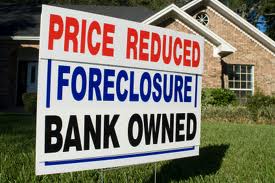
foreclosure defense attorneys on Long IslandTen million American families reside in homes worth less than the amount of the mortgages due on the homes. The large number of homes underwater in the United States still has a negative effect on the American economy. This is seven years after the great recession in the United States caused the collapse of the real estate market.

Although ten million Americans owe more on their property than their homes are worth, this is still an improvement from 2013.

Underwater Homes On Long Island

Long Island is fortunate that a smaller portion of the homeowners’ homes in Nassau and Suffolk Counties are underwater than the national average. Approximately 9% of the homeowners on Long Island, approximately 48,000 homes, are worth less than the amounts of their mortgages.

The actual figure of homes which are worth less than their mortgages on Long Island, is substantially higher. When taking into consideration the homeowners who have equity in their homes, it must be noted that for many of these homeowners, if they were to sell their homes, the proceeds from selling their homes would be too low to cover the costs and expenses involved in the sale of the home.

Fewer Homes Being Placed On The Market

The fact that homeowners can’t place their homes on the market and cover the expenses of paying the mortgage and the real estate transaction, is causing homeowners to keep their homes out of the marketplace. This has a negative impact on economic growth. A shortage of homes being listed in some areas has actually resulted in the homes which are on the market having inflated prices. This tends to prevent first time homeowners from coming into the marketplace due to their inability to meet the cost of these new homes.

Stan Humphries, the Chief Economist for Zillow, recently stated “the unfortunate reality is the housing markets look to be swimming with underwater borrowers for years to come.”

Hopefully the economy on Long Island and the rest of the United States will continue to improve which will raise the incomes of Americans and put more value into their homes.

foreclosure lawyer in New YorkElliot S. Schlissel is a foreclosure lawyer. He defends foreclosure lawsuits brought by financial institutions against homeowners and assists homeowners in obtaining mortgage modifications.

How Bank Lawyers View Foreclosure Cases

Please click on the link below to watch today’s video blog:

http://youtu.be/Gerutref7Cc

Elliot S. Schlissel is a foreclosure defense attorney. He represents individuals and families throughout the Metropolitan New York area whose homes have gone into foreclosure. Elliot and his staff of lawyers take the appropriate legal action to keep families in their homes and avoid losing their homes in foreclosure proceedings.  He can be reached for consultation at 516-561-6645, 718-350-2802 or by email to schlissel.law@att.net.

Foreclosure Defense in Valley Stream, Lynbrook, Baldwin, Malverne, Freeport, Oceanside, Long Beach, Elmont, Lakeview, West Hempstead, Hempstead, Merrick and Bellmore, New York

We represent individuals throughout the New York Metropolitan area with divorce and child custody, personal injury, car accident, wrongful death, estate administration, nursing home and medicaid issues

The information you obtain at this website is not, nor is it intended to be, legal advice. You should consult an attorney for individual advice regarding your particular legal issue. This is attorney advertising.

This is attorney advertising. This website is designed for general information purposes only. The information presented on this website shall not be construed to be legal advice. If you have a legal problem you should consult with an attorney.

Copyright © 2018 By The Law Offices of Schlissel DeCorpo. All Rights Reserved.