
Foreclosure Lawsuit Dismissed a Second Time!

foreclosure defense lawyer for homeownersThe Federal National Mortgage Association (FNMA) brought an application in a foreclosure case for summary judgment in the year 2010. The summary judgment motion was denied because there were defects in the foreclosure lawsuit. FNMA in 2014 brought a second foreclosure lawsuit. In this lawsuit they made a similar motion for summary judgment seeking the same relief they had sought in their prior motion. The court denied the motion again.
Justice Alice Schlesinger, sitting in a Foreclosure Supreme Court Part in New York County, dismissed the lawsuit a second time. Her decision stated there were numerous deficiencies in the papers submitted by the attorneys for FNMA. FNMA’s attorneys claimed none of the defects in their papers were significant. Justice Schlesinger found they had four years to correct the problems which existed in the original lawsuit and they still hadn’t dealt with these issues. Justice Schlesinger was “troubled” by the ambiguous role the Mortgage Electronic Registration Systems, Inc. (“MERS”) had in the assignment process with regard to this mortgage. She also noted in her decision there were a number of scriveners errors in the Complaint submitted by the bank. Her decision stated these errors dealt with significant issues. Her decision stated there was an issue concerning who had possession of the note at the time the foreclosure lawsuit was initiated. Justice Schlesinger found that FNMA sought to amend their Complaint five years after initiating the original proceeding. The court declined FNMA’s leave to amend and dismissed the foreclosure lawsuit.

Conclusion

Experienced foreclosure defense lawyers who carefully review the facts of a case can come up with winning strategies to have these cases dismissed.New York foreclosure defense attorney

Proposed Changes To The Foreclosure Process In New York State

foreclosure defense lawyerBenjamin Lawsky is the Superintendent of Financial Services in New York State. He feels the delays in foreclosure settlement conferences are the main reason why New York’s foreclosure system is “broken and badly in need of change.” A study by the Department of Financial Services found that it takes approximately 9 months from the time a foreclosure lawsuit is initiated to when the foreclosure settlement conference procedures are completed. With regard to this approximate 9 month period, he stated “unfortunately…the mandatory settlement conferences have not been the timely and efficient forum for foreclosure resolution that was once envisioned.” He went on further to state “for borrowers that are already at the end of their rope, any interruption – let alone nine months of start – and – stop delays – can be the death knell to any chance of saving their home.”

New York Civil Practice Law and Rules section 3408(a)(1) requires both the homeowner and the financial institution negotiate in good faith. Lawsky finds that there is a lack of a clear definition of what is “good faith.”

Bank’s Representatives Having No Authority To Settle

In many situations, courts are confronted by bank attorneys appearing at foreclosure court conferences who do not have authority to enter into settlements or mortgage modifications with homeowners. In these situations the courts often simply keep adjourning the case until someone shows up who has greater authority to enter into mortgage modifications on behalf of the banks.

Lawsky believes the law creating foreclosure court conferences is flawed. He stated “the unintended consequences of this legal flaw are unproductive conference sessions, useless delays, waste of court resources, and most importantly, needless foreclosures.” Lawsky wants there to be new legislation which will define what negotiating in good faith means to both homeowners and financial institutions. He also feels courts should have greater authority to impose sanctions on the parties to these proceedings who do not negotiate in good faith.

Zombie Homes

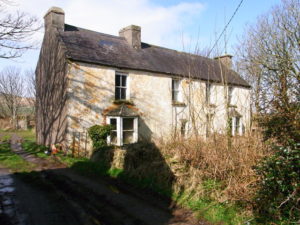
Lawsky feels there is a special problem in the courts with the processing of foreclosures on “zombie homes”. Zombie homes are homes which have been abandoned by the homeowners. These homes create a blight in communities. They are vacant. Sometimes they are vandalized. Vandals remove the pipes from these homes. Lawsky wants the foreclosure process on vacant homes to be streamlined to allow them to be expedited. Lawsky has specifically suggested a new non-judicial process for either uncontested foreclosures or foreclosures on vacant homes be established.

Courts Flooded With Foreclosures

Approximately one-third of all the cases brought before the Supreme Court Civil Parts throughout the State of New York are now foreclosure cases.

Conclusion

The foreclosure process should be set up in a manner to help homeowners who have the wherewithal to keep their homes and obtain mortgage modifications.foreclosure defense attorney in New York

Bank Punished For Negotiating In Bad Faith: Court Limits Their Interest Rate to 2%

homeowner's attorneyJustice Debra Silber sitting in a Supreme Court foreclosure court in Kings County, New York recently had a case involving bad faith in negotiations by Deutsche Bank. In this case the defendant moved for, and was granted, an Order which confirmed a report of a special referee made at the foreclosure conference which found that Deutsche Bank had acted in bad faith in violation of New York Civil Practice Law and Rules section 3408(f).

Bad Faith by Bank

Justice Silber, in her decision, found the actions and inactions by Deutsche Bank clearly indicated an absence of good faith as was contemplated by the New York Statute. During a period of ten months the bank delayed the underwriting of husband’s mortgage modification application. The referee found Deutsche Bank’s failure to act during a 10 month period was a dilatory tactic. Justice Silber concluded the husband had sought to obtain a mortgage modification for a period of 6 months. He had made 18 appearances at foreclosure mediation conferences. In determining the appropriate sanction to punish Deutsche Bank for its failure to work with the defendant in this case regarding his mortgage modification application, the court decided to reduce the interest rate to 2% on the balance of the mortgage which accrued after August 1, 2010. This was the date Justice Silber deemed the bank should have approved the husband’s HAMP mortgage application. In addition, the bank and its loan servicer organization were barred from collecting attorney’s fees with regard to the foreclosure lawsuit which accrued after August 1, 2010.

Conclusion

If a bank fails to negotiate in good faith mortgage modifications at foreclosure court mediation conferences, there are remedies available to the homeowner.

foreclosure defense lawyersElliot S. Schlissel is a foreclosure attorney who litigates foreclosure cases. He seeks to keep homeowners in their homes.

Foreclosure Dismissed, Bank Fails To Show It Was The Holder Of The Note

mortgage modification and bankruptcy attorneys on long islandJustice Francois Rivera, sitting in the Real Property Part in Supreme Court, Kings County, recently dismissed a foreclosure case brought by Loancare against Mr. Coleman.

The foreclosure lawsuit claimed Coleman had failed to make payments on the note and mortgage. It further claimed he took no action to cure the default. Coleman submitted an Answer which contained seventeen affirmative defenses. One of the affirmative defenses was that the bank lacked standing to bring this lawsuit.

Justice Rivera noted in his decision, before commencing a foreclosure lawsuit a plaintiff must have a legal or an equitable interest in the mortgage.

Transfer of the Mortgage

Coleman initially had given a mortgage to Lend America. Lend America executed and delivered the mortgage and note to Mortgage Electronic Registration Systems, Inc., (hereinafter referred to as “MERS”) as Lend America’s nominee.

When Loancare brought the lawsuit, they did not claim or prove that Lend America delivered the note to MERS. Therefore MERS was never the holder of the note. Since they didn’t have the note to begin with, they couldn’t assign it! Since MERS couldn’t assign it to Loancare, Loancare never became the holder of the note pursuant to a written assignment prior to initiating the foreclosure lawsuit. In addition, Justice Rivera pointed out in his decision Loancare did not allege the facts and circumstances as to who and which entity physically delivered the note.

Justice Rivera therefore decided Loancare did not establish a prima facie case that it was the holder and/or assignee of the note and mortgage. Justice Rivera therefore dismissed the lawsuit based on the fact the plaintiff had no standing to bring this foreclosure proceeding.

Conclusion

Submitting an appropriate Answer with numerous affirmative defenses and especially alleging lack of standing, is very important when responding to a foreclosure lawsuit. If Coleman had failed to allege lack of standing in his Answer, he would have waived this affirmative defense and Loancare would have been successful in obtaining a judgment of foreclosure and selling Coleman’s home.

foreclosure defense attorneysElliot S. Schlissel is a foreclosure attorney who helps homeowners fight foreclosure lawsuits and stay in their home.

Deeds In Lieu of Foreclosure: An Imperfect Remedy

foreclosure attorney for homeownersDeeds in lieu of foreclosure are used by many attorneys and homeowners to short circuit the foreclosure process. I rarely suggest to a client to execute a deed in lieu of foreclosure. What a deed in lieu of foreclosure accomplishes is it allows the bank to take the home back quickly. It often leaves the homeowner with no credit, no assets, and no place to live! The reason given for executing a deed in lieu of foreclosure is it will eliminate a deficiency judgment.

Deficiency Judgment

Here is an example of what a deficiency judgment is: let’s assume there is a home worth $300,000, and a mortgage on the home in amount of $400,000. The house sells for $250,000 to a speculator at a foreclosure sale. There is a $150,000 deficiency which is still owed by the borrower. The deed in lieu of foreclosure prevents the bank from getting a deficiency judgment in the amount of $150,000.

This is the selling point used by many attorneys. It is usually a false selling point. Banks, generally speaking, do not pursue deficiency judgments in the Metropolitan New York area if the homeowner has no assets. Even if the bank desires to move forward for a deficiency judgment, the homeowner can simply file a Chapter 7 bankruptcy and eliminate the debt.

Fighting the Foreclosure Proceeding

When the homeowner decides to hire an attorney and fight the foreclosure proceeding, both the homeowner and his or her family will probably spend the next three or four years living in their home and not facing the problems of finding a place to live without credit and financial resources.

Deeds in Lieu of Foreclosure Won’t Always Work

A deed in lieu of foreclosure is usually only accepted by financial institutions where there is no equity in the property, and there are no liens or other mortgages attached to the property. In these types of cases, most banks will agree to a deed in lieu of foreclosure transaction.

If there is a second mortgage, monetary judgments on the property, mechanics’ liens, or other types of liens on the property, the bank will generally not agree to a deed in lieu of foreclosure transaction. In these situations they want the foreclosure sale to go forward. At the foreclosure sale, the second mortgage, the mechanics’ liens, and the judgments will be eliminated. The bank will obtain clear title to the property and not have to deal with the nuisances involved with other title impediments. In situations where there are second mortgages, mechanics’ liens, or other judgments or liens on the property, most banks will simply want to continue with the foreclosure process to obtain clear title.

New York foreclosure defense attorney IslandElliot Schlissel is a foreclosure defense lawyer helping homeowners stay in their homes throughout the Metropolitan New York area.

Foreclosure And Your Credit Score

New York foreclosure and bankruptcy attorneyThe initiation of a foreclosure lawsuit by a financial institution against you will have a negative impact on your credit score. For most families, their home is their most significant asset and investment. When the family gets served with a Summons and Complaint in a foreclosure lawsuit, not only are they facing the potential loss of their home, but in addition, their credit worthiness is also being negatively impacted. Foreclosure lawsuits generally cause individual’s credit scores to be reduced by between 150 and 300 points. The foreclosure action can remain on your credit report for between 7 and 10 years.

Reduced Credit Scores

The reduction in your credit score may make it more difficult for you to rent an apartment should you decide to leave your home, do a short sale, or give the bank a deed in lieu of foreclosure. In addition, a reduced credit score will make it more difficult to obtain car loans, personal loans and credit cards. Some employers also look into an individual’s credit scores as part of their employment process. A low credit score may lead a potential employer to a negative conclusion regarding an individual’s level of responsibility or character.

Maintaining Your Credit Score During Foreclosure Litigation

Do not despair! Action can be taken to maintain your credit score even during the course of foreclosure litigation. If you have credit cards you should use 2 or 3 credit cards each and every month. It is important you make timely payments on these credit cards even if the payments are only minimum payments. Each time you use your credit cards it will give you positive points on your credit score. In addition, if you have car loans, personal loans, or other debt you should make your payments in a timely manner on these debts. Your continued use of credit cards, paying loans such as car loans, over time will completely rebuild your credit score. My office has represented individuals who while in foreclosure maintained credit scores of over 700 points.

Conclusion

Even though a foreclosure will have a negative impact on your credit score it is possible to maintain your credit score during the course of foreclosure litigation.

New York foreclosure defense attorney IslandElliot S. Schlissel is a foreclosure attorney who is familiar with the multitude of problems caused by the sub-prime mortgage crisis in America. He represents homeowners in foreclosure cases throughout the Metropolitan New York area and takes legal action to preserve their home ownership rights and help them obtain mortgage modifications.

Various Fraudulent Mortgage Transaction Issues – Part II

legal help for homeownersFraudulent Mortgage Assignments

There are a variety of types of fraud which banks engage in related to the assignment of mortgages. Sometimes the assignment contains signatures of individuals claiming to be corporate officers of the bank and/or mortgage company when in fact they were never employed by these institutions. On other occasions, mortgage assignments are signed by individuals who claim to be corporate officers of financial institutions which went out of business or filed bankruptcy many years earlier. There are also many examples of assignments of mortgages which are notarized by notaries who were actually in a different state at the time of the transaction. These notaries never witnessed the signatures of the individuals they notarized.

Ownership of the Note and Mortgage

There is a United States Supreme Court Case which stands for the proposition the foreclosing institution must own the note and mortgage at the time of the initiation of the foreclosure lawsuit. The case is Carpenter v. Longan, 83 U.S. 271. In this case, the United States Supreme Court stated “plaintiff failed to show that it owned the mortgage at the time the complaint was filed.” As a result the court ruled the plaintiff financial institution did not have standing in the foreclosure case. The financial institution must not only be the holder and owner of the original note, but also must be the holder and owner of the mortgage as well. In Carpenter v. Longan, the United States Supreme Court held the plaintiff lacked standing to initiate and prosecute the foreclosure case and therefore the case was dismissed.

New York foreclosure defense attorney IslandElliot S. Schlissel, Esq., is a foreclosure lawyer representing homeowners throughout the Metropolitan New York area. He defends homeowners whose homes are subject to being foreclosed upon. He also helps homeowners obtain mortgage modifications.

Various Fraudulent Mortgage Transaction Issues – Part I

foreclosure defense help in New YorkPhony Appraisals

Many fraudulent mortgage transactions start out with the appraiser coming back with an inflated value of the home for which the purchaser seeks to obtain a mortgage. In cases where the purchaser actually couldn’t afford the home to begin with, the mortgages they were offered were mortgages involving negative amortization. Negative amortization refers to a situation where instead of paying down the mortgage, a portion of the interest gets added to principal and the homeowner ends up owing more money than they started out borrowing.

Truth in Lending Law Violations (“TILA”)

The Truth in Lending Law requires banks to abide by a certain ethical code of conduct. Predatory lending is defined under the Truth in Lending Law as any pattern of conduct in which the actual lender is hidden through subterfuge. Violations of the Truth in Lending Law allow the damaged party to recover their attorney’s fees, and treble damages.

When purchasers attend a closing they sign numerous documents. The two most significant documents are the note and the mortgage. The note is an I Owe You. It is documentation that a debt exists. However, the evidence of the existence of the debt is subject to being rebutted. The mortgage creates a lien pursuant to a written contract. The contract is a contract to enforce the note. If the note is invalid, is unenforceable or can be rebutted, in theory, the mortgage should be able to be set aside. Unfortunately, the courts in New York currently do not see things this way.New York foreclosure defense attorney Island

The Foreclosure Process: The Initial Steps

foreclosure defense for homeownersThe first step in a foreclosure proceeding is the bank sending the homeowner a letter accelerating the mortgage. The acceleration letter advises the homeowner the financial institution (lender) will call in the entire balance of the mortgage, which represents the total amount due, unless the homeowner becomes up to date on his or her mortgage payments by a specified date. Most banks send an acceleration letter after the homeowner falls approximately three months behind on their mortgage payments. However, there is no specific rule which requires a bank to send an acceleration letter when the homeowner is three months behind.

Falling Behind On Your Mortgage Payments

The homeowner technically defaults on the payment of the loan on their home when they become one month late on their mortgage payments. However, as indicated earlier in this article, acceleration letters are almost never sent out prior to the homeowner being three months behind on their mortgage.

Ninety Day Pre-Foreclosure Filing Notice

New York State has a statute which requires the financial institution holding the mortgage to send out a notice a minimum of ninety days before they initiate a foreclosure legal action by filing a Summons and Complaint in the County Clerk’s office of the County in which the home is located. There are very specific rules and notice requirements concerning the ninety day pre-foreclosure filing notice. This notice also must list at least five not for profit organizations which can provide information or counseling to homeowners with regard to the problems they are having in making their mortgage payments.New York foreclosure defense attorney Island

How A Home Is Sold In Foreclosure

Please click on the link below to watch today’s video blog:

http://youtu.be/uhj4y6Vf62Q

Elliot S. Schlissel is a foreclosure lawyer who has been representing homeowners for more than 45 years.  His goal is to keep homeowners in their homes.  He defends homeowners in foreclosure lawsuits and helps his clients in obtaining mortgage modifications.  He and his associates can be reached for consultation at 516-561-6645, 718-350-2802 or by email to schlissel.law@att.net.

Foreclosure Defense in Valley Stream, Lynbrook, Baldwin, Malverne, Freeport, Oceanside, Long Beach, Elmont, Lakeview, West Hempstead, Hempstead, Merrick and Bellmore, New York

We represent individuals throughout the New York Metropolitan area with divorce and child custody, personal injury, car accident, wrongful death, estate administration, nursing home and medicaid issues

The information you obtain at this website is not, nor is it intended to be, legal advice. You should consult an attorney for individual advice regarding your particular legal issue. This is attorney advertising.

This is attorney advertising. This website is designed for general information purposes only. The information presented on this website shall not be construed to be legal advice. If you have a legal problem you should consult with an attorney.

Copyright © 2018 By The Law Offices of Schlissel DeCorpo. All Rights Reserved.