
Long Island’s Economy Is Not Recovering

Real Estate Problems Create Continued Economic Problems on Long Island

More and more homeowners on Long Island are falling behind on their mortgages. Rising unemployment has forced more Long Island residents onto the welfare rolls. Long Island continues to lose jobs to other areas of the country.

The Recession on Long Island Continues

Although Nassau County is among the weathiest counties in the United States, its future does not look promising. At one time, Nassau County was a hub of National Defense related industries. Among these many industries was Grumman Corporation, which was the largest employer in Nassau County. With fewer and fewer jobs available, Nassau County now finds itself in financial difficulty.

With the loss of jobs, the devaluation of real estate, and newer companies hesitant to move to Long Island due to high taxes and expensive property values, the future for Nassau County looks bleak. Even beyond that, Nassau County Executive Edward Mangano has had the county’s finances taken over by the State appointed organization known as “NIFA” (Nassau Interim Finance Agency). What is a county such as Nassau County – considered a mature and economic county – to do about rising its prospects for the future? Innovative programs must be developed to bring new industries into the county, and tax breaks may be necessary to entice these industries.

When homes fall behind in their mortgages and are taken over by banks, they shouldn’t be sold. The continued selling of foreclosed homes results in creating an over supply of homes for sale on the real estate market, driving home prices down, and further creating losses for everyone. Instead, these homes should be rented to their former homeowners, who should be given the possibility of purchasing these homes down the road. The cost of maintaining the infrastructure of Nassau County needs to be reduced. Nassau County Police Officers are among the highest paid in the United States. A combination of their wages, pensions and fringe benefits are beyond what the county can afford to pay. Only aggressive action by the politicians and the business community can save Nassau County.

Long Island Foreclosure Defense Lawyers New York City Foreclosure Defense Lawyers

For those who are behind on their mortgage, a mortgage modification may be the best way to keep their home. Unfortunately, however, banks are approving fewer and fewer mortgage modifications. Should your home go into foreclosure, you need the best foreclosure defense lawyers to help you and your family stay in your home. The Law Offices of Schlissel DeCorpo has been providing legal assistance to homeowners and keeping them in their homes for more than 45 years. Our law firm represents clients concerning mortgage modifications, and deals with the problems involving mortgage modifications that fail to meet our clients needs. When our clients are sued in foreclosure, we submit the appropriate documents to the court in order to defend them. We attend court conferences regarding the foreclosure, and we try to persuade both the court and the bank attorneys to put pressure on the bank to approve mortgage modifications. We submit formal Answers to foreclosure lawsuits. When appropriate, we include in our answers legal defenses such as defective foreclosure lawsuits, predatory lending, defective mortgages and numerous other types of real estate related legal defenses.

Our law firm has extensive experience in dealing with the Federal laws and foreclosure. In some situations filing either a Chapter 7 or Chapter 13 bankruptcy is the best route to deal with foreclosure and other financial issues. Filing a bankruptcy will stop foreclosures from moving forward, stop debt collection, and in some situations, eliminate second mortgages. At the end of the bankruptcy filing, we also advise our clients with regard to reestablishing their credit.  There are many myths about bankruptcy that are simply not true. Call us for a free consultation. At this first meeting we will discuss your foreclosure and bankruptcy options and how we can keep you in your home. Thank you for visiting the Elliot S. Schlissel, Esq. foreclosure blog.
2012: A Banner Year For Foreclosures On Long Island

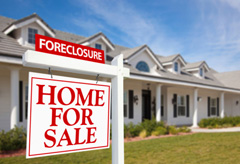
During 2012, in many villages on Long Island, there were more foreclosures than there were real estate sales.  Areas where there were more foreclosures than real estate sales involve the towns of Freeport, Bellport, Inwood, Amityville and a variety of other towns on Long Island.  Even without the devastation caused by Hurricane Sandy, the real estate market was far from being healthy.

Home Sales Fall

In 2005 there were approximately 50,000 homes sold on Long Island.  In 2012 there were only 22,000 home sales.  The value of the homes sold in 2005 was approximately $30 billion, while the value of the real estate transactions in 2012 was only $13 billion dollars.  There were approximately 6,200 foreclosed homes in 2005 while there were 14,000 in the year 2012.

Stagnant Real Estate Market

The real estate market on Long Island is not recovering.  Experts refer to it as being “stagnant”.  Maryann Garvin who heads the Community Development Corp of Long Island, a not for profit housing advocacy group, recently stated “you want a healthy housing market where you have movement…where people can sell their house and get a bigger house, or sell it and get a smaller house.  It doesn’t feel like our market is that fluid.”

Investors Buying Homes

In some areas of Long Island, speculators are purchasing distressed homes.  These speculators purchase the homes, do a minimum amount of repairs and either rent them or resell them for a profit.  Investors are now becoming involved in the purchase of homes in water front communities which were badly damaged by Hurricane Sandy.  In some of these situations the homeowners have decided not to repair their homes because of the fear there will be hurricanes in the future.

Unfortunately for the homeowners, the real estate market in many of these areas was further devastated by the extensive damage caused to many homes by Hurricane Sandy.  The investors are buying these homes for rock bottom prices with the hope in a few years people won’t remember the problems caused by Sandy and they will make a significant profit on their investments.

Fighting Foreclosure Proceedings

Many homeowners, especially those in waterfront communities which were significantly damaged by Hurricane Sandy are no longer paying their mortgages.  They hope to stay in their homes for as long as they can while hiring lawyers to fight their foreclosures proceedings.

Foreclosure Defense Lawyers

The Law Offices of Schlissel DeCorpo is one of the largest foreclosure defense law firms in the metropolitan New York area.  Our firm has helped hundreds of families stay in their homes and fight off foreclosure proceedings.  In some of our cases, families have not made mortgage payments for close to a decade and still reside in their homes.  Our law office aggressively litigates issues concerning fraudulent mortgages, foreclosure fraud and predatory lending issues.

Court Enforces Mortgage Modification Agreement

foreclosure assistance for long island homeownersIn the case of Brown v. Nationstar Mortgage reported in the New York Law Journal on June 26, 2015, Brown had brought a lawsuit seeking to enjoin the enforcement of a judgment of foreclosure which resulted in the sale of his home. In addition, he sought to stop a proceeding which attempted to remove him from his home after the foreclosure sale had taken place. His lawsuit requested the court rescind the sale of his property and find a mortgage modification agreement he had previously entered into with Nationstar Bank was effective and enforceable.

The court found the only issue which needed to be dealt with, because all of the other relief requested by Brown had previously been litigated, was whether the mortgage modification agreement should be enforceable.

Justice Daniel Barrett found Brown had reasonable notice of the foreclosure proceedings. He stated, however, he was “perplexed by the inactivity concerning this matter.” Mr. Brown had testified he had received a letter from the respondent offering him a mortgage modification. The letter required he sign a mortgage modification agreement and agree to make a payment for the agreement to become effective. He testified that he complied with all of the requirements the bank had requested. In spite of entering into a valid mortgage modification agreement with the bank, a foreclosure sale was conducted and Nationstar Mortgage bought the property. They thereafter served Brown with a 90 day notice to remove himself from the premises.

Mortgage Modification Agreement is Valid and Mortgage Set Aside

Justice Barrett ruled there was a valid mortgage modification agreement because Brown had complied with all of the required terms of the agreement. He then sought to place the parties in the position they would occupy if the agreement was performed pursuant to all of its terms. The judge therefore directed both parties continue to perform under the terms of the agreement and, in addition, there be a two year interest free period.

Conclusion

The entering into of a mortgage modification agreement does not stop lawsuits from moving forward. Banks usually hold the lawsuits in abeyance to see if the terms of the mortgage modification agreement are complied with. However, sometimes the outside counsel representing banks in foreclosure lawsuits have no idea the banks are entering into a mortgage modification agreement. They therefore continue with the foreclosure process which can result in the sale of the home and eviction of the family that lives in the home. To make sure the attorneys representing the bank in the foreclosure proceedings are aware of what is going on between the bank and the homeowner, it is important to provide documentation to the attorneys for the bank with regard to the existence of the mortgage modification being underwritten and being accepted.New York foreclosure defense lawyer

Foreclosure Legal Documents – Part II

advocate for homeownersThe Complaint

The purpose of the Complaint in a foreclosure lawsuit is to spell out the financial institution’s claims as to why they are entitled to relief. The Complaint specifically will discuss the nature of the mortgage and the promissory note. The Complaint will also provide the address and legal metes and bounds description of the property being foreclosed upon. It will usually state the homeowner had agreed to make payments pursuant to the terms of the note and mortgage and they defaulted on these terms. The Complaint will specifically name who owes the bank money and their interest in the property being foreclosed upon. In addition, the Complaint will usually have exhibits attached to it. These exhibits, at a minimum, will be the note and the mortgage.

The Complaint will also state the relief the lender asks for. This will usually be the right to sell the property and after the sale having the net proceeds after the costs of the sale apply to the balance due under the lender’s mortgage. The bank’s complaint may also have a request they receive a deficiency judgment in the event the proceeds from the sale of the home do not satisfy the entire balance due of their mortgage costs and disbursements.

The Lis Pendens

The lis pendens is a legal document the attorney for the financial institution files in the County Clerk’s office of the county where the property being foreclosed upon is located. This document serves to provide public notice to all future individuals obtaining liens and judgments as well as any potential interested purchaser of the property the property is in the midst of a foreclosure lawsuit and is encumbered by this foreclosure proceeding. The attorneys for the financial institution bringing the foreclosure proceeding usually files the lis pendens on or about the same time the Summons and Complaint are filed with the County Clerk’s office.New York foreclosure defense attorney

The Note and The Mortgage

foreclosure and real estate lawyer in New YorkIf you have purchased a home and financed it through a financial institution, you attended a closing. At that closing, you executed numerous documents. One of those documents is the note. The note is simply an I owe you. The note basically states you are borrowing money from a lender and you promise to pay it back. The note includes the terms of repayment, interest rates, the term of the loan and information concerning late charges and other issues.

The Mortgage

The mortgage and note are two separate documents completely. The mortgage is an agreement which allows the financial institution, who is the lender concerning your property, to have a security interest, or lien, on your property. Another way of looking at the mortgage is you pledge your home as collateral to secure the financial transaction which allows you to buy your home. If the bank does not get paid, they go after the collateral, to wit, your home, to take it back and sell it at auction to repay the note which documents the loan you took from them.

New York foreclosure defense attorney IslandElliot S. Schlissel is a foreclosure lawyer. He has helped hundreds of New Yorkers stay in their homes. He fights foreclosure lawsuits throughout the Metropolitan New York area and helps his clients obtain mortgage modifications. Elliot and his staff of attorneys can be reached 7 days a week.

Bankruptcy And Foreclosure

Please click on the link below to watch today’s video blog:

http://youtu.be/95N3eKJXfRc

Elliot S. Schlissel is a foreclosure attorney who has been helping homeowners stay in their homes for more than 45 years.  He defends his clients in foreclosure lawsuits, helps his clients obtain mortgage modifications, and when appropriate, represents them in bankruptcy proceedings.  He and his associates can be reached for consultation at 516-561-6645, 718-350-2802 or by email to schlissel.law@att.net.

Judgment of Sale Vacated in a Foreclosure Action

To watch today’s video blog, please click on the link below:

http://youtu.be/oV8CVtudXOg

Elliot S. Schlissel is a foreclosure defense attorney.  He can be reached for consultation at 516-561-6645 or 718-350-2802.

Foreclosure and Reverse Mortgages

real estate and elder care attorneysThe purpose of a reverse mortgage is to allow seniors who have homes with substantial equity to pull the equity out of their home and still be able to reside in the home for the rest of their lifetime without making mortgage payments. The difference between a reverse mortgage and a traditional conventional mortgage is the individual taking out the loan under a reverse mortgage does not have to make monthly mortgage payments. The lender only gets paid when the mortgagor dies, or in the event of the sale of the home prior to the mortgagor’s death.

No Personal Obligation to Pay a Reverse Mortgage

There is no personal obligation on the mortgagor to make payments with a reverse mortgage like there is in a traditional mortgage. The only method the financial institution has to collect under a reverse mortgage is from the sale of the home. The lender is therefore exposed to not being capable of having its loan repaid should the market conditions reduce the value of the home or the home be in poor condition. However, the lender can obtain insurance from HUD to protect it from the risk of the home not being worth the amount of the loan plus interest.

Underwriting Reverse Mortgages

The loans are underwritten by financial institutions based on a number of factors. The older the mortgagor is, the more money can be obtained in the mortgage. This takes into consideration the fact that the older the mortgagor is, the smaller his or her life expectancy will be. The shorter life expectancy allows the loan to become due and payable earlier in time.

In the event there are co-mortgagors on the loan, the loan is not called due until the second of the two mortgagors dies.

Problems with Reverse Mortgages

In recent years, when homes were owned by husbands and wives and one of the spouses was older than the other, the banks would convince the younger spouse to deed his or her share of the property to the older spouse. This action was taken so the underwriter would allow a larger amount of money to be borrowed in the mortgage based on the shorter life expectancy of the older spouse. The younger spouses were assured in the event the older spouse dies, they would be allowed to continue to reside in the house. Unfortunately, that is not what happened! When the older spouse, the mortgagor, died the surviving spouse was notified by the financial institutions the reverse mortgage was due and payable because the surviving spouse was not a party to the mortgage loan. Since the surviving spouse was also a senior, and had limited cash flow in most situations, he or she was unable to make the mortgage payments and therefore the house would end up in foreclosure.

HUD has recently dealt with this issue.

New HUD Policy

With regard to all reverse mortgages that are given by financial institutions after August 4, 2014, the new rule requires the non-borrowing spouse who had been married to the borrowing spouse (mortgagor), at the time of the closing, will be afforded protection by this rule and the financial institutions will not be permitted to bring foreclosure lawsuits against the surviving spouse or request payment of the mortgage upon the death of the spouse who was on the mortgage. The financial institution will not be entitled to bring a foreclosure proceeding until the surviving spouse also dies. It should be noted this rule only applies to parties who were actually married at the time the mortgage was taken out. In the event a reverse mortgage is taken out and then the mortgagor marries, that surviving spouse would not be included under this new rule and would need to either pay off the mortgage or have the house subject to being foreclosed upon.assisting homeowners

Home Sales Rise 4% in May 2013

foreclosure defense lawyersIn May of 2013, home sales rose 4.2% in the United States. This on an annualized rate would amount to 5.2 million home sales in the United States for the year 2013. The last year when there were more than 5 million home sales of occupied homes in the Unites States was 2009. It should be noted during 2009 there was a home buying tax credit which inflated the number of homes sold. The median price of homes sold in 2013 so far is $208,000.

Strong Housing Market

Jim O’Sullivan, the Chief United States economist at High Frequency Economics, recently stated “housing is now the strongest part of the economy in growth terms.”

Foreclosed Homes

The number of homes taken in foreclosure in the United States by financial institutions is decreasing. However, homes foreclosed on by banks still represent a larger portion of the homes being sold on the market than existed prior to the real estate and mortgage crisis. Prospective purchasers are buying homes they feel are priced to sell.

About The Author

Elliot S. Schlissel, Esq. is a foreclosure lawyer. He and his staff of attorneys represent families whose homes are in foreclosure and are seeking mortgage modifications. Elliot’s motto is “I can keep you in your home!”helping homeowners stay in their homes

Banks To Review Their Own Foreclosures For Refunds To Consumers

mortgage modification attorneysRegulators in Washington have requested financial institutions, subject to the recent settlement between the Federal Government and all fifty states, for improper mortgage and foreclosure practices, be required to review all of their foreclosures to determine which consumers are to receive funds pursuant to this settlement. Banks are supposed to review their own files to determine where errors were made. They’re supposed to target their most needy customers and provide these needy homeowners with financial aid related to the settlement of the lawsuits brought by the governmental entities against them.

Foreclosure Review

Initially, the Office of the Control of the Currency had required foreclosure review by independent consultants. However, this foreclosure review did not work out. The reviewers were inefficient and there were numerous delays related to these reviews. Instead, Federal Regulators are requiring banks to review their own records to determine which of their abused homeowners are to receive the 3.6 million dollars in payments from them. The Comptroller of the Currency felt the elimination of the middlemen consultants would speed up the payments to the abused homeowners.

Suspicion Of Further Abuse

Many homeowners are concerned. They feel having the banks, who created these problems, review their own records is a foolish attempt to deal with the rightful grievances of the homeowners who have been put into foreclosure due to improper, illegal and fraudulent bank practices.

The New Plan

Banks are supposed to be reviewing their loan files. They are supposed to determine whether mistakes were made in processing the loans, whether the foreclosures were illegal and whether improper action was taken by the bank employees. The banks are supposed to make a list rating the level of abuse. After this is done, regulators will make the decision as to how much money to pay in each category of abused borrowers. The bigger the errors, the larger the payout. Regulators believe this will be the most equitable way to divide the money among the homeowners.

Conflicts Of Interest

This system seems to me to be analogous to having criminals decide their own penalties. Isaac Simon Hodes, an organizer with the community group, Lynn United For Change, recently stated, “the whole process has been a slap in the face to homeowners and a slap on the wrist to banks.” He also stated “the latest development shows how there has been no accountability” for the banks.

Under this program, Bank of America is to distribute 1.1 billion dollars to its homeowners. Wells Fargo Bank is supposed to distribute $700 million dollars to homeowners.

Conclusion

The banks are still getting away with murder!

About The Author

homeowner advocatesElliot S. Schlissel and his dedicated group of attorneys represent homeowners cornering foreclosure defense legal proceedings and mortgage modifications. Elliot S. Schlissel has been involved in helping homeowners deal with financial institutions for more than 3 decades. For the first 15 years of his career, he was a creditor’s attorney representing the financial institutions. He helped them collect funds from debtors. Elliot S. Schlissel and his dedicated attorneys are one of the largest foreclosure defense law firms in the metropolitan New York area. They help homeowners deal with fraudulent mortgages, improper bank practices, robo-signing issues and violations of truth in lending laws.

Foreclosure Defense in Valley Stream, Lynbrook, Baldwin, Malverne, Freeport, Oceanside, Long Beach, Elmont, Lakeview, West Hempstead, Hempstead, Merrick and Bellmore, New York

We represent individuals throughout the New York Metropolitan area with divorce and child custody, personal injury, car accident, wrongful death, estate administration, nursing home and medicaid issues

The information you obtain at this website is not, nor is it intended to be, legal advice. You should consult an attorney for individual advice regarding your particular legal issue. This is attorney advertising.

This is attorney advertising. This website is designed for general information purposes only. The information presented on this website shall not be construed to be legal advice. If you have a legal problem you should consult with an attorney.

Copyright © 2026 By The Law Offices of Schlissel DeCorpo. All Rights Reserved.