

 Beneficial Homeowners Services Corp. had provided a loan to Carpenter when he bought his home. They claimed with regard to the loan Carpenter had signed a promissory note and said note was secured by a mortgage on his house.
Carpenter failed to make his mortgage payments. This caused Beneficial to start a foreclosure lawsuit. In the foreclosure lawsuit Carpenter alleged various affirmative defenses. One of those affirmative defenses was that Beneficial lacked standing to bring the lawsuit.
The Summary Judgment Application
Beneficial brought a motion for summary judgment. They alleged in this motion there was no question of fact that Carpenter took out a loan, signed the note and they held a mortgage on his property. Therefore they should be entitled to a judgment of foreclosure. This was the second time they had brought the same motion.
Bank Not The Correct Party
Carpenter alleged as a defense the bank was not the appropriate party to bring the lawsuit. The formal defense in legal terms was the bank lacked standing to bring the foreclosure action.
The Standing Party
Justice Robert Muller who sits in Clendon County, in upstate New York, ruled that Beneficial failed to establish standing as a matter of law. They had submitted a power of attorney whereby an assignee Caliber was authorized to act as attorney in fact for Beneficial. However, Justice Muller found the alleged power of attorney was insufficient to establish Beneficial had standing to prosecute the alleged default by Carpenter. Judge Muller pointed out the affidavit submitted by Beneficial did not clarify how Wells Fargo Bank came to act as a custodian for the note. Judge Muller also pointed out Beneficial failed to provide documentation of the alleged relationship between Caliber and Beneficial. This was the basis for Judge Muller to deny the plaintiff’s application for summary judgment.
 Elliot S. Schlissel, Esq. is a foreclosure lawyer who represents clients throughout the Metropolitan New York area in foreclosure matters and bankruptcies. He can be reached at 800-344-6431 or e-mailed at Elliot@sdnylaw.com. His office offers free consultations to individuals who have foreclosure related issues.

 A homeowner can make a motion to dismiss the bank’s lawsuit in a foreclosure case based on a jurisdictional basis or the fact that there are meritorious defenses to the complaint submitted by the bank. Examples of a basis for dismissing the lawsuit brought by the financial institution are:
  There are various strategies that can be utilized by attorneys for homeowners in
 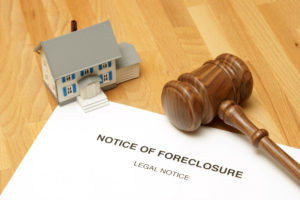 The term foreclosure refers to a lawsuit brought, usually by a financial institution, against a homeowner. The legal proceeding is brought in the Supreme Court of the County in which the property is located. The financial institution is always represented by a law firm. The law firm is not an in-house law firm. It is always a law firm hired by the financial institution that specializes in bringing foreclosure actions against homeowners.
 In a case before Supreme Court Justice Debra Silber who sits in Kings County, a homeowner brought an action for a declaratory judgment. The declaratory judgment was pursuant to Real Property Actions and Proceedings Law Section 1501.4. The homeowner wanted the court to declare that the mortgage on the homeowner’s property was not enforceable. The homeowner’s claim was it was not enforceable because the six year statute of limitations had expired. The homeowner asked Judge Debra Silber to have the
  A foreclosure lawsuit was brought in Westchester County before Justice William Giacomo. Acqua Capital was the plaintiff in this lawsuit. At the time of the
  As 2008 came to an end the stock market took a plunge. The economy in the United States seemed to have slowed down. This has caused more homeowners to fall behind on making their mortgage payments. When a homeowner cannot make their payments under their mortgage affirmative action can be taken to deal with the situation prior to the home going into foreclosure. One of the better actions a homeowner can take is to apply for a mortgage modification. Since 2008 millions of homeowners in the United States have applied for mortgage modification. A mortgage loan modification can be the answer to homeowners’ financial issues in many situations.
 In a case before Justice Robert Quinlan, who sits in Suffolk County Supreme Court, a foreclosure lawsuit was brought by Deutsche Bank National Trust Company, as trustee. The action was to
  The first thing homeowners need to do in defending a


