

Foreclosure Action Dismissed; Statute Of Limitations Expired

Foreclosure Action Dismissed: Statute of Limitations Expired

In a case before Justice David Elliot in Queens County, Supreme Court a foreclosure action was brought by Americas Wholesale Lender. The lender claimed the defendants were in default in their mortgage payments.

Motion to Dismiss

The defense in this case made a pre-answer application to the court asking to dismiss the action based on the fact it was time barred by the statute of limitations. The statute of limitations in foreclosure cases is 6 years from the time the debt is accelerated and/or the entire amount is called to be due and owing. In this case the defendants were able to show the debt was accelerated by commencement of a foreclosure action in 2008 which was subsequently discontinued.

Statute of Limitations Expired Two Years Earlier

The plaintiff in this case brought this foreclosure lawsuit more than 2 years after the expiration of the 6 year statute of limitation period. In their motion the defendants were able to adequately establish the case was time barred by the 6 year statute of limitations.

Judge Elliot in his decision found the plaintiff did not raise an issue of fact that the statute of limitations was re-set by the defendant’s alleged payment in 2010. In addition the attorneys for the financial institution did not establish there was a re-acknowledgment of the debt via a letter requesting a mortgage modification. The defendants’ motion to dismiss the lawsuit was granted.

Conclusion

Attorney Elliot Schlissel

In each and every case where a foreclosure is initiated against a homeowner the question as to whether there is a complete defense based on the statute of limitation must be evaluated. Should there be a statute of limitations defense an appropriate motion to dismiss should be made.

Elliot S. Schlissel is a foreclosure defense lawyer representing homeowners throughout the Metropolitan New York area for more than 3 decades.

New Law Allows Homeowners to File Late Answers In Foreclosure Case

Picture of home keys

In the case of first impression Justice William Giacomo sitting in the Supreme Court foreclosure part in Westchester County was presented with an issue concerning the filing of a late answer by a homeowner. JP Morgan Chase had started a foreclosure lawsuit on June 8, 2016. The defendant, Hernandez, did not submit a notice of appearance and a written answer; however she did appear at 5 foreclosure settlement conference meetings at the courthouse. The case was eventually removed from the foreclosure settlement part on March 15, 2016. On March 30, 2016 she filed a written answer. The attorneys for JP Morgan Chase rejected the answer. They claimed that the time to submit an answer had expired.

Hernandez brought a motion requesting the court force JP Morgan Chase to accept the late filing of the answer. Justice William Giacomo in his decision held the intent of the new legislation was to allow pro se defendants (defendants who do not have an attorney) who participate in foreclosure conferences to submit answers after the foreclosure conferences end even though they are untimely. In this case Judge Giacomo stated that Hernandez was served with a summons and complaint on June 18, 2016 and she participated in foreclosure settlement conferences. The court noted that 15 days after the case was removed from the foreclosure conference part Hernandez filed her answer. The Judge held that the intent of the new legislation was to allow individuals representing themselves to participate in the litigation process. In this case he found JP Morgan Chase would not suffer any prejudice in permitting Hernandez to file a late answer. He therefore granted her motion and a late answer was now considered to be timely served.

Conclusion

This is a terrific decision for homeowners. Many homeowners come into my office and participate for months and months in the foreclosure settlement conference part only to have their mortgage modification applications denied. They then find themselves in a litigation court part, however since they have not submitted an answer they have defaulted in the case and the judge won’t hear their side of the story. This new statute allows homeowners to file late answers and participate in the legal proceedings regarding the foreclosure on their home.

Attorney Elliot Schlissel

Elliot S. Schlissel and his associates are foreclosure attorneys, with more than 100 years of combined legal experience, representing homeowners on foreclosure cases throughout the metropolitan New York area. We can be reached at 1-800-344-6431, (516) 561-6645, or (718) 350-2802 for a free consultation.

The Foreclosure Defense

Defense Plan Graphic

Elliot S. Schlissel and his associates are foreclosure attorneys, with more than 100 years of combined legal experience, representing homeowners on foreclosure cases throughout the metropolitan New York area. They can be reached at 1-800-344-6431, (516) 561-6645, or (718) 350-2802 for a free consultation.

Case Dismissed: Bank Didn’t Provide 90 Day Pre Foreclosure Notice

Person holding an orb with a home inside

A foreclosure legal action was brought by M&T Bank. Dr. Colleen Farrell submitted an answer to the foreclosure lawsuit. In it she claimed she had not been served with the preliminary notice the bank was putting the property into foreclosure required under New York Real Property Actions and Proceedings Law section 1304.

Motion to Dismiss Lawsuit

The bank made a motion for summary judgement and Dr. Farrell opposed the motion and moved to dismiss the bank’s complaint for failure to properly serve a 90 day notice prior to initiating the foreclosure lawsuit. In the application, Farrell claimed the service on his receptionist of the 90 day notice was invalid. He took the position she was not authorized to accept the service of this document. M&T Bank took the position Dr. Farrell was properly served. They claimed it was irrelevant as to whether his receptionist was authorized to accept service. In addition the bank claimed Farrell wasn’t even entitled to a 90 day notice under Real Property Actions and Proceeding Law section 1304. They took this position because the doctors office was not his principal place of residence. The court took into consideration that while Dr. Farrell claimed his receptionist was not authorized to accept service, she did not deny that she had been served. The court ruled whether or not she had authority to accept service was irrelevant since she had been served.

90 Day Pre Foreclosure Notice was Required

NY Foreclosure Defense Attorney Elliot Schlissel

The court ruled however that section 1304 90 day pre foreclosure service requirements applied to Farrell even if he was not living at the premises. Since the bank failed to show strict compliance with the 90 day pre foreclosure notice requirement the court granted Farrell’s cross motion to dismiss the complaint due to the bank not having met its minimum statutory requirements prior to initiating the foreclosure lawsuit.

Reverse Mortgage Foreclosures

A briefcase full of money

Many seniors in New York are facing reverse mortgage foreclosures. These seniors often are at a stage in their life where they are on fixed incomes. If they lose their homes they may end up living in the street!

Unpaid Property Taxes

The failure of seniors to pay their property taxes has been the reason for the recent increase on reverse mortgage foreclosure proceedings. In many cases the homeowner does not know how much is owed in property taxes and homeowners insurance payments. Many of these foreclosures are triggered by outstanding financial obligations by the homeowners of only $10,000.00.

There are many consumer oriented protection statutes which protect homeowners in regular mortgage foreclosures but do not apply to reverse mortgage foreclosures. There are no mandatory foreclosure settlement conferences with regard to reverse mortgages. In addition there is no 90 day notice requirements prior to the initiation of the reverse mortgage foreclosure, as would be required in a traditional bank foreclosure.

Lump Sum Reverse Mortgage Payments

Many of the problems faced by seniors result from their taking lump sum payments on their reverse mortgage and thereafter spending all of the money. A better route is for seniors to receive steady payments over a period of time from the funds from the reverse mortgage. This will enable them to pay for the homeowners insurance on their home and the taxes on their property.

In 2015 New rules went in to effect designed to ensure seniors have the financial ability to repay the tax expenses on their homes.

Conclusion

Under certain circumstances a reverse mortgage is a reasonable option for a senior to take. It allows the senior to utilize the equity in his/her home to support themselves. However it is usually a bad idea for the senior to take all of the funds out of the reverse mortgage in lump sum. Reverse mortgages work properly when the seniors receive periodic payments that allows them to live with dignity and to pay the taxes and homeowners insurance on their homes.

NY Foreclosure Defense Attorney Elliot Schlissel

Elliot S. Schlissel and his associates are foreclosure lawyers representing homeowners throughout the Metropolitan New York area.

The Dead Borrower Issue

Dead Borrower Issue

In a case pending in Supreme court in Westchester county, justice William Glacomo sitting in a foreclosure part dealt with an unusual issue.  US Bank had brought a foreclosure proceeding. In the foreclosure case they had moved for summary judgement (this is a motion requesting a foreclosure order without the need for trial).  They claimed Eisman, who is now deceased did not make his mortgage payments.  An estate was formed for the decedent Eisman. The executor of the estate argued the estate didn’t receive the appropriate notice the home was going into foreclosure under the Real Property Actions and Proceedings Law section 1304.  This section requires a financial institution to give 90 days notice to a homeowner prior to initiating the foreclosure lawsuit.

90 Day Notice Required

Justice William Giacomo found the 90 day notice required under Real Property Actions and Proceedings Law section 1304, only applied to living persons not to estates.  Because Eisman was dead he did not have to be served at the cemetery and the executor of the estate also did not have to be served.

Judge Giacomo’s rational was since the borrower was dead, there was no longer a notice requirement which needed to be given to this borrower. He therefore held that Real Property Actions and Proceedings Law section 1304 no longer applied.

The Estate Issue

When someone dies an estate is created, the executor if there is a will and the administrator, if there is no will, stands, in the shoes of the decedent.  If an obligation was owed to decedent to provide 90 days notice prior to initiating a foreclosure lawsuit, why shouldn’t this also apply to the estate of the decedent?  I believe this issue should be taken up on appeal.

Elliot S Schlissel and his associates are foreclosure lawyers who defend homeowners in the Metropolitan New York area.

NY Foreclosure Defense Attorney Elliot Schlissel

Foreclosure Settlement Conferences in New York: Part One

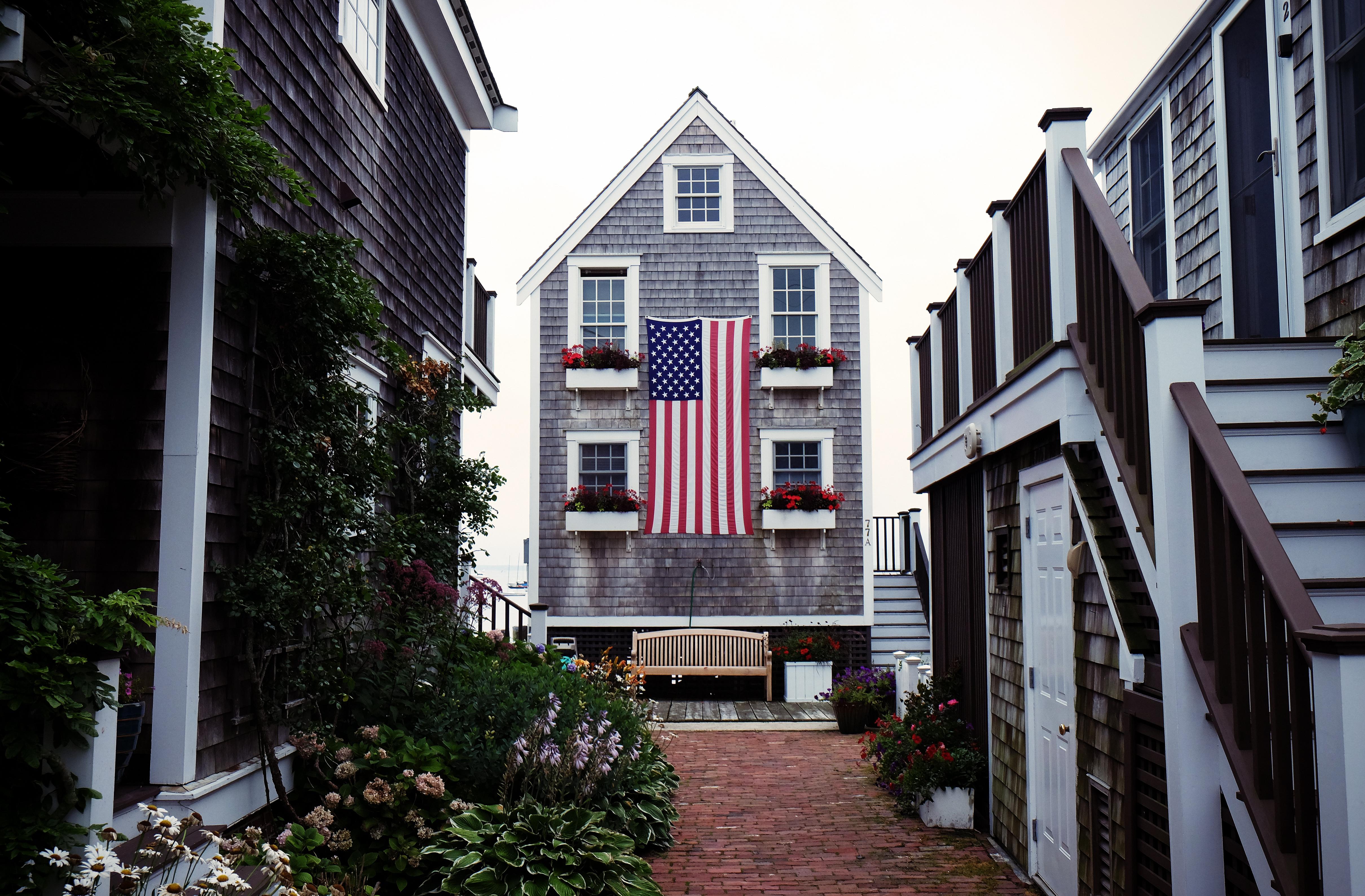
A home with an american flag hanging on the side of it

Foreclosure lawsuits are initiated by the attorneys for the financial institutions by filing a copy of the sun’s complaint in the County which the home of being foreclosed on is located. Therefore, the attorneys representing the substitution hire a processor server, a copy of the summons and think. When homeowners receive the summons and complaint, often they have no idea what to do. However, shortly thereafter, he was homeowners seek this adequate settlement conference at the scheduled. Homeowners assume this court settlement conferences are dealing with the lawsuit initiated against them by the financial institution. Unfortunately, this is not true. While most homeowners default in responding to the summons and complaint, a significant amount of homeowners in the metropolitan area actually attended the foreclosure settlement conferences.

These homeowners participate in the settlement conferences, prepare mortgage modification documents, submit the mortgage modification documents and either receive a mortgage modification or are denied. If they receive a mortgage modification, the foreclosure lawsuit does not move forward. If they either don’t submit mortgage modification documents to the financial institution and\or the mortgage modification application is denied, the case is removed from the foreclosure conference part and put into a trial part. Unfortunately, for the homeowner, if they only participated in the mortgage modification conference and did not file an answer to the summons and complaint with the banks attorney and the court, they defaulted in the lawsuit. Default means an admission of the allegations contained in the foreclosure pleadings submitted by the bank’s lawyers. Thereafter, the attorneys for the bank will usually bring a motion for summary judgment, obtain judgment against the homeowner and have a referee appointed to sell the home.

NY Foreclosure Defense Attorney Elliot Schlissel

Solution to The Problem

When served with a summons think the question attorney to submit a written answer to the summons served them institution.

STATUTE OF LIMITATIONS DEFENSE TO FORECLOSURES

Picture of a 2 story home

The statute of limitations for a foreclosure action is six years. This six year statute of limitations period begins to run from the date the entire mortgage balance is accelerated and called due by the financial institution. Once the lender has accelerated the mortgage, If the homeowner makes a payment, it will not restart a new six year period for the statute of limitations to expire.

FORECLOSURE LAWSUITS

Homeowners often believe that banks are very efficient and very accurate with regard to their paperwork. However, this is not necessarily true. Mortgages and notes are freely transferred from banks to other financial institutions. There are sometimes numerous delays, the misplacement of documents and/or the bank simply fails to act to collect on its mortgages. Therefore, the issue as to whether six years has passed since the acceleration of the mortgage is an issue that should be looked into with regard to defending foreclosure lawsuits.

CASES PENDING FOR SIX YEARS

Homeowners often come to our office and say, “well this lawsuit was brought in 2010 and now it’s 2016, and therefore the statute of limitations has expired.” This is not correct. The statute of limitations start from the period the mortgage accelerated and ends when the lawsuit is initiated. Therefore, even if a lawsuit was stated in 2010 and it lingered on for six years there would be no statute of limitations defense. If that lawsuit is dismissed, would the statute of limitations then have expired? The answer to that is both yes and no. Although the statute of limitations in that example would have expired, the bank would be given an additional 60-day grace period to start a second lawsuit to foreclosing on the home.

CONCLUSION

NY Foreclosure Defense Attorney Elliot Schlissel

The statute of limitations is a viable defense to foreclosure lawsuits and should be plead in the homeowner’s answer in the appropriate circumstances to effectuate this defense.

Elliot S. Schlissel, Esq. Is a foreclosure lawyer representing the homeowners throughout the metropolitan New York area.

VIDEO: The Statute of Limitations Defense

Video: Mortgage Modification, Stay In Your Home!

Elliot discusses mortgage modification and how to stay in your home if you are facing foreclosure.

Foreclosure Defense in Valley Stream, Lynbrook, Baldwin, Malverne, Freeport, Oceanside, Long Beach, Elmont, Lakeview, West Hempstead, Hempstead, Merrick and Bellmore, New York

We represent individuals throughout the New York Metropolitan area with divorce and child custody, personal injury, car accident, wrongful death, estate administration, nursing home and medicaid issues

The information you obtain at this website is not, nor is it intended to be, legal advice. You should consult an attorney for individual advice regarding your particular legal issue. This is attorney advertising.

This is attorney advertising. This website is designed for general information purposes only. The information presented on this website shall not be construed to be legal advice. If you have a legal problem you should consult with an attorney.

Copyright © 2018 By The Law Offices of Schlissel DeCorpo. All Rights Reserved.