
Notice to Admit in Foreclosure Action Improper

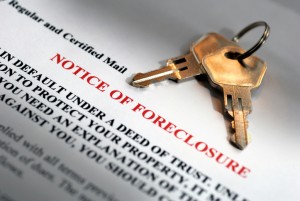
House keys and foreclosure notice

In a case before Justice Joan Lefkowitz sitting in the Supreme Court Real Property Part in Westchester County, US Bank made an application for summary judgment. This application was brought in the foreclosure lawsuit and it was opposed by the defendant, Glusky. Glusky took the position the bank failed to satisfy a condition precedent to initiation of a foreclosure case. Glusky claimed the bank failed to comply with the 90 day notice requirement under Real Property Action and Proceedings Law Section 1304. The failure of the bank’s compliance with this law denied the bank standing to bring the foreclosure lawsuit.

Justice Joan Lefkowitz had made a previous decision holding the bank had failed to establish prima facie entitlement to summary judgment. This was because they did not establish the bank was in compliance with the Section 1304 of the Real Property Action and Proceedings Law 90 day notice requirements. This statute requires the bank provide a homeowner with 90 day’s-notice prior to the initiation of a foreclosure lawsuit.

Bank Seeks To Get Around 90 Day Notice Statute

The bank’s attorneys had sent Glusky a notice to admit. He objected to the notice. He asked the court for an order striking the notice to admit. Glusky claimed the facts went to the heart of the case. Counsel for the bank argued against Glusky’s protective order. Justice Joan Lefkowitz found the notice to admit asked Glusky to admit to material issues which were in dispute in this case. Therefore, she found the notice to admit was improper. Glusky had appropriately rejected the bank’s claim. The Judge also found the fact that Glusky did not object Attorney Elliot Schlisselto it in a timely manner is not relevant to the notice to admit being improper. Judge Lefkowitz rendered a decision which stated since the notice to admit was improper. Glusky simply did not need to respond. Judge Lefkowitz granted Glusky’s protective order striking the notice to admit.

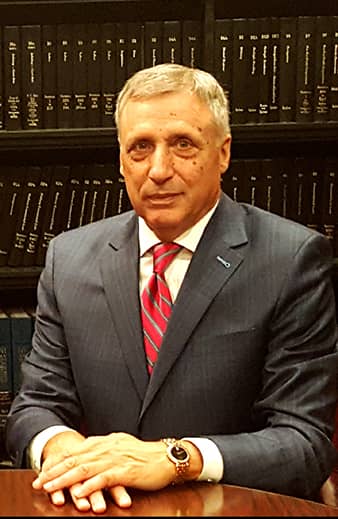
Elliot S. Schlissel and his associates are foreclosure lawyers who have protected homeowners in foreclosure cases for more than 3 decades.


VIDEO: Statute of Limitations Defense for Foreclosure

Elliot discusses another case in which the statute of limitations was used as a defense for foreclosure.

Foreclosure Dismissed: Bank Failed to Comply with 90 Day Notice Requirement

Law books and a globe

In a case before Supreme Court Justice Peter Sweeney sitting in Kings County, he dismissed the bank’s foreclosure lawsuit. The bank had brought a summary judgment motion requesting an order that the house be sold at public auction, in addition they sought an order of reference with regard to this mortgage. The mortgage was on a two-family home owned by the Mitchells. The Mitchells brought a cross-application. They asked Judge Sweeney to dismiss the case. They claimed the bank had failed to serve them with Real Property Actions and Proceedings Law Section 1304’s 90 day notice prior to bringing the foreclosure lawsuit. The bank submitted evidence by their process server which alleged he had personally served Mitchell with the 1304 Notice when he served the Summons and Complaint. He claimed this took place at Mitchells’ residence.

No Personal Service

Mitchell in his opposing papers and cross-motion claimed he was never personally served with the 1304 Notice or the Summons and Complaint in this foreclosure lawsuit. He claimed he was more than a mile away at a local store at the time the alleged personal service took place by the process server.

Hearing Ordered Regarding Process Server’s Affidavit

Justice Sweeney found Mitchell submitted proof which contested the process server’s affidavit. Justice Sweeney therefore ordered a traverse hearing to determine whether service of process was properly effectuated. A special referee was appointed to supervise this proceeding. The referee found the bank’s claim that Mitchell had waived the bank’s failure to comply with Real Property Action and Proceedings Law Section 1304 was untrue. The special referee found a lender’s failure to comply with the 90 day notice provisions of Section 1304 is not an affirmative defense the defendant had to plead in his or her answer. Defendant Mitchells’ cross-motion to dismiss was therefore granted.

Attorney Elliot Schlissel

Conclusion

Banks have a definitive obligation to provide homeowners with 90 day’s-notice prior to initiating foreclosure lawsuits.

Bank’s Summary Judgment Application Denied

Keys and A House

In a case before Justice Elliot sitting in Supreme Court in Queens County, HSBC Bank brought a motion for summary judgment (a motion for a judgment of foreclosure claiming there are no issues that need to be tried) against Murphy in a foreclosure lawsuit. HSBC claimed they had possession of the original note with the proper endorsement. They therefore claimed they were the owner of the note and mortgage. They took the position that Murphy had not made his monthly mortgage payments and was therefore in default regarding his contractual obligations.

Bank Lacks Standing Defense

Murphy claimed in his defense the bank lacked standing to bring this lawsuit. He argued that a copy of the original note with a blank endorsement annexed to its motion and the affidavits dealing with the motion were invalid. Murphy claimed the endorsement was on a separate piece of paper which amounted to being on a blank page.

Justice Elliot found the affidavit of the bank’s servicer attesting to physical possession of the original note was not sufficient. He found the endorsement did not provide significant evidence that it was “firmly affixed thereto to become part thereof.” HSBC’s servicer did not provide sufficient information with regard to the original note’s condition. Therefore, Justice Elliot ruled the bank was not entitled to summary judgment on the case and the case would continue.

Attorney Elliot Schlissel

Elliot S. Schlissel and his associates have been representing clients in foreclosure cases throughout the Metropolitan New York area for more than 45 years.

VIDEO: Reverse Mortgage Foreclosures

Statute of Limitations Defenses in Foreclosure Losses: Six Year Statute of Limitations

write on paper

There is a six (6) year statute of limitations with regard to bringing a foreclosure lawsuit on a mortgage by a creditor. When the lender accelerates the mortgage (calls the entire balance due and owing, the statute of limitation period starts to run).

Acceleration of the Mortgage

When the bank accelerates a mortgage they must provide written notice to the homeowners. The bank is required to provide the homeowners with 90 days notice they they are accelerating the mortgage before they can initiate a foreclosure lawsuit. The failure of the bank to provide the homeowner with this 90 days notice gives the homeowner a legal defense to to foreclosure lawsuit. Our law office has had foreclosures dismissed due to the banks failure to provide the homeowner with this 90 day notice.

Restarting the Six Year Statute of Limitations

If the homeowner make a payment on a mortgage loan, enters into a mortgage modification or files a Chapter 13 bankruptcy that acknowledges the mortgage debt and agrees to repay it, each of these actions will restart the statute of limitations running all over again. The statute of limitations is a complete defense to a foreclosure lawsuit. If the 6 year period is approaching from the time the bank accelerated the mortgage the homeowner should be very careful to avoid taking any actions that will restart the statute of limitation period again. It is strongly suggested if you believe you have a statute of limitations defense, that you consult with an experienced foreclosure defense lawyer and get his or her opinion regarding this issue.

Attorney Elliot Schlissel

Elliot S. Schlissel and his associates for more than 3 decades have been representing homeowners throughout the Metropolitan New York area in foreclosure lawsuits. The law firm strives to keep homeowners in their homes and stop foreclosure cases from going forward.

VIDEO BLOG: Statute of Limitations Defense in Foreclosure

Mortgages and Death of a Homeowner

Foreclosure Action Dismissed: Statute of Limitations Expired

When you die your mortgage payments are still due and owing. If your lender does not receive the mortgage payments when you die it can move forward to bring a foreclosure lawsuit against your home. The best way to deal with mortgage payments in the event you die is to have an estate plan set up while you are living to deal with this issue. One way of covering the balance due on your mortgage would be to take out a life insurance policy in an amount sufficient to cover your mortgage. There are specific life insurance policies designed for this purpose.

In the event you are married, have a significant other or have a co-borrower upon your death the cosigner or co-borrower would be liable to make the mortgage payments. However if you are the breadwinner and have no life insurance your co-owner or co-borrower may not be in a position to continue to make the mortgage payments. If the co-owner or co-borrower is not in a position to make the mortgage payments the best route may be to sell the home if there is equity in the home. However, if there are children attending local schools, this may not be a practical solution.

Have a Will

Should you write a will, you can make arrangements in the will with regard to what happens to your home in the event of your death. The issue is not who makes the mortgage payments but who inherits the house upon your death. A will can be also tied into a life insurance trust set up to pay off the mortgage when you die. An estate plan can see to it that your home passes to your heirs in a manner that allows them to keep your home.

The best way to deal with death related issues related to your mortgage or otherwise would be to meet with an estate planning attorney and make a plan in the event of premature death or not so premature death.

Elliot-Schlissel

Elliot S. Schlissel, Esq. is an estate lawyer representing clients in drafting of wills, trusts and probating wills and trusts throughout the Metropolitan New York area for more than 3 decades!.

Judge Cancels Mortgage against Wife Which Was Fraudulently Obtained

Fraudulently-Obtained

Justice Carmen Velasquez sitting the Supreme Court part of Queens County was recently presented with an unusual case. A wife and husband had married in 1981. The home they lived in was purchased by the wife in 1987. In 1996 a divorce action was initiated. A divorce agreement was entered into in 1997. Pursuant to the terms of this agreement the wife received 100% ownership interest in the home that she purchased in 1987.

Fraudulent Mortgage

The wife claimed her husband and his father had fraudulently obtained a mortgage for $840,000.00 against her home. The wife claims she never signed any documents giving her husband and his father a mortgage on her home. The husband took the position that the signatures on the mortgage were the wife’s, she claimed they were forged.

Wife’s Lawsuit

The wife brought a case seeking the declaration that the husband be barred from all claims to the property, she be considered the lawful owner of the property and the fraudulentmortgage be cancelled and discharged.

Justice Velasquez found the wife’s testimony to be credible and reliable. She took into consideration there was no documentary evidence of a mortgage loan by the wife to the husband’s father. She also took into consideration the wife came from an affluent family and had no need to borrow money. In the end Judge Velasquez granted the wife’s demand for relief, cancelled, removed and discharged the mortgage from the wife’s property.

Elliot-Schlissel

Elliot S. Schlissel, Esq. is a foreclosure lawyer representing clients in obtaining and litigating foreclosure lawsuits throughout the Metropolitan New York area. Elliot S. Schlissel, Esq. and his associates have been defending homeowners in foreclosure proceedings for more than 45 years.

$2.5 Million Foreclosure Dismissed Based on Statute of Limitations Defense

Picture of a home

US Bank brought a foreclosure lawsuit against Samuel Rudick. Samuel Rudick and Patricia Rudick, who is deceased, took out a $1.75 million loan for their Westhampton home in 2003. In 2004 their loan was modified. In 2006 the Rudicks took out a second mortgage on their home. During 2006 the first and second mortgages on their home were consolidated into a third mortgage for approximately $2.5 million.

The original financial institution regarding this matter was JP Morgan Chase. Chase eventually sent a notice of default to the Rudicks which stated: “that they had defaulted on their mortgage loan by failing to tender their monthly payments.” A foreclosure lawsuit was brought by JP Morgan Chase in 2008. Chase discontinued this lawsuit. Eventually a second foreclosure action was commenced. A motion was made to dismiss the second lawsuit in 2014. The basis of the dismissal application was that the 6 year statute of limitations had expired since the loan had been accelerated (called due and owing), more than 6 years ago.

A Third Foreclosure Proceeding

US Bank acquired the mortgage from Chase Manhattan Bank. US Bank therefore started a third foreclosure action. This lawsuit was also dismissed.

Conclusion

Attorney Elliot Schlissel

Homeowners whose homes go in foreclosure should consult with an experienced foreclosure lawyer to see if there is a valid defense to the lawsuit. The homeowners in this case as a result of the excellent legal work by their attorneys came into a $2.5 million windfall!

Foreclosure Defense in Valley Stream, Lynbrook, Baldwin, Malverne, Freeport, Oceanside, Long Beach, Elmont, Lakeview, West Hempstead, Hempstead, Merrick and Bellmore, New York

We represent individuals throughout the New York Metropolitan area with divorce and child custody, personal injury, car accident, wrongful death, estate administration, nursing home and medicaid issues

The information you obtain at this website is not, nor is it intended to be, legal advice. You should consult an attorney for individual advice regarding your particular legal issue. This is attorney advertising.

This is attorney advertising. This website is designed for general information purposes only. The information presented on this website shall not be construed to be legal advice. If you have a legal problem you should consult with an attorney.

Copyright © 2018 By The Law Offices of Schlissel DeCorpo. All Rights Reserved.