

Defense to Foreclosure Lawsuit: The Mortgage Company Made a Mistake – Part II

help for homeowners facing foreclosureFinding Errors By The Bank’s Servicing Organization

You should maintain organized records with regard to all transactions concerning financial institutions who hold your mortgage and their servicing organizations. There is a federal statute called the Real Estate Settlement Procedures Act. It is commonly referred to as “RESPA”. This provides you with a manner in which you can challenge many of the types of errors and improper practices engaged in by banks and their servicing organizations. It also gives you an ability to obtain the information necessary to make challenges.

To obtain the information under the RESPA law you should send the servicing organization by certified mail, a written request identifying you as the homeowner who entered into the loan and the account and information regarding the loan. The servicer has a legal obligation under the RESPA statute to notify you within 5 business days of their receipt of your qualified written request acknowledging your request was received by them. Thereafter they have 30 business days to provide you the information you requested be produced or explain to you in writing why it cannot be produced. If it cannot be produced they must provide you with the name and contact information of an individual with whom you can follow up to obtain this information. It should be noted the 30 business days to comply with your request can be extended by 15 business days if the servicing organization gives you written notification within the 30 day period of their request for an extension and the reasons why they are requesting this extension. Once you have made this request and the servicer is working on a response, they cannot report to a credit bureau information regarding alleged overdue payments that relate to the information contained in your request. If you should request this information after the foreclosure lawsuit has been initiated it will continue during the term that the request is being processed. In the event the servicing organization you requested the information from is no longer the servicing organization and there is another servicing organization which has replaced this servicing organization your written request must be sent not more than one year after the transfer to the new servicing organization.

Statutory Damages

Should the servicer fail to comply with your request, you can take legal action against the bank and you are entitled to $2,000 in statutory damages plus reimbursements for all of your attorney’s fees and in addition you are entitled to be compensated for any other losses or damages you might have. Unfortunately, due to the lobbying efforts of banks, this remedy will not cause the foreclosure action to stop or have any impact on the foreclosure lawsuit.New York foreclosure defense attorney

Defense to Foreclosure Lawsuit: The Mortgage Company Made a Mistake – Part I

foreclosure defense attorney for homeownersBanks and their servicing companies make mistakes. Homeowners, at one time, blindly believed whatever a bank did and whatever documents they submitted were always correct. Since the mortgage crisis started in 2008, there have been dozens of publications of inappropriate actions, mistakes, issues involving robo-signing and bad practices by financial institutions. As a result of these disclosures, attorney generals in all 50 states as well as the United States Attorney General have brought lawsuits which have resulted in banks all over the country paying hundreds of billions of dollars in fines and penalties.
Katherine M. Porter, a law professor, conducted a study based on the filings of 1,300 Chapter 13 bankruptcy cases. Her study revealed, in a majority of these bankruptcies, documents submitted by the holders of the mortgage contained errors (Misbehavior and Mistake in Bankruptcy Mortgage Claims, Texas Law Review, 2008.)

What Type Of Mistakes To Look For

Mortgage servicing companies cannot always be counted on to give you credit for all of your mortgage payments. They may charge excessive fees in violation of state laws. They may fail to advise you that you can redeem your property by becoming current on your mortgage payments. In the event you seek to reinstate your mortgage, and you receive a statement from the mortgage servicing company with regard to what they claim is necessary to be paid to reinstate your mortgage, that reinstatement must have an accurate itemization of what they claim is due them. An example of a mortgage servicer mistake would be charging you for a reappraisal or home inspection on your home when the mortgage documents don’t make it an obligation of yours to pay these fees. The following are examples of common mortgage servicer mistakes:

  • the bank engaged in coercive improper collection practices concerning their mortgage
  • your mortgage payments get applied to someone else’s account
  • the bank receives your mortgage payment but doesn’t give you credit for it
  • the bank buys insurance on your property and charges you for it in spite of the fact you already had insurance on your property
  • the bank fails to pay your property taxes in a timely manner and a penalty is assessed or the bank fails to pay your property taxes altogether even though they have received the money in escrow for your property taxes
  • the bank charges you late fees and property expense fees even though your mortgage payments were made on a timely basisNew York foreclosure defense attorney

The Lack of Standing Defense in Foreclosure Lawsuits – Part II

loan modification lawyerPresenting the Lack of Standing Issue to the Court

To start with, the lack of standing must be plead as an affirmative defense in the homeowners’ Answer. The homeowner can thereafter during the discovery portion of the case demand documentation from the financial institution of the chain of assignments which led them to bring this lawsuit. If the bank cannot produce documentation of this chain of assignments the homeowner can make a motion to dismiss under New York Civil Practice Law and Rules section 3211. The homeowner, in their moving papers to dismiss the lawsuit, must make the argument the financial institution bringing the lawsuit is not a valid holder of the note and mortgage and/or there is an issue concerning one or more of the assignments in the chain of assignments.

Lack of Standing Arguments

Many homeowners who come into my office have researched on the internet and through other sources the issue of standing and seek to submit a lack of standing argument to the court. However, the technicalities of bringing a motion to dismiss under section 3211 of the New York Civil Practice Law and Rules and the manner in which the motion needs to be presented to the court generally requires an expertise which is beyond the ability of most homeowners. The best way to assert and/or prove a lack of standing argument for the purpose of getting a foreclosure case dismissed is to hire an experienced foreclosure defense lawyer to make these arguments for you.New York foreclosure defense attorney

Defense to Foreclosure Lawsuit: The Mortgage Company Made a Mistake

Defense to Foreclosure Lawsuit: The Mortgage Company Made a MistakeViolations of Truth In Lending Law

The Truth in Lending Law (hereinafter referred to as “TILA”) is usually violated by a lender failing to provide the appropriate disclosure to the homeowner at the time of closing. The financial institution must specifically disclose the annual percentage rate of the loan. In addition they must disclose the finance charges, the amount financed, the total payments, the payment schedule and many other items. These disclosures are supposed to be included in the document referred to as the Truth in Lending Disclosure Statement. The lender is responsible for all of the calculations contained in the Truth in Lending Disclosure Statement being accurate.

TILA and HOEPA Violations Apply To All Subsequent Banks
Who Will Receive Assignments From The Original Lender

The actual violations of TILA and the Home Ownership and Protection Law (hereinafter referred to as “HOEPA”) are caused by the original lender not complying with these statutes. Thereafter if the loan is assigned to subsequent financial institutions these lenders are held accountable for the violations of the original bank. The only way subsequent financial institutions can avoid liability under these statutes is if they can show a reasonable person exercising ordinary due diligence would not have been able to determine the violation or improper practice pursuant to TILA or HOEPA.

Rescinding the Loan

The method in which you rescind the loan is to give written notice to the lender you are exercising your right of rescission. If you are successful in your request to rescind the loan, the financial institution must return everything you paid to them except for the payments of the loan principle. In addition, you must return the portion of the loan principle that has not yet been repaid. When you rescind the loan you can eliminate being responsible for the payment of the loan under its terms but you still can’t keep the loan proceeds. The reality is when you rescind the loan you must refinance to repay the portion of the principal you received. However, rescission of a loan will always stop a foreclosure proceeding in its tracks!

It should be noted recently the United States Supreme Court rendered a decision in the matter of Jesinoski v. Countrywide Home Loans that you don’t have to sue within the three year rescission period for rescission. You only have to provide written notice to the lender to preserve all of your rights during that three year period.

Foreclosure Defense Lawyer

If you seek to hire a lawyer to represent you in a foreclosure defense, one of the things he or she should be familiar with are the regulations involving TILA and HOEPA. The lawyer should know how these laws can be asserted by you in a foreclosure proceeding as a defense and how you can obtain damages as a result of violations of these laws. An excellent publication which can provide you with more ideas concerning the fighting of foreclosure lawsuits is Foreclosures published by the National Consumer Law Center.New York foreclosure defense attorney

Unfair Lending Practices

foreclosure defense lawyersThere are a variety of federal and state statutes which can be utilized by homeowners to fight foreclosure lawsuits. These laws were enacted to protect homeowners from illegal or improper practices by financial institutions. There are two federal laws designed to protect homeowners against unfair lending practices. These laws specifically deal with residential mortgages. The first statute is the Truth in Lending Act. This law is sometimes referred to as “TILA”. The second statue designed to protect homeowners is the Home Ownership and Equity Protection Act. This statute is often referred to as “HOEPA”. Both of these federal statutes give a homeowner the ability to sue for monetary damages. In addition, homeowners can also sue for financing costs paid by them. Under some circumstances both of these statutes allow a homeowner to have the mortgage canceled. If the mortgage is canceled, the foreclosure lawsuit will come to an end if the homeowner can make arrangements to refinance the balance of the principle due to the lender.

Rescission of a Loan

Rescission of a loan means canceling the loan. There is a concept under TILA of retroactively canceling or rescinding a loan. The technical term for this is extended rescission. A lender has to give you three days notice under certain circumstances to rescind or cancel a loan. However, your right to rescind or cancel the loan can be extended up to three years if you can show the lender violated portions of TILA. The three year period can be extended even in the event a foreclosure lawsuit has been initiated. This means in a foreclosure lawsuit if you can show a material violation of either TILA or HOEPA you can cancel the loan and by taking this action you can be successful in defending the foreclosure lawsuit. It should be noted the most common types of loans covered by either TILA or HOEPA are refinanced loans and HELOCs.New York foreclosure defense attorney

Foreclosure Legal Documents – Part I

foreclosure defense on Long IslandThe Summons

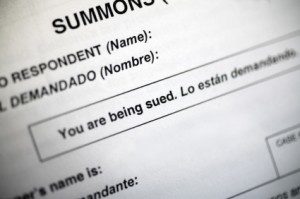
The purpose of a Summons is to inform the person being sued that a lawsuit is pending against them and an Answer to the lawsuit must be filed if they seek to contest or assert their rights related to the lawsuit. Each defendant in a foreclosure lawsuit who is named must be served by a process server in New York. Homeowners who are named as defendants in foreclosure lawsuits must be served with a Summons. Also, individuals having liens on the house or creditors holding judgments filed against the house also must be served with a Summons. This gives these other individuals notice that this lawsuit may affect their rights to collect on their liens and judgments against the house. The Summons specifically provides notice to the homeowners with regard to how much time they have to respond to the initiation of the lawsuit. The Summons states if the individual is served personally, they have twenty days to respond, and if served by any other means other than personal service, they have thirty days to respond to the lawsuit. This sets the time period by which homeowners who are served with the Summons and Complaint in foreclosure cases must respond to it by filing a written Answer, acknowledged before a notary public, with the Court and with the attorney for the bank. If the homeowner fails to respond in a timely manner, their failure to submit an Answer will be considered a default. The default means the homeowner is not challenging the allegations in the lawsuit.New York foreclosure defense lawyer

Underwater Homes

foreclosure defense lawyer in New YorkThe term “underwater homes” means the home is worth less than the amount owed on its mortgage. Another way of referring to a home that has a mortgage greater than its value is “negative equity”. Most people who are in underwater homes are unable to sell their home or refinance it. At the height of the real estate crisis in America in 2012, approximately one-third of all homes in the United States were underwater. Today, approximately 15% of homes in the United States are underwater. This represents about 12% of all homeowners in the country, or approximately 950,000 homeowners have homes which are underwater. In many instances, homeowners’ homes are so far underwater that the mortgage is twice the value of their home.

Real estate values have been going up recently. However, many homes in America are so far underwater these homes will never reach a point of having equity in them.

Lack of Funds and Bad Credit

This can result in the homeowner trying to rent a home when they don’t have sufficient funds to pay the security and one month’s rent on a rental apartment or rental home. They also will most likely have a low credit score because they are behind on their mortgage payments. Landlords do not like to rent homes to families that have bad credit.

What Should Homeowners With Underwater Homes Do?

The best recommendation would be to consult with a foreclosure defense attorney. What homeowners of underwater homes should not do is move out and abandon their homes. The fact their home is underwater and they are behind on their mortgage, does not mean they are in imminent threat of losing their home and being forced out of it. In most situations, it is in the homeowner’s best interest to continue to live in their home. Many homeowners do not understand the full implications of simply moving out of their home, abandoning it and not paying their mortgage.

Conclusion

Don’t move out of your home solely if you are behind on your mortgage payments. Try to obtain a mortgage modification. Seek out an experienced foreclosure lawyer and review your options with him or her.New York foreclosure defense lawyer

New York Banks Agree to Maintain “Zombie Properties”

foreclosure defense for homeowners on Long IslandEleven banks in the State of New York have agreed to establish a program to maintain and monitor homes in foreclosure which are vacant. They have taken this action because of pressure from the New York State Attorney General, Eric Schneiderman, and complaints by neighbors surrounding these properties which have been made to the financial institutions. These eleven banks and credit unions represent approximately three-quarters of all of the houses in foreclosure in the Metropolitan New York market.
Bank To Check To See If Homes Are Vacant

The banks have agreed they will check all properties within 60 days of the loans becoming delinquent. The checking will involve an external inspection. In addition, the financial institutions will check each property in foreclosure every 25 to 35 days thereafter. If they reach a decision that the foreclosed home has been abandoned by its owners, they will post a notice with their contact information on it. In addition, they will change one of the door locks. They will also board up broken windows and doors and remove nuisance features. In addition, they will take action with regard to safety issues. All of these properties will be placed on a list to be shared with municipalities throughout the State.

The Eleven Banks

The eleven banks which have agreed to this process are: Ridgewood Savings Bank, M&T Bank, Bethpage Federal Credit Union, Astoria Bank, Green Tree Servicing, PHH, Northstar, Ocwen, CitiMortgage, Bank of America, and Wells Fargo.

More and More Zombie Homes

Attorney General Eric Schneiderman who had previously submitted legislation to the State Legislature, noted that zombie foreclosures have increased more than 50% recently. He claims there are approximately 17,000 zombie homes being foreclosed on. Zombie homes place burdens on the communities in which they are located. These burdens deal with maintenance costs, property tax issues, and vandalism of these homes.

New York foreclosure defense lawyerElliot S. Schlissel is a foreclosure lawyer representing homeowners throughout the Metropolitan New York area. His motto is, “I will keep you in your home.”

Foreclosure Lawsuits Time Barred by the Statute of Limitations

foreclosure attorneys for homeownerThe statute of limitations for bringing a foreclosure lawsuit in the State of New York is six years from the time the mortgage is accelerated by the bank (called due) or from the initiation of the foreclosure legal action, whichever occurs first.

The real estate crisis in America started many years ago. Foreclosure defense attorneys are now coming across cases initiated by banks where the statute of limitations defense bars the banks from moving forward with their foreclosure case. It should be noted the statute of limitations is a defense to the foreclosure lawsuit. However, it does not remove the bank’s lien from the property. What you end up with in a case where the statute of limitations defense is effectively plead, a bank is unable to collect on their mortgage but their mortgage still remains a lien on the property preventing it from being sold without it being repaid.

Acceleration of the Mortgage

A mortgage requires that a homeowner make payments over a period of time. The usual length of mortgages are 15 or 30 years. During the period the homeowner is making payments, all they owe each month is the amount of their payment. The acceleration of the loan involves the bank usually sending a letter to the homeowner saying it is calling the entire balance of the mortgage due and owing. This means, if the homeowner sends a payment in the correct monthly amount to the bank they will usually reject it claiming they want the entire mortgage paid in a lump sum payment. It should be noted however, if the homeowner is several months behind and pays all the arrears, the bank will usually reinstate the mortgage.

After the bank sends the acceleration letter or initiates a foreclosure lawsuit, if the homeowner takes action to acknowledge the debt, it can start the statute of limitations running all over again.

Conclusion

If there is any possibility the bank can be barred by moving forward with a foreclosure, it is extremely important the statute of limitations be plead as an affirmative defense in the homeowners’ Answer to the Summons and Complaint.New York foreclosure defense lawyer

New Precedent Regarding the Lack of Standing Defense in Foreclosure Lawsuits

foreclosure defense for Long IslandersOne of the most potent defenses a homeowner has in a foreclosure lawsuit is based on the concept the financial institution bringing the lawsuit is not the rightful owner of the note and mortgage at the time the lawsuit was commenced. The legal terminology regarding this situation refers to the fact the financial institution lacked standing to bring the lawsuit. When this affirmative defense is alleged by the attorney for the homeowner, the lender now has the burden of proving it actually was the rightful owner of the note and mortgage at the time the lawsuit was initiated. In other words, the financial institution must show it was the appropriate institution to bring the foreclosure lawsuit.

Pleading Lack of Standing As An Affirmative Defense

The homeowner in a foreclosure lawsuit, up until now, needed to plead the affirmative defense of lack of standing in their Answer. If they did not specifically plead the lack of standing affirmative defense, courts have traditionally taken the position the homeowners have waived their right to allege this defense. This means the financial institution did not have to meet the burden of establishing it was the proper party at the time the lawsuit was initiated to bring the foreclosure proceedings. New York Civil Practice Law and Rules section 3018(b) which is entitled “Responsive Pleadings” states “[a] party shall plead all matters which if not plead would be likely to take the adverse party by surprise or would raise issues of fact not appearing on the face of a prior pleading.” This section of the law requires defendants in all lawsuits to plead whatever defenses they feel are appropriate. If defendants in civil lawsuits do not plead their defenses, they simply waive them.

Appeals Court Decision May Have Changed the Law

Recently the Appellate Division of the Second Department, an appeals court, has rendered a decision which may change the law with regard to a homeowner raising the issue of standing in a mortgage foreclosure lawsuit as a defense. In the case of U.S. National Association v. Faruque, 120 A.D.3d 575, 991 N.Y.S.2d 630 (2d Dept. 2014) they placed the issue of standing before a court even though it was not alleged in the homeowner’s pleading.

In the Faruque case the appeals court departed from prior legal precedents. In the Faruque case the bank started a foreclosure lawsuit. The homeowner submitted an Answer which stated they “specifically denied that the note was delivered to the plaintiff or that an assignment” from the originating lender to the plaintiff “had been recorded.” Although this allegation contained elements of the lack of standing defense, the homeowners did not plead the bank had lacked standing to bring the lawsuit. In this case the court held the homeowner “was not required to plead lack of standing as an affirmative defense.” The court went on to state “in order for the plaintiff to be entitled to relief, it had to prove its standing.”

The court in the Faruque case rendered a decision whereby the financial institution did not meet its burden under the circumstances of the case because it “did not establish that the note was physically delivered to it prior to the commencement of the action.”

Best Practice

Whether the Faruque case will change the case law in the State of New York to assume a lack of standing legal defense is questionable. The best way for a homeowner to submit the most potent Answer in a foreclosure lawsuit is to plead the affirmative defense of lack of standing. This creates a problem for the bank in the case. The bank then must prove they actually were the legitimate owner of the note and mortgage at the time of initiation of the foreclosure lawsuit.New York foreclosure defense attorney

Foreclosure Defense in Valley Stream, Lynbrook, Baldwin, Malverne, Freeport, Oceanside, Long Beach, Elmont, Lakeview, West Hempstead, Hempstead, Merrick and Bellmore, New York

We represent individuals throughout the New York Metropolitan area with divorce and child custody, personal injury, car accident, wrongful death, estate administration, nursing home and medicaid issues

The information you obtain at this website is not, nor is it intended to be, legal advice. You should consult an attorney for individual advice regarding your particular legal issue. This is attorney advertising.

This is attorney advertising. This website is designed for general information purposes only. The information presented on this website shall not be construed to be legal advice. If you have a legal problem you should consult with an attorney.

Copyright © 2018 By The Law Offices of Schlissel DeCorpo. All Rights Reserved.