
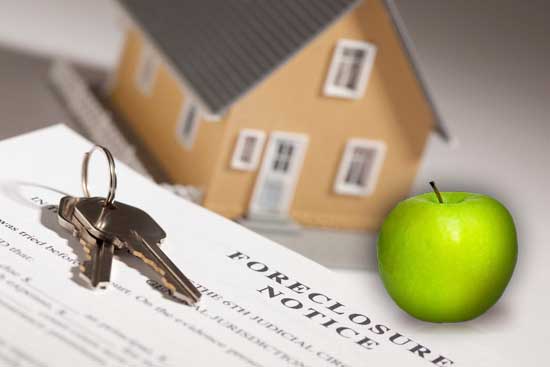
Mortgage Lender Penalized for Failure to Comply with Notice Requirements

foreclosure defense lawyersJudge Dolinger sitting in the Supreme Court in Rochester recently ruled a mortgage lender who did not comply with the “consumer friendly notice requirements under New York State law should be given a second chance to comply with the statute.” However, the lender was permanently enjoined from imposing any interest, fees, costs or legal expenses on the borrower from 90 days before the filing of the complaint until the bank complies with the New York notice requirements.

Foreclosure Prevention Tenant Protection and Property Management Act

The Foreclosure Prevention Tenant Protection and Property Management Act of 2009, requires a lender give the homeowner notice prior to the house being foreclosed on. In the case before Judge Dolinger, Citi Mortgage failed to comply with this statute. Judge Dolinger was concerned if the case was dismissed, Citibank would get a second chance to comply with the statute’s notice requirements. However, the judge noted in his decision the bank’s failure to comply with the notice requirements in their first attempt. If they were successful in the second attempt the borrower would be worse off because they would be responsible for the entire amount of the unpaid debt including the portion of the interest penalties and attorneys fees which accrued on the debt during the period of time between Citi Mortgage’s first chance at complying with the statute and their second chance. Judge Dolinger wrote in his decision, “the borrower is worse off because the amount of the debt has been increased during the two year period in which the foreclosure action has been pending making a recasting of the mortgage more costly, if not prohibitively so.” To deal with this, Judge Dolinger entered an order permanently enjoining the bank from imposing any interest, fees or legal expenses on the borrower from 90 before the filing of the complaint until such time as they complied with the statute.

Notice Regarding Foreclosure Lawsuit

New York Real Property Actions Proceedings Law (RPAPL) § 1304 requires a creditor to notify a borrower by registered or certified mail as well as by first class mail, offering assistance on how to avoid foreclosure. Citi Mortgage had failed to comply with this section of the Real Property Actions Proceedings Law. In the case before Judge Dolinger, he stated “there was no sworn statement from any bank official regarding the mailing.” Judge Dolinger, based on the bank’s failure to provide the sworn statement regarding the mailing, could have dismissed the foreclosure lawsuit. He refused to do so because he stated he “will not allow the bank to escape the consequences of its failure to follow” the law. Judge Dolinger went on to state “when and if the bank complies” with this statute it can collect “any principal payments due at any time under the note and mortgage.” Judge Dolinger’s ruling, however, denied the bank the ability to collect interest, fees, costs and attorneys fees during the period of time the bank was in non-compliance with the statute.

Conclusion

This was a victory for the mortgagors, albeit a small victory.assisting homeowners
Foreclosure Court Conference Denied

foreclosure defense lawyerIn a case of first impression, Justice Cohen sitting in the Appellate Division, Second Department (an appeals court) recently wrote a decision that stated a residential foreclosure lawsuit which was caused by a default on a commercial loan is not entitled to participate in the mandatory settlement court conference program. Justice Cohen stated in his decision “while it is unfortunate that here a primary residence may be lost in foreclosure not everyone under every circumstance is entitled to reap the protections afforded to victims of the mortgage crisis by the New York State Legislature.”

History of the Case

Roz Valt Corp. took out a loan from Independence Bank in December 2006. It borrowed $230,000. The purpose of the loan was to provide funds to enable the corporation to acquire various types of equipment, to pay construction costs and to be utilized as funds to set up a “Quiznos” submarine shop in Brooklyn.

The president of Roz Valt Corporation was Roslyn Valentine. She was personally liable for the payment of the loan. In addition, she executed a collateral mortgage to Independence Bank for $230,000. This was a second mortgage on her home in Queens County. Unfortunately, Roz didn’t make the payments under the loan. Independence Bank brought a foreclosure action on the second mortgage on her home. In her pleadings, Ms. Valentine argued she was entitled to the mandatory settlement court conference pursuant to New York Civil Practice and Law Rule Section 3408.

Court of Appeals Ruling

The New York Court of Appeals ruled New York Civil Practice Law and Rule Section 3408 applies to settlement conferences for “any residential foreclosure action involving a home loan.” Judge Cohen agreed with Ms. Valentine’s argument that the settlement court conferences were designed to help homeowners avoid their homes being taken from them in foreclosure. However, he also found, in this case, she was not entitled to a foreclosure settlement court conference. He took this position because this case involved a commercial loan. The loan was made to Roz Valt Corporation which was not a natural person. The money loaned was not utilized for housing purposes. He also found Ms. Valentine was a guarantor of the loan not the borrower.

Conclusion

Unfortunately, Judge Cohen’s decision may cause Ms. Valentine to lose her home.homeowner advocates

Foreclosure Dismissed – Citibank Has No Standing

foreclosure defense lawyersIn a case before Justice Lizbeth Gonzalez, in the Supreme Court of Bronx County, the judge dismissed a foreclosure lawsuit brought by Citibank.

Citibank had filed a foreclosure proceeding against a homeowner named McCray. They had taken this action on behalf of a Bears Stearns Alt-A Trust. McCray brought a motion requesting the foreclosure lawsuit be dismissed. He argued Citibank had lacked standing to bring the lawsuit. Citibank claimed it had standing to bring the lawsuit because it was the holder of the original note.

Holder or Assignee of the Note and Mortgage

Judge Gonzalez in her decision stated a foreclosing party in a foreclosure lawsuit has standing when they are both the holder or assignee of the mortgage and underlying note at the time the action is commenced.

Citibank’s attorneys had argued they were the holder of the note. However, their legal submissions did not state they also were the holder of the mortgage.

Motion to Dismiss Case Granted

Judge Gonzalez found that there was no proof submitted by Citibank they were the holder of both the mortgage and the note at the time of the initiation of the lawsuit. The court therefore granted McCray’s motion to dismiss. Judge Gonzalez found that Citibank did not submit adequate proof it had the right to the debt in the absence of documentation of chain of custody and proof the mortgage and notes were lawfully assigned and held by it prior to commencing the lawsuit. Since Citibank did not establish and meet the requirements they had standing to bring the foreclosure lawsuit, Judge Gonzalez held that they did not have standing to foreclose and their foreclosure lawsuit was dismissed.

Conclusion

Before a financial institution can bring a foreclosure lawsuit they must be able to prove that they are the holder of both the note and mortgage. In addition, they must show that the mortgage has been rightfully assigned to them and the assignment was properly filed. The documentation of the assignment, the possession of both the note and the mortgage, should be attached to the summons and complaint in the foreclosure legal action. If the financial institution does not do this, the court should dismiss the case for lack of standing.

assistance for homeownersElliot S. Schlissel is a foreclosure defense attorney. His office has helped homeowners in scores of cases fight foreclosures and remain in their homes.

New Mortgage Rules: Too Little, Too Late!

foreclosure defense attorneysA new agency called the Consumer Financial Protection Bureau has been established. The purpose of this agency is to see to it we do not end up in another real estate bubble related to improper, unfair and illegal mortgage practices by financial institutions.

Owning one’s home is the American dream. The process of purchasing a home involves applying for a mortgage. Mortgage brokers and loan officers at banks seek to simplify this process. However, applying for a mortgage loan is generally the largest financial transaction a family enters into. The Consumer Financial Protection Bureau is set up pursuant to the Dodd-Frank financial reform law. New applications and forms are created by this statute. They are supposed to be in simplified, easy to read, and involve complete disclosure.

Financial institutions are supposed to clearly provide individuals applying for the mortgage with information concerning the actual cost of the loan. The principal amount. The amount of interest they are being charged and what they will spend in closing costs. The forms must also contain information concerning other aspects of the financial transaction including but not limited to whether there will be prepayment penalties and other costs related to the financing. The new law goes a long way to simplifying and clarifying this process for prospective home buyers. However, it does not go far enough.

Failure of the New Mortgage Rules

What the new forms do not do is provide the prospective homeowner with a logical basis to compare loan products from different financial institutions. The new loan forms do not include various costs related to the purchase of a home. Some of the costs these forms do not deal with are title insurance, closing expenses related to taxes, fuel oil costs to heat the house, and attorneys fees for hiring an attorney for legal representation.

No Three Day Right to Review

The Consumer Financial Protection Bureau had initially requested that all financial institutions be required to give the mortgagors a three day right to review the information whenever loan terms concerning the transaction are changed or modified. Unfortunately, this rule was not established. Lenders still have the ability to present the mortgagors, at the time of the closing, with changes in the cost structure of the financing. This is both unfair and unreasonable. You have homeowners sitting at the table at their closing expecting to pay one amount for the financing of their home and being told at the last minute, it is going to cost you more. They are too deep into the transaction to walk away. They are stuck with a higher cost of their mortgage. This is true even if the higher costs are beyond their ability to pay. Lenders should be forced to live up to the terms of their proposals when they offer prospective homeowners mortgages. They should not be allowed to change the terms at the last minute to the prospective homeowners detriment.

The establishment of the Consumer Financial Protection Bureau under the Dodd-Frank financial reform law was a great idea. Unfortunately, this great idea has not worked out completely to consumer’s benefit.

helping homeowners stay in their homesElliot S. Schlissel is a foreclosure defense lawyer with more than 45 years of legal experience. He litigates foreclosure lawsuits throughout the Metropolitan New York area. He keeps families in their homes and helps them obtain mortgage modifications.

Foreclosures Loom Concerning Home Equity Loans

mortgage modification attorneysThere is concern there will be a new wave of foreclosure proceedings in the near future related to home equity lines of credit. Home equity loans are a type of second mortgage. Many home equity loans are almost ten years old. The ten year anniversary usually causes the homeowners who have taken out these loans to be forced to start paying back the principal on these loans as well as the interest they have been paying since the loans were originally taken out. It is estimated there is more than $220 billion dollars of outstanding home equity loans with large financial institutions in the United States. When the consumer has to start paying back principal as well as the interest, there is a significant increase in the amount of the monthly payments.

Popularity of Home Equity Loans

Prior to the housing bubble, financial institutions aggressively marketed home equity lines of credit. These lines of credit allowed consumers to pay back more expensive financial obligations such as credit card debts. In addition, home equity loans were used by consumers to buy cars and to take vacations. As a result of banks’ aggressive marketing of home equity loans between the years 2003 and 2007, the amount of outstanding home equity credit increased from approximately $345 billion to $600 billion dollars. Financial institutions that initially approved these home equity loans were counting on the value of the home to increase to support the payment of these loans. Unfortunately the value of homes stopped rising, and during the housing bubble the home valuations were significantly reduced. Large portions of these home equity loans are now unsecured (this means in the event the house was sold, the first mortgage on the property would be satisfied but there would be insufficient funds at the time of the closing of the real estate transaction to satisfy the home equity loan).

Averting a Home Equity Loan Crisis

A home equity loan crisis can be averted if the real estate market turns itself around and real estate values start increasing again. As the real estate values increase, home equity loans will become secured again and in the event of sale of the home, there will be sufficient equity in the homes to pay off the home equity loans.

foreclosure advocate for homeownersElliot S. Schlissel is a foreclosure attorney representing homeowners fighting foreclosure lawsuits. In addition, he helps homeowners obtain mortgage modifications to keep their homes out of foreclosure.

Town of Brookhaven Taking Action Against Banks Who Failed to Maintain Foreclosed Properties

foreclosure defense lawyersTown officials in Brookhaven are moving forward to take action against financial institutions which have failed to maintain hundreds of homes and other structures they have taken title to in foreclosure lawsuits. During the past twelve months, town workers have been forced to board up more than three hundred homes that have fallen into disrepair which are owned by financial institutions as a result of foreclosure proceedings. Town of Brookhaven Supervisor Edward P. Romaine, recently stated “banks let the houses fall apart; did not adequately maintain them and didn’t stay in touch with the local government.”

Foreclosed Homes Devalue Their Neighbors’ Property

It is estimated when a home goes into foreclosure and falls into disrepair it has a negative financial impact on the surrounding homes of approximately $10,000 to $20,000. In addition, vacant homes attract drug dealers and prostitutes.

Property Registration Law

The Town of Brookhaven is in the process of passing a property registration law related to vacant homes. The statute would have a registration fee of $100 for a home or building which has been vacant for less than a year. The failure of financial institutions to comply with this regulation would cost them between $1,000 and $15,000 in fines. The statute would also allow the Town of Brookhaven to place liens on vacant homes and buildings for maintenance work the Town is forced to do. This maintenance work would also include maintaining the property, cutting the grass and trimming trees.

Councilwoman Jane Bonner from Coram has taken the position banks should be held accountable for homes they have taken back in foreclosure. She maintains a strong position it is not the government’s responsibility to maintain property owned by financial institutions.

Conclusion

assistance for homeownersForeclosures not only remove families from their homes. They have a negative effect on the surrounding homes and create blights in the neighborhood if the foreclosed homes are not maintained.

Courts Flooded with New Foreclosure Cases in New York

foreclosure defense attorneysIt is estimated approximately 45,000 foreclosure cases will be filed in the Supreme Courts of the State of New York in 2013. It is anticipated more foreclosures will be filed in 2013 than in 2011 and 2012 combined in Courts.

The increase in court filings relates to lenders’ ability to provide documentation of their foreclosure lawsuits concerning the accuracy of the foreclosure filings. There was an affirmation requirement imposed by Chief Judge Jonathan Lippman in October 2010, requiring attorneys for financial institutions bringing foreclosure proceedings to attest to the validity of the material in the foreclosure Complaint. On August 30, 2013, a “Certificate of Merit” replaced the attorney’s affirmation. The Certificate of Merit requires the financial institution and its attorneys to document the institution bringing the lawsuit has the mortgage and note and can document the assignments of the mortgage and note from prior financial institutions to them.

Foreclosure Settlement Conferences

Each foreclosure proceeding in the State of New York is subject to a Foreclosure Settlement Conference. More and more homeowners are retaining attorneys to represent them in foreclosure proceedings in New York. Homeowners are utilizing foreclosure lawyers to represent them at the Foreclosure Conferences for the purpose of pressuring financial institutions into granting the homeowners mortgage modifications. It is estimated there will be more than 100,000 Foreclosure Settlement Conferences taking place in the State of New York before the end of the year 2013. The huge number of settlement conferences is causing the legal system in New York to be overburdened.

Approximately half of the homeowners represent themselves at the settlement conferences. Unfortunately, most homeowners representing themselves have difficulties at the settlement conferences and do not obtain good outcomes. Legal representation has a significant impact on the success rate of resolving the foreclosure lawsuits to the homeowners’ benefit.assisting homeowners

Home Loans Will Be Harder to Obtain in 2014! – Part II

foreclosure defense attorneysFewer Foreclosures in the Future

The creation of the Consumer Financial Protection Bureau (CFPB) may make it more difficult for financial institutions to foreclose on homes owned by homeowners who have stopped making mortgage payments. “For every foreclosure, lenders will have to show the CFPB that there was absolutely no way they could do anything else” according to Gaffney. This will require financial institutions to offer homeowners behind in their mortgage, additional options other than foreclosure. Those options may involve short sales, refinancing, cash for keys arrangements (these are arrangements where lenders pay delinquent homeowners to hand over the keys to their residence and walk away from their homes) and other potential options. Due to the necessity of offering these alternatives, lenders may become concerned that taking back homes from delinquent homeowners will be more difficult. This may result in more conservative underwriting requirements by lenders which will end up shutting more prospective homeowners out of the marketplace to obtain mortgages.

Ability to Pay Rules

Under the new rules going into effect in 2014, financial institutions will have less latitude in evaluating prospective homeowners regarding mortgages. The lender will have to take into consideration the “ability to pay” of the prospective borrower. The following are a list of the new rules lenders will have to take into consideration in underwriting new mortgages in 2014:

  1. Current or reasonably expected income or assets;
  2. Credit history;
  3. Monthly mortgage payments;
  4. Current employment status;
  5. Current debt obligations, (alimony, child support, credit card bills);
  6. Monthly payments on other loans;
  7. Monthly payments on mortgage related obligations; and,
  8. Monthly debt to income ratio or residue income.

Debt to Income Ratio

The debt to income ratio under the new rules will create problems for many families who seek to obtain mortgages. Under the new rules going into effect on January 1, 2014, the monthly debt to income ratio will be set at a maximum of 43%. This means homeowners will not be able to utilize more than 43% of their income to pay all of their financial debts. These debts will include car loans, credit cards, personal loans, and other financial obligations over and above the prospective mortgage they seek to obtain.

Conclusion

Applying for a mortgage in 2014 is going to be more difficult. If you are interested in obtaining a mortgage, apply now!foreclosure advocate for homeowners

Mortgage Terms – Part II

foreclosure defense attorneysDifferences Between the Note and Mortgage

A note is signed by the person obligated to make the payments pursuant to the terms of the contract of the promissory note. The person who is obligated to make the payments is not necessarily the same person that owns the property. In some situations a guarantor or other individual who has better credit than the homeowner is required to be on the note. In some transactions where there are two people involved, whether it is a husband and wife or just two individuals are the owners of property, whose names are on the deed and one of those individuals has bad credit only the individual with good credit may be on the note.

A mortgage is a document that is signed by the individuals who own the property. In the large majority of situations, the homeowners execute both the note and the mortgage. However, this is not always the case. Where corporations are involved, the corporate entity that owns the property will usually sign the mortgage. However, the principals of the corporate entity will execute the note.

Mortgages are Recorded

A mortgage needs to be recorded in the county seat of the county where the property is located. The recording of the mortgage creates a record for all those individuals making inquiry as to whether the home is owned free and clear of financial impediments and to ascertain who the lender is.

assisting homeownersElliot S. Schlissel, Esq., is a foreclosure attorney representing individuals throughout the metropolitan New York area whose homes are threatened with foreclosure or in foreclosure. He strives to keep his clients in their homes by litigating the foreclosure proceedings asserting technical defenses and assisting his clients in obtaining mortgage modifications.

Mortgage Terms – Part I

mortgage modification attorneysMost homeowners in the State of New York hire an attorney to represent them when buying or selling a house. The attorney handles the paperwork, deals with the bank lawyer, and the other parties’ attorney. Unfortunately when homeowners fall behind on their mortgage payments, the banks bring foreclosure lawsuits against them. Homeowners will sometimes research their rights on the internet to determine whether they have viable defenses to their foreclosure proceedings. When reviewing the terms of either a summons and complaint in foreclosure or with regard to the financing of a home through a financial institution, at the time of purchase, it is important to know actually what the specific terms utilized by financial institutions mean.

The Note

The loan document or note refers to a promissory note given by the borrower to the lender. The promissory note creates a contract wherein the borrower agrees to pay a certain amount of money to the financial institution pursuant to specific terms. With regard to notes involved in real estate transactions, the length of the repayment obligation is usually 15 or 30 years. The interest rate on the financial obligation determines how much the borrower will have to pay the financial institution each month. In addition to repaying the interest and principal on the loan, taxes and insurance on the residence are usually added to the monthly payment costs.

A simplified way to look at the promissory note is that it is basically an “IOU”. The note actually does not specifically relate to the property involved. It exists on its own as a financial obligation between the borrower and the financial institution. If the borrower does not make timely payments pursuant to the terms of the promissory note the lender can sue the borrower on the note for breach of contract.

The Mortgage

Let’s start with what a mortgage is not. A mortgage is not a “promise” to pay the loan on the property. The mortgage is not any type of promise. The mortgage is attached to the property by the debt created by the note. The mortgage contains language similar to a deed that gives the lender the right to take the property back if the borrower does not make the timely payments pursuant to the promissory note. In effect the mortgage attaches the note to the property and gives the lender a remedy to sell the property in the event the terms of the promissory note are not adhered to by the borrower.homeowner advocates

Foreclosure Defense in Valley Stream, Lynbrook, Baldwin, Malverne, Freeport, Oceanside, Long Beach, Elmont, Lakeview, West Hempstead, Hempstead, Merrick and Bellmore, New York

We represent individuals throughout the New York Metropolitan area with divorce and child custody, personal injury, car accident, wrongful death, estate administration, nursing home and medicaid issues

The information you obtain at this website is not, nor is it intended to be, legal advice. You should consult an attorney for individual advice regarding your particular legal issue. This is attorney advertising.

This is attorney advertising. This website is designed for general information purposes only. The information presented on this website shall not be construed to be legal advice. If you have a legal problem you should consult with an attorney.

Copyright © 2018 By The Law Offices of Schlissel DeCorpo. All Rights Reserved.