
Foreclosure Defense Information

real estate and mortgage modification attorneysEconomic Injury in Foreclosure Lawsuits

I have personally spoken to hundreds of homeowners with regard to issues and injustices they have been subject to related to mortgages, mortgage modifications, and foreclosure lawsuits against their homes. However, there is a concept most homeowners do not seem to understand. There is a principle of law which states when you bring a lawsuit you must allege monetary damages. To prove monetary damages you must show there has been an economic injury to you and a certain amount of money is required to redress your grievance for this economic injury (damages). Unfortunately in most foreclosure cases it is extremely difficult for the homeowner to allege economic damages in a countersuit against a financial institution.

Destroying Title To One’s Home

In the counter lawsuits brought by our law firm, we allege there has been economic injury to the homeowner because the financial institution, upon initiating a foreclosure proceeding, filed what is called a lis pendens. A lis pendens is a notice to the world a foreclosure lawsuit has been initiated. The filing of a lis pendens has a negative impact on the title to one’s home. It provides notice to all people interested in any transaction concerning the home that it is involved in a foreclosure lawsuit. Destroying the title to one’s home can be the basis for countersuing the bank for monetary damages.

Fraud

In cases where the bank has engaged in fraudulent activities, has violated truth in lending laws and/or has been involved in predatory lending, there is potential for economic injury the homeowner can recover. Unfortunately the cases do not currently allow a homeowner to set aside a mortgage based on any of those aforementioned theories of recovery. The courts have not granted homeowner’s applications in the past to set aside mortgages and remove the liens from the homeowner’s homes. This is still an avenue which is being pursued by our law office and other law firms defending beleaguered homeowners in foreclosure defense lawsuits brought by financial institutions.assisting homeowners on Long Island
The Effect of the New Mortgage Rules on the Housing Industry

To watch today’s video blog, please click on the link below:

http://youtu.be/VHNfaksmnWE

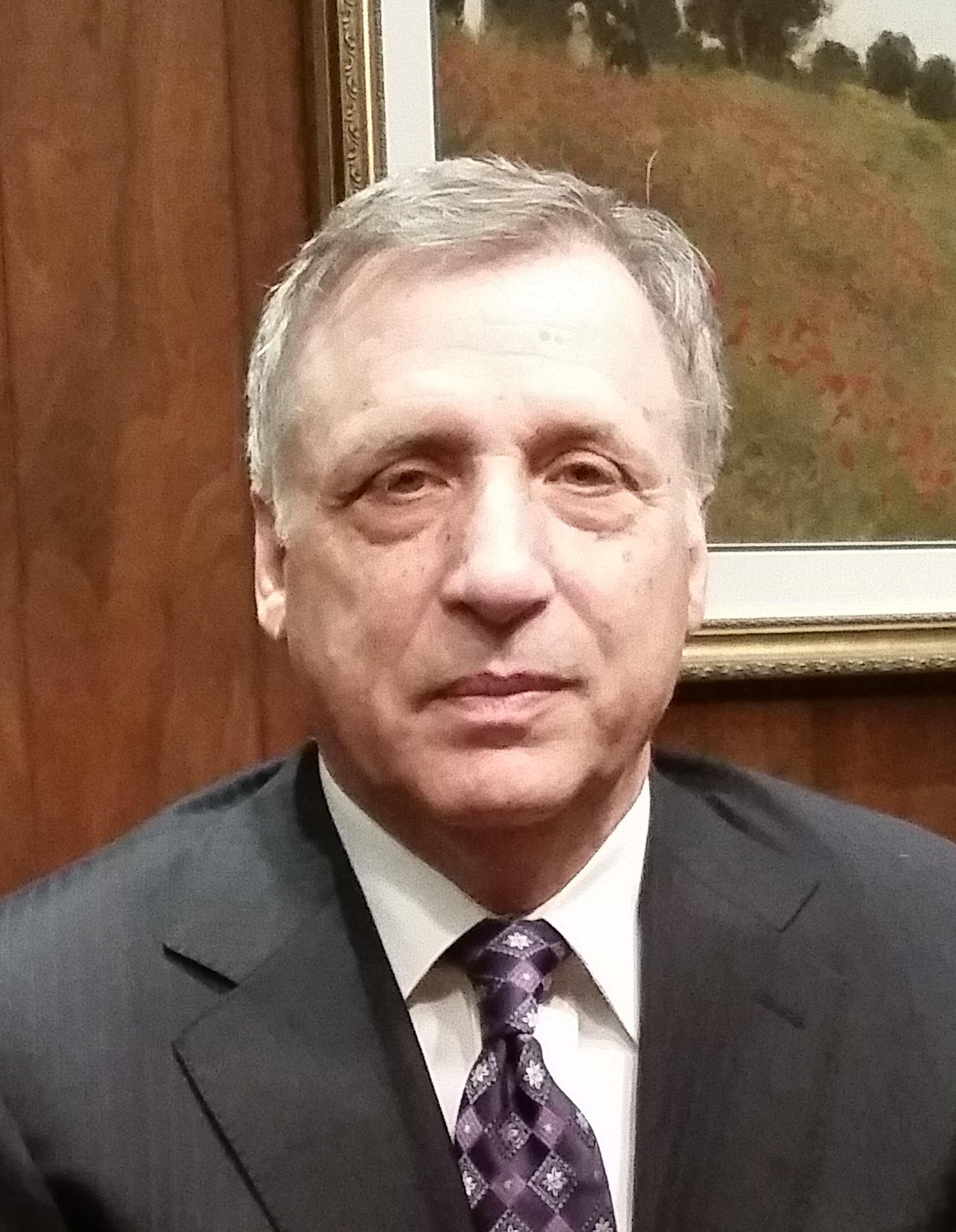
Elliot S. Schlissel is a foreclosure defense attorney.  He can be reached for consultation at 516-561-6645 or 718-350-2802.

Foreclosure Law

mortgage modification lawyerIn New York State there is a statute known as the New York Real Property Actions and Proceedings Law section 1304. This statute, in June of this year, was extended for five additional years. This section of the law requires a financial institution provide “at least 90 days before a lender, an assignee, or a mortgage loan servicer commences legal action against the borrower…such lender, assignee or mortgage loan servicer shall give notice to the borrower”.

90 Days Notice to Homeowner

The section requires the notice to the homeowner provide a warning they are on the verge of losing their home in a foreclosure lawsuit. In addition, this notice requirement gives key information concerning how long the homeowner is in default on their mortgage and how much is due and owing on their mortgage. The law requires service of this notice be given to the homeowner and they be given a reasonable opportunity to take action to save their home such as by negotiating a mortgage modification.

Prerequisite for Foreclosure Lawsuit

The service by the financial institution and/or its representatives of the notice under this section of the law is a necessary prerequisite before a foreclosure lawsuit can be initiated. In the event the financial institution fails to fully comply with this requirement, a homeowner in a foreclosure proceeding can move to have the foreclosure case dismissed.

Settlement Court Conferences

In June of this year, the settlement court conference requirements in foreclosure lawsuits was also extended for five years. New York Civil Practice Law and Rules section 3408 had established a mandatory settlement court conference requirement in all foreclosure lawsuits. Upon the service of a summons and complaint in a foreclosure lawsuit, the Supreme Court within twenty days of proof of filing of this foreclosure lawsuit, is required to schedule a mandatory foreclosure conference. The purpose of the foreclosure court conference is to have settlement discussions between the homeowner and the representatives of the financial institution. New York Civil Practice Law and Rules section 3408 requires both the homeowner and the representative of the financial institution negotiate in good faith to reach a solution to the foreclosure case by having the mortgage modified. It is the court’s responsibility to see to it both parties negotiate in good faith and there are not unreasonable delays caused by either party.

Lenders Not Compelled To Provide Mortgage Modifications

Unfortunately, even though a lender must attend a foreclosure court conference they have no obligation other than negotiate in good faith. Simply stated, they do not have to grant a mortgage modification. They can deny it for any reasonable reason. Unfortunately for homeowners, courts cannot force a lender to grant a mortgage modification under New York law.

assisting homeowners on Long IslandElliot S. Schlissel is a foreclosure defense attorney helping homeowners stay in their homes throughout the Metropolitan New York area.

Underwater Homes and the Housing Market

To watch today’s video blog, please click on the link below:

http://youtu.be/PqKONpMSmBc

Elliot S. Schlissel is a foreclosure defense lawyer.  He can be reached at 516-561-6645, 718-350-2802 or by email to schlissel.law@att.net.

Ignorance of The Law Is Not a Valid Defense in Foreclosure

Please click on the link below to view today’s video blog:

http://youtu.be/6w0CQ5Ottoo

Elliot S. Schlissel is a foreclosure defense attorney.  He can be reached by telephone at 516-561-6645 or 718-350-2802, or by email to schlissel.law@att.net.

Uniondale Marriott Hotel on Long Island in Foreclosure

foreclosure assistance for homeownersOne of Long Island’s largest hotels has had a foreclosure lawsuit initiated against it. The Long Island Marriott Hotel and Conference Center located in Uniondale, New York is in foreclosure. The hotel is owned by the New York Islanders’ owner, Charles Wang.

The financial institution that loaned the New York Islanders and Charles Wang $103,000,000 in 2007 has brought a foreclosure proceeding in the Supreme Court in Nassau County located in Mineola, New York.

It is estimated the amount owed on the mortgage loan on the Marriott Hotel is more than $125,000,000. The hotel had been valued in the year 2010 at approximately $150,000,000. In a recent appraisal, it was valued at $63.4 million.

Mr. Wang had initially purchased the hotel in 2005 from Marriott. He took this action as part of his Lighthouse plan to revitalize the area around the Nassau County Coliseum. In 2007, Scott Rechler of RXR Realty purchased the hotel. He was a partner of Wang with regard to the project. The Lighthouse Project which was proposed to revitalize the area around the hotel never came to fruition. Eventually, Wang bought the hotel back from Scott Rechler.

Wang had proposed to Nassau County they fund the renovation of the Coliseum. However, when this was submitted through a referendum, the voters in Nassau County voted it down. In 2012, the New York Islanders announced they were moving to the Barclays Center in Brooklyn and they would be permanently leaving Nassau County.

In 2013, Nassau County Executive Mangano entered into an agreement with Bruce Ratner, whom he had selected to renovate the Coliseum.

Conclusion

It is a sad state of events when the largest hotel in Nassau County is in foreclosure.

helping homeowners stay in their homesElliot Schlissel is a foreclosure attorney. He represents individuals in foreclosure lawsuits and mortgage modification applications throughout the Metropolitan New York area. He has been helping homeowners stay in their homes and fight foreclosure lawsuits for more than 45 years.

Citibank Fails to Show it Has Standing to Bring a Foreclosure Proceeding

foreclosure defense for homeownersIn a case before Justice Carolyn Wade, in the Supreme Court of Kings County, in a Foreclosure Part, CitiMortgage moved for summary judgment in a foreclosure lawsuit. The bank submitted a copy of a note which the Williamsons, the defendants in the proceeding, executed. The note was payable to Premium Capital Funding. The Williamsons acknowledged they had this debt and that they had executed a mortgage to Premium Capital Funding. Premium Capital Funding had executed an assignment of the mortgage to CitiMortgage.

The defendants had submitted arguments the plaintiffs’ affidavits which were submitted do not conform with New York State Law and therefore should be considered defective. They also claimed there was an endorsement on the allonge which was also defective.

Bank Does Not Have Standing to Bring The Foreclosure Lawsuit

CitiMortgage failed to establish it was the appropriate holder of the note. Justice Carolyn Wade rendered a decision stating that Citibank failed to submit the documentation substantiating that CitiMortgage was the appropriate successor to CitiFinancial Mortgage Company. CitiFinancial Mortgage Company was the name of the institution which Premium Capital Funding had assigned the note and mortgage to.

Note Not Physically Delivered

Justice Wade in her decision also indicated CitiMortgage failed to establish it was the actual holder of the original note and mortgage by way of physical delivery. The Judge’s decision went on to state the allonge and note were undated and had not been affixed to the mortgage. (It should be noted that an allonge is a document which modifies, changes, and provides further information with regard to a mortgage). Judge Wade in her decision also stated an out of state affidavit needs to be accompanied by a Certificate of Conformity in the appropriate admissible form before it can be accepted in a proceeding in a New York State court. The affidavits herein were not in conformity and therefore are considered defective. CitiMortgage’s application for summary judgment was therefore denied.

Conclusion

Time and time again in the numerous articles I have written, lack of standing affirmative defenses have been successful in preventing banks from successfully bringing summary judgment motions in foreclosures. It is therefore extremely important in every foreclosure lawsuit the defendants allege a lack of standing argument. Until the lawsuit is initiated and discovery takes place within the confines of the lawsuit, it is usually impossible to ascertain as to whether the appropriate financial institution is bringing the foreclosure legal action. Stated in another form, the defendant homeowners don’t know whether the right party is suing them and therefore it is necessary to allege a lack of standing affirmative defense in all cases where the plaintiff in the foreclosure lawsuit is not the original financial institution that granted the mortgage loan.assisting homeowners

Court Bars Collection of Interest and Fees on Loan For Failure of Mortgage Company to Negotiate in Good Faith

foreclosure settlement attorneysJustice Kenneth Sherman sitting in the Supreme Court Foreclosure Part in Kings County recently had a case before him involving what he felt was the bank’s failure to negotiate in good faith at the mandatory foreclosure settlement conferences. A special referee had written a report requesting all interest be tolled on a loan provided by American Home Mortgage Servicing (hereinafter referred to as “AHMS”) and they be further barred from collecting attorney’s fees related to their initiating a foreclosure legal action. Judge Sherman acknowledged receipt of the report and scheduled the matter for a hearing to decide if American Home Mortgage Servicing had engaged in bad faith negotiations at the mandatory foreclosure settlement conferences.

Statute Requires Good Faith Negotiations

Judge Sherman noted mandatory settlement conferences were required with regard to all foreclosure lawsuits brought concerning residential mortgages. In this case, the defendant was a resident of the property that was being foreclosed on. The enabling statutes creating the mandatory residential foreclosure conference parts mandated all parties negotiate in good faith at these foreclosure settlement conferences. Judge Sherman stated in his decision American Home Mortgage Servicing was represented by an attorney at the settlement conferences. However, the attorney for American Home Mortgage Servicing did not have the appropriate contractual authority to negotiate a loan modification in good faith which would resolve this foreclosure proceeding. The court specifically stated in its decision that on April 23, 2009, and on October 5, 2010, the attorneys for American Home Mortgage Servicing failed to appear by an attorney who had actual knowledge, ability and authority to negotiate a mortgage modification in a meaningful manner. Therefore the Judge ruled AMHS did not comply with New York Civil Practice Law and Rules Section 3408(c). This statute requires all parties to foreclosure court conferences negotiate in good faith. The court therefore barred AHMS from collecting any claimed interest, penalties and attorneys’ fees or costs incurred from the loan from April 23, 2009 to October 5, 2010.

Conclusion

Financial institutions are legally obligated under New York law to negotiate in good faith for the purpose of working out mortgage modifications at the mandatory foreclosure court conferences. Financial institutions who are represented by attorneys who have no real authority to work out reasonable loan modifications can be considered to have acted in bad faith, and in violation of New York State law.

foreclosure advocate for homeownersElliot Schlissel is one of the leading foreclosure defense attorneys in the Metropolitan New York area. For more than 45 years he has helped his clients fight foreclosure proceedings, obtain mortgage modifications and continue to live in their homes. He offers free consultations to all prospective clients.

Deficiency Judgments After Foreclosure

foreclosure defense lawyersDeficiency Judgments

A deficiency judgment can be taken against you when your property is sold at a foreclosure sale for less money than you owe on the mortgage. By example, if you owe on your mortgage $500,000 and your property sells in foreclosure for $300,000, the financial institution can take a deficiency judgment against you for the balance of the $200,000 that you owe. Lenders will go after deficiency judgments, generally speaking, if they feel you have an ability to pay the balance of the judgment off.

Deficiency judgments are not automatic. The attorneys for the foreclosing bank must engage in further legal action to obtain a deficiency judgment against you. In cases where the financial institution does not believe that you have the capability of paying a deficiency judgment, they generally won’t go after a deficiency judgment.

How To Avoid Deficiency Judgments?

There are a variety of ways of avoiding a deficiency judgment. One of these involves selling your home at a short sale and having the bank agree they will not go after you for any deficiency between the amount the property is sold for and how much you owe. The second route to avoiding a deficiency judgment is filing a bankruptcy.

Deficiency judgments are taken against you in New York State Courts. If you file a bankruptcy in the United States Bankruptcy Court, under federalism, the federal court that you file the bankruptcy in is a higher court than the New York State court. You can discharge any deficiency owed by you with regard to your mortgage by filing a Chapter 7 bankruptcy in a Federal Court. In addition to avoiding a deficiency judgment, you can also avoid credit card debts, personal loans and other financial obligations by filing a bankruptcy.

Foreclosure Lawyer

There are a specific set of laws dealing with deficiency judgments in foreclosure lawsuits. These statutes are complicated. Each and every foreclosure situation is a separate individual case with different facts and different circumstances. The purpose of this article is to educate you that deficiency judgments can occur. Should you have concerns about a deficiency judgment or other issues in foreclosure legal action, it is important you contact an experienced, knowledgeable foreclosure defense lawyer to represent you.assistance for homeowners

Can’t Read or Write English? Not An Excuse in a Foreclosure Proceeding

foreclosure defense lawyerJustice Thomas Whelan, sitting in the Supreme Court of Suffolk County, was recently presented with a case involving a litigant who could not read or write in the English language, and also did not understand what was involved in the service of process in starting a foreclosure lawsuit against him. One West Bank brought a foreclosure proceeding against Navaro. They took this action because Navaro did not pay her mortgage obligations. Navaro brought an application to the court seeking to dismiss One West’s lawsuit against her. One West had moved for a default judgment within a year of the case being removed from the foreclosure conference mediation part. One West was able to establish even though they had delayed for approximately a year, they had a reasonable excuse for the delay and their claim in foreclosure was valid.

Ignorance of the Law – No Excuse

Navaro brought a cross motion. She sought to remove the default. She claimed a reason for failing to submit a written answer to the summons and complaint after being served was because she could not read and write in the English language. In addition, she claimed she did not understand her responsibility to submit a written answer to the summons and complaint served upon her in the foreclosure proceeding. The court denied Navaro’s cross motion. Justice Whelan held confusion or ignorance of the law and/or the legal process did not in and of itself constitute a reasonable excuse for failure to answer the summons and complaint or appear in court regarding the case. The court granted One West’s motion to obtain a default judgment and to appoint a receiver to compute the amount owed and subsequently thereafter sell the house.

Conclusion

If you get served with a summons and complaint and you are not sure what you need to do, hire a foreclosure defense lawyer. Ignorance of the law is not an excuse in a foreclosure proceeding.helping homeowners stay in their homes

Foreclosure Defense in Valley Stream, Lynbrook, Baldwin, Malverne, Freeport, Oceanside, Long Beach, Elmont, Lakeview, West Hempstead, Hempstead, Merrick and Bellmore, New York

We represent individuals throughout the New York Metropolitan area with divorce and child custody, personal injury, car accident, wrongful death, estate administration, nursing home and medicaid issues

The information you obtain at this website is not, nor is it intended to be, legal advice. You should consult an attorney for individual advice regarding your particular legal issue. This is attorney advertising.

This is attorney advertising. This website is designed for general information purposes only. The information presented on this website shall not be construed to be legal advice. If you have a legal problem you should consult with an attorney.

Copyright © 2018 By The Law Offices of Schlissel DeCorpo. All Rights Reserved.