
Underwater Homes

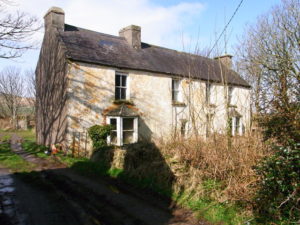
foreclosure defense lawyer in New YorkThe term “underwater homes” means the home is worth less than the amount owed on its mortgage. Another way of referring to a home that has a mortgage greater than its value is “negative equity”. Most people who are in underwater homes are unable to sell their home or refinance it. At the height of the real estate crisis in America in 2012, approximately one-third of all homes in the United States were underwater. Today, approximately 15% of homes in the United States are underwater. This represents about 12% of all homeowners in the country, or approximately 950,000 homeowners have homes which are underwater. In many instances, homeowners’ homes are so far underwater that the mortgage is twice the value of their home.

Real estate values have been going up recently. However, many homes in America are so far underwater these homes will never reach a point of having equity in them.

Lack of Funds and Bad Credit

This can result in the homeowner trying to rent a home when they don’t have sufficient funds to pay the security and one month’s rent on a rental apartment or rental home. They also will most likely have a low credit score because they are behind on their mortgage payments. Landlords do not like to rent homes to families that have bad credit.

What Should Homeowners With Underwater Homes Do?

The best recommendation would be to consult with a foreclosure defense attorney. What homeowners of underwater homes should not do is move out and abandon their homes. The fact their home is underwater and they are behind on their mortgage, does not mean they are in imminent threat of losing their home and being forced out of it. In most situations, it is in the homeowner’s best interest to continue to live in their home. Many homeowners do not understand the full implications of simply moving out of their home, abandoning it and not paying their mortgage.

Conclusion

Don’t move out of your home solely if you are behind on your mortgage payments. Try to obtain a mortgage modification. Seek out an experienced foreclosure lawyer and review your options with him or her.New York foreclosure defense lawyer

New York Banks Agree to Maintain “Zombie Properties”

foreclosure defense for homeowners on Long IslandEleven banks in the State of New York have agreed to establish a program to maintain and monitor homes in foreclosure which are vacant. They have taken this action because of pressure from the New York State Attorney General, Eric Schneiderman, and complaints by neighbors surrounding these properties which have been made to the financial institutions. These eleven banks and credit unions represent approximately three-quarters of all of the houses in foreclosure in the Metropolitan New York market.

Bank To Check To See If Homes Are Vacant

The banks have agreed they will check all properties within 60 days of the loans becoming delinquent. The checking will involve an external inspection. In addition, the financial institutions will check each property in foreclosure every 25 to 35 days thereafter. If they reach a decision that the foreclosed home has been abandoned by its owners, they will post a notice with their contact information on it. In addition, they will change one of the door locks. They will also board up broken windows and doors and remove nuisance features. In addition, they will take action with regard to safety issues. All of these properties will be placed on a list to be shared with municipalities throughout the State.

The Eleven Banks

The eleven banks which have agreed to this process are: Ridgewood Savings Bank, M&T Bank, Bethpage Federal Credit Union, Astoria Bank, Green Tree Servicing, PHH, Northstar, Ocwen, CitiMortgage, Bank of America, and Wells Fargo.

More and More Zombie Homes

Attorney General Eric Schneiderman who had previously submitted legislation to the State Legislature, noted that zombie foreclosures have increased more than 50% recently. He claims there are approximately 17,000 zombie homes being foreclosed on. Zombie homes place burdens on the communities in which they are located. These burdens deal with maintenance costs, property tax issues, and vandalism of these homes.

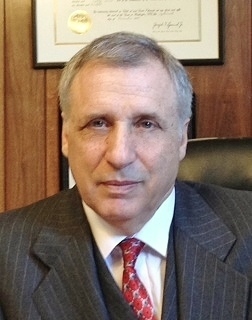
New York foreclosure defense lawyerElliot S. Schlissel is a foreclosure lawyer representing homeowners throughout the Metropolitan New York area. His motto is, “I will keep you in your home.”

Foreclosure Lawsuits Time Barred by the Statute of Limitations

foreclosure attorneys for homeownerThe statute of limitations for bringing a foreclosure lawsuit in the State of New York is six years from the time the mortgage is accelerated by the bank (called due) or from the initiation of the foreclosure legal action, whichever occurs first.

The real estate crisis in America started many years ago. Foreclosure defense attorneys are now coming across cases initiated by banks where the statute of limitations defense bars the banks from moving forward with their foreclosure case. It should be noted the statute of limitations is a defense to the foreclosure lawsuit. However, it does not remove the bank’s lien from the property. What you end up with in a case where the statute of limitations defense is effectively plead, a bank is unable to collect on their mortgage but their mortgage still remains a lien on the property preventing it from being sold without it being repaid.

Acceleration of the Mortgage

A mortgage requires that a homeowner make payments over a period of time. The usual length of mortgages are 15 or 30 years. During the period the homeowner is making payments, all they owe each month is the amount of their payment. The acceleration of the loan involves the bank usually sending a letter to the homeowner saying it is calling the entire balance of the mortgage due and owing. This means, if the homeowner sends a payment in the correct monthly amount to the bank they will usually reject it claiming they want the entire mortgage paid in a lump sum payment. It should be noted however, if the homeowner is several months behind and pays all the arrears, the bank will usually reinstate the mortgage.

After the bank sends the acceleration letter or initiates a foreclosure lawsuit, if the homeowner takes action to acknowledge the debt, it can start the statute of limitations running all over again.

Conclusion

If there is any possibility the bank can be barred by moving forward with a foreclosure, it is extremely important the statute of limitations be plead as an affirmative defense in the homeowners’ Answer to the Summons and Complaint.New York foreclosure defense lawyer

New Precedent Regarding the Lack of Standing Defense in Foreclosure Lawsuits

foreclosure defense for Long IslandersOne of the most potent defenses a homeowner has in a foreclosure lawsuit is based on the concept the financial institution bringing the lawsuit is not the rightful owner of the note and mortgage at the time the lawsuit was commenced. The legal terminology regarding this situation refers to the fact the financial institution lacked standing to bring the lawsuit. When this affirmative defense is alleged by the attorney for the homeowner, the lender now has the burden of proving it actually was the rightful owner of the note and mortgage at the time the lawsuit was initiated. In other words, the financial institution must show it was the appropriate institution to bring the foreclosure lawsuit.

Pleading Lack of Standing As An Affirmative Defense

The homeowner in a foreclosure lawsuit, up until now, needed to plead the affirmative defense of lack of standing in their Answer. If they did not specifically plead the lack of standing affirmative defense, courts have traditionally taken the position the homeowners have waived their right to allege this defense. This means the financial institution did not have to meet the burden of establishing it was the proper party at the time the lawsuit was initiated to bring the foreclosure proceedings. New York Civil Practice Law and Rules section 3018(b) which is entitled “Responsive Pleadings” states “[a] party shall plead all matters which if not plead would be likely to take the adverse party by surprise or would raise issues of fact not appearing on the face of a prior pleading.” This section of the law requires defendants in all lawsuits to plead whatever defenses they feel are appropriate. If defendants in civil lawsuits do not plead their defenses, they simply waive them.

Appeals Court Decision May Have Changed the Law

Recently the Appellate Division of the Second Department, an appeals court, has rendered a decision which may change the law with regard to a homeowner raising the issue of standing in a mortgage foreclosure lawsuit as a defense. In the case of U.S. National Association v. Faruque, 120 A.D.3d 575, 991 N.Y.S.2d 630 (2d Dept. 2014) they placed the issue of standing before a court even though it was not alleged in the homeowner’s pleading.

In the Faruque case the appeals court departed from prior legal precedents. In the Faruque case the bank started a foreclosure lawsuit. The homeowner submitted an Answer which stated they “specifically denied that the note was delivered to the plaintiff or that an assignment” from the originating lender to the plaintiff “had been recorded.” Although this allegation contained elements of the lack of standing defense, the homeowners did not plead the bank had lacked standing to bring the lawsuit. In this case the court held the homeowner “was not required to plead lack of standing as an affirmative defense.” The court went on to state “in order for the plaintiff to be entitled to relief, it had to prove its standing.”

The court in the Faruque case rendered a decision whereby the financial institution did not meet its burden under the circumstances of the case because it “did not establish that the note was physically delivered to it prior to the commencement of the action.”

Best Practice

Whether the Faruque case will change the case law in the State of New York to assume a lack of standing legal defense is questionable. The best way for a homeowner to submit the most potent Answer in a foreclosure lawsuit is to plead the affirmative defense of lack of standing. This creates a problem for the bank in the case. The bank then must prove they actually were the legitimate owner of the note and mortgage at the time of initiation of the foreclosure lawsuit.New York foreclosure defense attorney

What Happens When You Fall Behind On Your Mortgage?

To watch today’s video blog, please click on the link below:

http://youtu.be/jZT2uG0JdTI

Elliot Schlissel is a foreclosure defense lawyer helping homeowners stay in their homes throughout the Metropolitan New York area.  He and his associates can be reached for consultation at 516-561-6645 or 718-350-2802 or send an email to schlissel.law@att.net.

Foreclosure Lawsuit Dismissed a Second Time!

foreclosure defense lawyer for homeownersThe Federal National Mortgage Association (FNMA) brought an application in a foreclosure case for summary judgment in the year 2010. The summary judgment motion was denied because there were defects in the foreclosure lawsuit. FNMA in 2014 brought a second foreclosure lawsuit. In this lawsuit they made a similar motion for summary judgment seeking the same relief they had sought in their prior motion. The court denied the motion again.
Justice Alice Schlesinger, sitting in a Foreclosure Supreme Court Part in New York County, dismissed the lawsuit a second time. Her decision stated there were numerous deficiencies in the papers submitted by the attorneys for FNMA. FNMA’s attorneys claimed none of the defects in their papers were significant. Justice Schlesinger found they had four years to correct the problems which existed in the original lawsuit and they still hadn’t dealt with these issues. Justice Schlesinger was “troubled” by the ambiguous role the Mortgage Electronic Registration Systems, Inc. (“MERS”) had in the assignment process with regard to this mortgage. She also noted in her decision there were a number of scriveners errors in the Complaint submitted by the bank. Her decision stated these errors dealt with significant issues. Her decision stated there was an issue concerning who had possession of the note at the time the foreclosure lawsuit was initiated. Justice Schlesinger found that FNMA sought to amend their Complaint five years after initiating the original proceeding. The court declined FNMA’s leave to amend and dismissed the foreclosure lawsuit.

Conclusion

Experienced foreclosure defense lawyers who carefully review the facts of a case can come up with winning strategies to have these cases dismissed.New York foreclosure defense attorney

Proposed Changes To The Foreclosure Process In New York State

foreclosure defense lawyerBenjamin Lawsky is the Superintendent of Financial Services in New York State. He feels the delays in foreclosure settlement conferences are the main reason why New York’s foreclosure system is “broken and badly in need of change.” A study by the Department of Financial Services found that it takes approximately 9 months from the time a foreclosure lawsuit is initiated to when the foreclosure settlement conference procedures are completed. With regard to this approximate 9 month period, he stated “unfortunately…the mandatory settlement conferences have not been the timely and efficient forum for foreclosure resolution that was once envisioned.” He went on further to state “for borrowers that are already at the end of their rope, any interruption – let alone nine months of start – and – stop delays – can be the death knell to any chance of saving their home.”

New York Civil Practice Law and Rules section 3408(a)(1) requires both the homeowner and the financial institution negotiate in good faith. Lawsky finds that there is a lack of a clear definition of what is “good faith.”

Bank’s Representatives Having No Authority To Settle

In many situations, courts are confronted by bank attorneys appearing at foreclosure court conferences who do not have authority to enter into settlements or mortgage modifications with homeowners. In these situations the courts often simply keep adjourning the case until someone shows up who has greater authority to enter into mortgage modifications on behalf of the banks.

Lawsky believes the law creating foreclosure court conferences is flawed. He stated “the unintended consequences of this legal flaw are unproductive conference sessions, useless delays, waste of court resources, and most importantly, needless foreclosures.” Lawsky wants there to be new legislation which will define what negotiating in good faith means to both homeowners and financial institutions. He also feels courts should have greater authority to impose sanctions on the parties to these proceedings who do not negotiate in good faith.

Zombie Homes

Lawsky feels there is a special problem in the courts with the processing of foreclosures on “zombie homes”. Zombie homes are homes which have been abandoned by the homeowners. These homes create a blight in communities. They are vacant. Sometimes they are vandalized. Vandals remove the pipes from these homes. Lawsky wants the foreclosure process on vacant homes to be streamlined to allow them to be expedited. Lawsky has specifically suggested a new non-judicial process for either uncontested foreclosures or foreclosures on vacant homes be established.

Courts Flooded With Foreclosures

Approximately one-third of all the cases brought before the Supreme Court Civil Parts throughout the State of New York are now foreclosure cases.

Conclusion

The foreclosure process should be set up in a manner to help homeowners who have the wherewithal to keep their homes and obtain mortgage modifications.foreclosure defense attorney in New York

Bank Punished For Negotiating In Bad Faith: Court Limits Their Interest Rate to 2%

homeowner's attorneyJustice Debra Silber sitting in a Supreme Court foreclosure court in Kings County, New York recently had a case involving bad faith in negotiations by Deutsche Bank. In this case the defendant moved for, and was granted, an Order which confirmed a report of a special referee made at the foreclosure conference which found that Deutsche Bank had acted in bad faith in violation of New York Civil Practice Law and Rules section 3408(f).

Bad Faith by Bank

Justice Silber, in her decision, found the actions and inactions by Deutsche Bank clearly indicated an absence of good faith as was contemplated by the New York Statute. During a period of ten months the bank delayed the underwriting of husband’s mortgage modification application. The referee found Deutsche Bank’s failure to act during a 10 month period was a dilatory tactic. Justice Silber concluded the husband had sought to obtain a mortgage modification for a period of 6 months. He had made 18 appearances at foreclosure mediation conferences. In determining the appropriate sanction to punish Deutsche Bank for its failure to work with the defendant in this case regarding his mortgage modification application, the court decided to reduce the interest rate to 2% on the balance of the mortgage which accrued after August 1, 2010. This was the date Justice Silber deemed the bank should have approved the husband’s HAMP mortgage application. In addition, the bank and its loan servicer organization were barred from collecting attorney’s fees with regard to the foreclosure lawsuit which accrued after August 1, 2010.

Conclusion

If a bank fails to negotiate in good faith mortgage modifications at foreclosure court mediation conferences, there are remedies available to the homeowner.

foreclosure defense lawyersElliot S. Schlissel is a foreclosure attorney who litigates foreclosure cases. He seeks to keep homeowners in their homes.

Foreclosure Dismissed, Bank Fails To Show It Was The Holder Of The Note

mortgage modification and bankruptcy attorneys on long islandJustice Francois Rivera, sitting in the Real Property Part in Supreme Court, Kings County, recently dismissed a foreclosure case brought by Loancare against Mr. Coleman.

The foreclosure lawsuit claimed Coleman had failed to make payments on the note and mortgage. It further claimed he took no action to cure the default. Coleman submitted an Answer which contained seventeen affirmative defenses. One of the affirmative defenses was that the bank lacked standing to bring this lawsuit.

Justice Rivera noted in his decision, before commencing a foreclosure lawsuit a plaintiff must have a legal or an equitable interest in the mortgage.

Transfer of the Mortgage

Coleman initially had given a mortgage to Lend America. Lend America executed and delivered the mortgage and note to Mortgage Electronic Registration Systems, Inc., (hereinafter referred to as “MERS”) as Lend America’s nominee.

When Loancare brought the lawsuit, they did not claim or prove that Lend America delivered the note to MERS. Therefore MERS was never the holder of the note. Since they didn’t have the note to begin with, they couldn’t assign it! Since MERS couldn’t assign it to Loancare, Loancare never became the holder of the note pursuant to a written assignment prior to initiating the foreclosure lawsuit. In addition, Justice Rivera pointed out in his decision Loancare did not allege the facts and circumstances as to who and which entity physically delivered the note.

Justice Rivera therefore decided Loancare did not establish a prima facie case that it was the holder and/or assignee of the note and mortgage. Justice Rivera therefore dismissed the lawsuit based on the fact the plaintiff had no standing to bring this foreclosure proceeding.

Conclusion

Submitting an appropriate Answer with numerous affirmative defenses and especially alleging lack of standing, is very important when responding to a foreclosure lawsuit. If Coleman had failed to allege lack of standing in his Answer, he would have waived this affirmative defense and Loancare would have been successful in obtaining a judgment of foreclosure and selling Coleman’s home.

foreclosure defense attorneysElliot S. Schlissel is a foreclosure attorney who helps homeowners fight foreclosure lawsuits and stay in their home.

Deeds In Lieu of Foreclosure: An Imperfect Remedy

foreclosure attorney for homeownersDeeds in lieu of foreclosure are used by many attorneys and homeowners to short circuit the foreclosure process. I rarely suggest to a client to execute a deed in lieu of foreclosure. What a deed in lieu of foreclosure accomplishes is it allows the bank to take the home back quickly. It often leaves the homeowner with no credit, no assets, and no place to live! The reason given for executing a deed in lieu of foreclosure is it will eliminate a deficiency judgment.

Deficiency Judgment

Here is an example of what a deficiency judgment is: let’s assume there is a home worth $300,000, and a mortgage on the home in amount of $400,000. The house sells for $250,000 to a speculator at a foreclosure sale. There is a $150,000 deficiency which is still owed by the borrower. The deed in lieu of foreclosure prevents the bank from getting a deficiency judgment in the amount of $150,000.

This is the selling point used by many attorneys. It is usually a false selling point. Banks, generally speaking, do not pursue deficiency judgments in the Metropolitan New York area if the homeowner has no assets. Even if the bank desires to move forward for a deficiency judgment, the homeowner can simply file a Chapter 7 bankruptcy and eliminate the debt.

Fighting the Foreclosure Proceeding

When the homeowner decides to hire an attorney and fight the foreclosure proceeding, both the homeowner and his or her family will probably spend the next three or four years living in their home and not facing the problems of finding a place to live without credit and financial resources.

Deeds in Lieu of Foreclosure Won’t Always Work

A deed in lieu of foreclosure is usually only accepted by financial institutions where there is no equity in the property, and there are no liens or other mortgages attached to the property. In these types of cases, most banks will agree to a deed in lieu of foreclosure transaction.

If there is a second mortgage, monetary judgments on the property, mechanics’ liens, or other types of liens on the property, the bank will generally not agree to a deed in lieu of foreclosure transaction. In these situations they want the foreclosure sale to go forward. At the foreclosure sale, the second mortgage, the mechanics’ liens, and the judgments will be eliminated. The bank will obtain clear title to the property and not have to deal with the nuisances involved with other title impediments. In situations where there are second mortgages, mechanics’ liens, or other judgments or liens on the property, most banks will simply want to continue with the foreclosure process to obtain clear title.

New York foreclosure defense attorney IslandElliot Schlissel is a foreclosure defense lawyer helping homeowners stay in their homes throughout the Metropolitan New York area.

Foreclosure Defense in Valley Stream, Lynbrook, Baldwin, Malverne, Freeport, Oceanside, Long Beach, Elmont, Lakeview, West Hempstead, Hempstead, Merrick and Bellmore, New York

We represent individuals throughout the New York Metropolitan area with divorce and child custody, personal injury, car accident, wrongful death, estate administration, nursing home and medicaid issues

The information you obtain at this website is not, nor is it intended to be, legal advice. You should consult an attorney for individual advice regarding your particular legal issue. This is attorney advertising.

This is attorney advertising. This website is designed for general information purposes only. The information presented on this website shall not be construed to be legal advice. If you have a legal problem you should consult with an attorney.

Copyright © 2018 By The Law Offices of Schlissel DeCorpo. All Rights Reserved.