

The Dead Borrower Issue

Dead Borrower Issue

In a case pending in Supreme court in Westchester county, justice William Glacomo sitting in a foreclosure part dealt with an unusual issue.  US Bank had brought a foreclosure proceeding. In the foreclosure case they had moved for summary judgement (this is a motion requesting a foreclosure order without the need for trial).  They claimed Eisman, who is now deceased did not make his mortgage payments.  An estate was formed for the decedent Eisman. The executor of the estate argued the estate didn’t receive the appropriate notice the home was going into foreclosure under the Real Property Actions and Proceedings Law section 1304.  This section requires a financial institution to give 90 days notice to a homeowner prior to initiating the foreclosure lawsuit.

90 Day Notice Required

Justice William Giacomo found the 90 day notice required under Real Property Actions and Proceedings Law section 1304, only applied to living persons not to estates.  Because Eisman was dead he did not have to be served at the cemetery and the executor of the estate also did not have to be served.

Judge Giacomo’s rational was since the borrower was dead, there was no longer a notice requirement which needed to be given to this borrower. He therefore held that Real Property Actions and Proceedings Law section 1304 no longer applied.

The Estate Issue

When someone dies an estate is created, the executor if there is a will and the administrator, if there is no will, stands, in the shoes of the decedent.  If an obligation was owed to decedent to provide 90 days notice prior to initiating a foreclosure lawsuit, why shouldn’t this also apply to the estate of the decedent?  I believe this issue should be taken up on appeal.

Elliot S Schlissel and his associates are foreclosure lawyers who defend homeowners in the Metropolitan New York area.

NY Foreclosure Defense Attorney Elliot Schlissel

Zombie Home Legislation

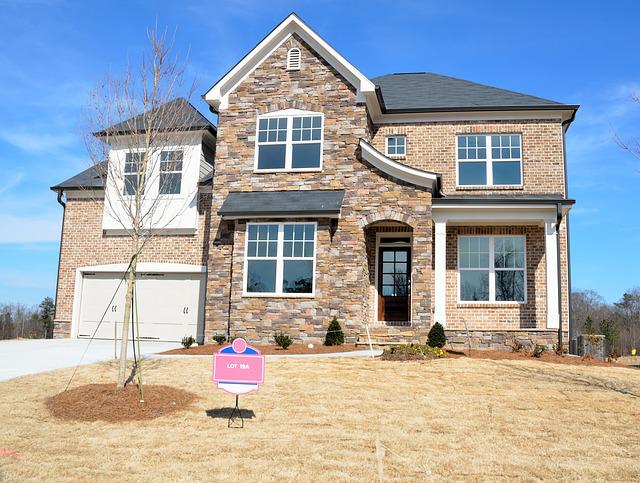
A brick home

In late June 2016 the legislature in the state of New York passed a bill that created a state wide zombie house registry.  This statute created a toll free number for homeowners to report eyesores related to abandoned homes in foreclosure. The statute imposed fines on banks that fail to maintain homes which were abandoned by their homeowners during the foreclosure process.

Speeding up Foreclosures in New York Courts

This new statute in addition to dealing with the abandoned “Zombie” home issue is also designed to speed up the foreclosure process in New York state courts.

Zombie Homes on Long Island

Many communities on Long Island have had problems in recent years dealing with thousands of homes which were abandoned by their owners as their homes went into foreclosure.  This problem also exists in parts of the city of New York and cities in Upstate New York.

Misunderstanding By Homeowners

Homeowners sometimes misunderstand how the foreclosure process works. The service of a foreclosure summons and complaint upon the homeowner by the bank holding the mortgage, on the home is the start of a process whereby the bank takes back the ownership of the home.  Homeowners sometimes misunderstand how the legal process of foreclosure progresses from the initiation of the lawsuit to the bank taking title to the home when it is sold on the courthouse steps. Even when the bank takes title to the home this doesn’t give them the right to show up at the house and force the homeowner from the home.

Attorney Elliot S. Schlissel and his associates are foreclosure attorneys representing homeowners in foreclosure cases throughout the metropolitan New York area.

Zombie Home Legislature: Part Two

Under New York State law, the bank or the individuals or the party that purchased the home at the foreclosure sale must bring a landlord tenant proceeding if they seek to evict the homeowners. In many cases the bank and or the people who purchased the property at the foreclosure sale are prepared to negotiate and discuss an amicable resolution of the issue of the homeowners vacating the home.

This new statute gives municipalities and the state dept of financial services the power to take legal action against banks and mortgage serving companies that do not maintain vacant homes.  The banks and or mortgage servicer can be fined as much as $500.00 dollars per day for each property they do not properly maintain. State senator Jeffrey Klein stated concerning this new legislation “finally, banks will be responsible to maintain zombie properties that have caused property devaluation across our state.”

Banks Failure During Foreclosure Process

Banks who are found to not be acting appropriately or exercising good faith during the foreclosure court proceedings can be fined up to $25,000.00 under this new statute. This new statute also can cause banks to be fined up to $25,000.00 for failure to produce required documents, during foreclosure mediation court conferences.

NY Foreclosure Defense Attorney Elliot Schlissel

Eliot S Schlissel is a foreclosure defense lawyer representing homeowners throughout the New York Metropolitan area with regard to obtaining mortgage modifications and defending foreclosure lawsuits. Elliot and his staff of attorneys take legal action to keep homeowners and their families in their homes by fighting foreclosure lawsuits and working with financial institutions to obtain mortgage modifications for the firm’s clients.

Foreclosure Settlement Conferences in New York: Part One

A home with an american flag hanging on the side of it

Foreclosure lawsuits are initiated by the attorneys for the financial institutions by filing a copy of the sun’s complaint in the County which the home of being foreclosed on is located. Therefore, the attorneys representing the substitution hire a processor server, a copy of the summons and think. When homeowners receive the summons and complaint, often they have no idea what to do. However, shortly thereafter, he was homeowners seek this adequate settlement conference at the scheduled. Homeowners assume this court settlement conferences are dealing with the lawsuit initiated against them by the financial institution. Unfortunately, this is not true. While most homeowners default in responding to the summons and complaint, a significant amount of homeowners in the metropolitan area actually attended the foreclosure settlement conferences.

These homeowners participate in the settlement conferences, prepare mortgage modification documents, submit the mortgage modification documents and either receive a mortgage modification or are denied. If they receive a mortgage modification, the foreclosure lawsuit does not move forward. If they either don’t submit mortgage modification documents to the financial institution and\or the mortgage modification application is denied, the case is removed from the foreclosure conference part and put into a trial part. Unfortunately, for the homeowner, if they only participated in the mortgage modification conference and did not file an answer to the summons and complaint with the banks attorney and the court, they defaulted in the lawsuit. Default means an admission of the allegations contained in the foreclosure pleadings submitted by the bank’s lawyers. Thereafter, the attorneys for the bank will usually bring a motion for summary judgment, obtain judgment against the homeowner and have a referee appointed to sell the home.

NY Foreclosure Defense Attorney Elliot Schlissel

Solution to The Problem

When served with a summons think the question attorney to submit a written answer to the summons served them institution.

FORECLOSURE ACTION DISMISSED: BANK DID NOT HAVE A PERSONAL JURISDICTION OVER THE HOMEOWNER

A House

In a case pending in Kings County, New York before Justice Robyn Garcin, a defendant named Acevedo sought to restore a prior motion to dismiss the foreclosure lawsuit brought against him by Deutsche Bank. The bank had an affidavit from their process server that claimed that Acevedo was served at 272 Etna Street. The service of the Summons and Complaint was made at that address, the bank claimed, to person of suitable age and discretion and thereafter a copy of it was mailed to Acevedo at that address.

ACEVEDO MOVED IN 2009

Acevedo, in his motion papers, documented that he had not resided at 272 Etna Street since 2009. He therefore argued that the service of the Summon ad Complaint was not properly effectuated at his him or the place he resided. The attorneys for the bank claimed Acevedo waived the defense of of lack of personal jurisdiction by failing to commence a motion to dismiss the lawsuit within 60 days of service of the original date of service of his answer to the Summons and Complaint. However, Justice Robyn Garcin found that due to the circumstances involved in this case Acevedo should not be held to the 60 day limitation with regard to making a motion to dismiss a Summons and Complaint based on improper service. Justice Garcin, in her opinion stated that: “the initiation of the lawsuit by serving Acevedo at the wrong address was defective and therefore the foreclosure lawsuit was dismissed.

Elliot S. Schlissel, Esq. is a foreclosure defense attorney representing homeowners throughout the metropolitan New York area for more than 45 years.

Elliot-Schlissel

VIDEO: The Statute of Limitations Defense

Video: Mortgage Modification, Stay In Your Home!

Elliot discusses mortgage modification and how to stay in your home if you are facing foreclosure.

Video: Underwater Homes & Foreclosure

In this video Elliot discusses the subject of underwater homes and foreclosure.

What You Shouldn’t Do When Facing Foreclosure

There are many published articles on the topic of what you should do if your home is going into foreclosure. This article is not going to discuss these issues. The purpose of this article is to tell you exactly what you shouldn’t do when facing the possibility of foreclosure.

The first thing you shouldn’t do is to sign over the deed to your home to someone else. Some despicable individuals and companies seek to take advantage of families in financial trouble by promising to get them their mortgages current. They have this bait and switch plan where they request you turn your home over to them. They then claim they will get a mortgage modification because their credit or circumstances is better than yours and thereafter they will sign the mortgage and deed back over to the beleaguered family. This is a bait and switch type of fraud designed to cause families to lose their homes. What these fraudulent companies do is refinance the property, take the equity out of the home, and thereafter let the foreclosure lawsuit proceed against the property. They then walk away from the situation leaving the homeowner in a worse situation than they were to begin with. Now there is no equity in their home, the homeowner no longer owns their home, and their options in dealing with the potential foreclosure are usually reduced or eliminated.

Do Not Ignore a Legal Document From the Bank or Their Lawyers

Facing a foreclosure lawsuit due to negative financial or personal circumstances can be difficult. It is easier to run from your life’s problems. However, ignoring the fact that your home is going into foreclosure is not a solution to your problem. This will exacerbate the problem by limiting the possibility of you and your family staying in your home. If you are contacted by your bank, mortgage company, or servicing company with requests, you should honor those requests and try to cooperate with them. If they are threatening you, you should hire a foreclosure attorney to advise you on how to deal with the situation. Competent, experienced foreclosure defense lawyers have developed a variety of techniques to help beleaguered homeowners stay in their homes.

Be Leery of Mortgage Modification Companies That Promise Stellar Results

There are many mortgage modification companies marketing their services to the public in the United States. Many of these companies more or less claim if you are breathing we will get you a mortgage modification. These companies are taking advantage of families in trouble. They present success rates which are usually unrealistic. Mortgage modification companies are no more successful in obtaining mortgage modifications for their customers than homeowners who submit mortgage modifications on their own. Many of these modification companies are hustlers taking advantage of people by asking for large up front fees based on false promises. Be sure to check with your local bar association, or the Better Business Bureau before hiring an attorney or mortgage modification company that claims they will get you a mortgage modification or stop your foreclosure from moving forward.

Defendant in Foreclosure Lawsuit Found Not Liable to Pay the Mortgage Debt

Law books on tableIn this case, the plaintiff, Wells Fargo Bank NA, brought a residential foreclosure lawsuit against the defendant Seibold. During the course of the foreclosure proceedings, both parties brought motions before the court. Wells Fargo sought summary judgment authorizing them to sell the property and holding defendant Seibold liable. Seibold brought a motion requesting the case be dismissed and he be held not liable.

Judge Finds Problems With Mortgage Industry Practices

Justice Philip Straniere heard the case in a Supreme Court Part located in Richmond County, New York. Judge Straniere had problems with a variety of practices of the mortgage industry, and specifically with Wells Fargo with regards to defendant Seibold in this case. He questioned the circumstances under which Seibold, who did not sign the note, was added to the mortgage. He didn’t understand why the estate in this case was not made a party to the lawsuit. He questioned certain allegations with regard to the ownership of the property which was excluded from the pleadings of the plaintiff in their Complaint. In addition he wanted to know why the original transaction was scheduled as a first and second mortgage when really it was simply a single mortgage. He found that the setting up this transaction as two mortgages may have been the cause of the default on this obligation. He took the position that the lenders were engaged in deceptive practices in violation of New York’s General Business Law Section 349.

Justice Straniere concluded the defendant Seibold was not liable for the payment of this mortgage. He found he did not sign the note. He also found that Seibold had raised an issue of fact with regard to questions concerning an escrow shortage.

Conclusion

I find this to be a very troubling case. Here is a situation where a judge has basically accused Wells Fargo of a variety of improprieties. Unfortunately, my office has seen numerous cases where banks have been involved in improprieties. When we bring these improprieties to the attention of judges, more and more homeowners are relieved of their financial obligations by the judges leading these cases.

Elliot S. Schlissel is a foreclosure attorneys representing homeowners throughout the New York Metropolitain area.

Homeowner Defaults in Foreclosure Lawsuit:

gavel

CitiMortgage Forced to Vacate Default and Accept Untimely Answer

Mr. Pollard had a mortgage with CitiMortgage. He had failed to make payments and CitiMortgage initiated a foreclosure proceeding. The case moved forward without Pollard participating in the case. Eventually, CitiMortgage moved for an Order of Reference. Mr. Pollard opposed the motion and brought a cross application to vacate the default in answering and to force CitiMortgage to accept his late Answer.

No Personal Service of Foreclosure Lawsuit Papers

Mr. Pollard took the position he did not intend to default in the lawsuit and waive his claims and defenses against CitiMortgage. He indicated in his moving papers he travels frequently related to his business situation. On the day the lawsuit was initiated, his wife Odessa was home in the house. However, she claimed she was not personally served with the foreclosure lawsuit Summons and Complaint.

Judge Agrees With Homeowner

Justice Janice Taylor sitting in the Supreme Court Foreclosure Part in Queens County was assigned to hear and determine the case. She found Mr. Pollard adequately demonstrated he did not receive actual notice of the start of the foreclosure proceeding by CitiMortgage. Justice Taylor took into consideration Mr. Pollard, although he was in default in responding to the Summons and Complaint, the period of default was only a relatively short period of time. She found in her decision that Mr. Pollard lacked any intent to abandon his claims and defenses to the foreclosure lawsuit brought by CitiMortgage. She also found that due to the short period of time that had gone by since Mr. Pollard had defaulted in answering the Summons and Complaint that CitiMortgage was not prejudiced by this delay. She also found the documents submitted by Pollard and his attorney demonstrated that he had a meritorious defense to the foreclosure based on the issue of lack of standing and the failure of CitiMortgage to comply with the Real Property Actions and Proceedings Law Sections 1304 and 1306 with regard to providing him with ninety days notice before bringing the foreclosure lawsuit. Pollard’s request to vacate the default in answering the Summons and Complaint and compelling CitiMortgage to accept the service and filing of an untimely Answer was granted.

Conclusion

Even if you ignore a foreclosure lawsuit, if the proper applications are presented to the court, the case can be reopened and brought back procedurally to the point in time when it was actually initiated.

Elliot S. Schlissel is a foreclosure defense lawyer representing homeowner throughout the Metropolitan New York area. He has represented hundreds of homeowners in foreclosure cases and helped numerous homeowners obtain mortgage modifications.

Foreclosure Defense in Valley Stream, Lynbrook, Baldwin, Malverne, Freeport, Oceanside, Long Beach, Elmont, Lakeview, West Hempstead, Hempstead, Merrick and Bellmore, New York

We represent individuals throughout the New York Metropolitan area with divorce and child custody, personal injury, car accident, wrongful death, estate administration, nursing home and medicaid issues

The information you obtain at this website is not, nor is it intended to be, legal advice. You should consult an attorney for individual advice regarding your particular legal issue. This is attorney advertising.

This is attorney advertising. This website is designed for general information purposes only. The information presented on this website shall not be construed to be legal advice. If you have a legal problem you should consult with an attorney.

Copyright © 2018 By The Law Offices of Schlissel DeCorpo. All Rights Reserved.