
To a joyful present and a well-remembered past. Best wishes for happy holidays and a magnificent new year.


To a joyful present and a well-remembered past. Best wishes for happy holidays and a magnificent new year.
 A homeowner can make a motion to dismiss the bank’s lawsuit in a foreclosure case based on a jurisdictional basis or the fact that there are meritorious defenses to the complaint submitted by the bank. Examples of a basis for dismissing the lawsuit brought by the financial institution are: lack of standing, failure to obtain proper service on the defendants, violation of the statute of limitations, fraud in the inducement and various other defenses and affirmative defenses available to homeowners.
Banks and financial institutions are worth billions of dollars. Homeowners, who work for a living, have limited financial assets to engage in sophisticated litigation with financial institutions. The financial institutions bringing the foreclosure lawsuit are spending money belonging to their shareholders. On the other side of the situation, the homeowner is putting his hands in his own pocket to fight the foreclosure lawsuit. It is therefore important for the attorneys for the homeowners to maximize the impact of their legal action and litigate the matter in the most cost efficient means. It should be pointed out, in my experience, bank’s are often prepared to spend more than $25,000.00 bringing motions to obtain a foreclosure judgment against homeowners to cause their home to be sold. This puts a heavy financial burden on the homeowner to defend against these motions.
There is a process during the litigation of a foreclosure lawsuit where each party can make motions asking the Judge prior to a trial to grant them relief. The bank asks for relief in a motion for summary judgment and/or judgment of foreclosure and sale and the homeowner usually brings a motion to dismiss the litigation. If you are facing foreclosure, the best way to deal with all of the issues and problems is to hire an experienced dedicated foreclosure attorney.
 Elliot S. Schlisel is the managing partner of Schlissel DeCorpo LLP. He has been representing homeowners in foreclosure lawsuits, helping them obtain mortgage modifications and dealing with numerous other problems related to improper conduct of financial institutions for more than 45 years. He can be reached for a free consultation at 800-344-6431 or e-mailed at Elliot@sdnylaw.com.
 There are various strategies that can be utilized by attorneys for homeowners in foreclosure lawsuits. During the course of the foreclosure lawsuit after the summons and complaint are served on the homeowner and an answer is interposed when the case is released from the mandatory foreclosure conference part the parties can engage in discovery. The discovery portion of the case is a period of time where the parties to the litigation can obtain documents and other types of information from the other side. In most foreclosure lawsuits all of the documents and relevant information regarding the foreclosure case are in the hands of the lender. The homeowner can make demands on the financial institution to provide information and documents during the discovery process to develop defenses to the foreclosure lawsuit. The attorneys for the homeowner can accomplish this by serving extensive discovery demands on the financial institution’s attorneys. The purpose of these extensive demands is to help develop the homeowner’s defense to the foreclosure lawsuit.
Unfortunately, most financial institution’s attorneys do not usually comply with the discovery demands. Sometimes they completely disregard the discovery demands and bring a summary judgment motion. They take this action because they will have difficulty into fully complying with the detailed discovery demands made by a qualified foreclosure defense lawyer. The failure of the financial institution to comply with the discovery demands can amount to another defense to the foreclosure lawsuit.
If the financial institution does not respond to discovery demands counsel for the defendant can make a motion to compel discovery. In most situations the financial institution’s attorneys do not completely ignore the discovery demands. Instead they comply with some of the requests and don’t reply to other aspects of the request. They make numerous detailed objections to the discovery demands. These objections basically are designed to avoid their having to respond to these discovery demands. In these case the attorneys for the homeowner can bring a motion but in this motion the homeowner’s attorney must show that the financial institution’s attorneys objections to the discovery demand lack merit.
The financial institution can make discovery demands upon the homeowner’s attorney too. However, the purpose of these discovery demands is usually not to obtain relevant information. The bank usually has all the information they need to proceed with their foreclosure case. The purpose of the discovery demand is to create difficult burden on the homeowner’s attorneys. The discovery demands can be very time consuming to respond to. While the financial institution’s attorneys are dealing with an institution that has billions of dollars in assets, homeowners have very limited assets to litigate against financial institutions. The serving of burdensome discovery demands by the financial institution is usually designed to set up a defense mechanism if the homeowner can’t completely respond to these demands when the homeowner claims that the financial institution is not in full compliance with the homeowner’s attorney’s discovery demands. It should be pointed out that trials on foreclosure cases are extremely rare. Approximately 98% of all foreclosure cases are resolved during the litigation motion process.
Elliot S. Schlissel, Esq. is a foreclosure defense lawyer. He has been representing homeowners for more than 45 years. Elliot is the managing partner of Schlissel DeCorpo LLP, a widely known foreclosure defense law firm. They can be reached for a free consultation at 800-344-6431 or Elliot can be e-mailed at Elliot@sdnylaw.com.
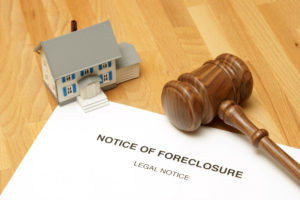 The term foreclosure refers to a lawsuit brought, usually by a financial institution, against a homeowner. The legal proceeding is brought in the Supreme Court of the County in which the property is located. The financial institution is always represented by a law firm. The law firm is not an in-house law firm. It is always a law firm hired by the financial institution that specializes in bringing foreclosure actions against homeowners.
The purpose of the foreclosure lawsuit is for the financial institution to obtain an judgment from a Supreme Court judge. This will allow the financial institution to have a referee appointed to sell the homeowner’s home at a public auction. The money received from the sale of the homeowner’s home goes to the financial institution to pay them what they are owed on the note and mortgage.
There are 2 documents of importance in a foreclosure. The first one is the note. When you buy a home you sign a note. The note is simply an IOU. The note is an agreement that basically states the financial institution is loaning you money and you agree to pay it back. There are various terms and obligations maintained in the paperwork regarding the note.
The mortgage is a separate document from the note. It is actually a separate contract. It is a security agreement which gives the financial institution a security interest in your property as collateral for the money you borrowed pursuant to the note. The mortgage states if you don’t make the payments pursuant to the terms of the note and mortgage, the financial institution can bring a foreclosure lawsuit for failure to make the payments.
Before a financial institution can bring a foreclosure lawsuit against a homeowner they must send an Acceleration Letter to the homeowner. The letter simply states that the lender is calling the entire amount of the mortgage and all the arrears due and payable by a specific date.
A homeowner is generally considered to have defaulted in the payment of his or her mortgage when they are at least one payment late. However, Acceleration Letters are generally not sent to homeowners until they are 90 days behind on the payment of their mortgage.
The law in New York has a special requirement before a foreclosure lawsuit can be initiated. The financial institution must send the homeowner notice a minimum of 90 days before they file a summons and complaint in a foreclosure lawsuit. The notice has specific language and states at least 5 non-profit housing counseling agencies located near the borrower that the borrower can go to. The notice conveys to the homeowner they are behind in their mortgage and they are going into foreclosure. The homeowner then has 90 days to try to take some action to avoid the foreclosure lawsuit.
Elliot S. Schlissel, Esq. is the managing partner of Schlissel DeCorpo LLP. Our law firm represents homeowners throughout the Metropolitan New York area with regard to the defense of foreclosure lawsuits. We have been helping homeowners keep their homes for more than 3 decades. We can be reached for a free consultation at 800-344-6431 or e-mailed at: Elliot@sdnylaw.com.
 In a case before Supreme Court Justice Debra Silber who sits in Kings County, a homeowner brought an action for a declaratory judgment. The declaratory judgment was pursuant to Real Property Actions and Proceedings Law Section 1501.4. The homeowner wanted the court to declare that the mortgage on the homeowner’s property was not enforceable. The homeowner’s claim was it was not enforceable because the six year statute of limitations had expired. The homeowner asked Judge Debra Silber to have the mortgage cancelled, discharged an struck from the records of the New York City Register
The homeowner asked the court pursuant to a summary judgment motion declaring that on the basis that there were no issues of fact disputed that a trial would not be required on the issue of the mortgage being unenforceable due to a six year statute of limitations acted as a time bar.
Issues were raised in this case with regard to the acceleration of the mortgage and the deceleration of the mortgage. Judge Silber granted plaintiff’s application. She found that the plaintiff had shown on her papers that she was entitled to a summary judgment cancelling and discharging the mortgage on her property. The homeowner had shown that the mortgage had been accelerated on or about April 16, 2009. The homeowner commenced her action to discharge the mortgage and have it cancelled on February 10, 2018. Since more than six years had expired, the homeowner was entitled to a judgment dismissing and cancelling the mortgage of record on her property.
Elliot S. Schlissel, Esq. is a foreclosure attorney. He has been representing homeowners in foreclosure cases throughout the Metropolitan New York area for more than 45 years. Elliot and his firm actively litigates the defense of foreclosure lawsuits against homeowners. He can be reached for a free consultation at 800-344-6431 or e-mailed at Elliot@sdnylaw.com.
 A foreclosure lawsuit was brought in Westchester County before Justice William Giacomo. Acqua Capital was the plaintiff in this lawsuit. At the time of the foreclosure sale there was $187,000 in surplus monies over what was due and owing to Acqua Capital. This refers to money in excess of what the bank was owed at the time of the sale which was paid by a speculator to buy the house.
Acqua capital and Campagna, the homeowner, entered into a lease. The former homeowner leased the home for $6,000.00 a month for 2 years. He requested the surplus monies ($187,000.00) be used to pay his rent.
The financial institution filed a notice of claim asking that $156,000.00 of the funds being held by the referee be assigned to Acqua Capital to make the lease payments. The referee is the person who sells the house in a foreclosure sale.
The referee issued a report regarding the surplus monies. The referee was concerned that Campagna was a victim of overreaching by Acqua Capital. The referee stated the court should find the lease is unenforceable. The referee claimed the rent should not be $6,000.00 per month. The referee found this to be an unreasonable amount of rent. The referee claimed a fair and reasonable rental value would be $3,500.00 a month. This would require a total $84,000.00 for the 2 year period and not the $156,000.00 that was sought by Acqua Capital. Acqua Capital claimed the referee was exceeding his authority with regard to this matter.
Justice Giacomo found the referee could ascertain the amount due from surplus monies to Acqua Capital, Campagna and all of the lienholders. Justice Giacomo asked the referee to address the legitimacy of the assignment and the appropriateness of the lease between Campagna and Acqua Capital. Justice Giacomo found the referee’s report with regard to the amount of rental payments and the distribution of surplus monies was supported by the evidence. Acqua Capital’s motion to reject the referee’s report was denied.
In the event of a foreclosure sale the mortgage holder and other lienholders are paid. Any money left over in theory belongs to the homeowner. Homeowners must bring surplus money proceedings to obtain these funds. In this case the homeowner had $187,000.00 of surplus monies he should be entitled to spend it any way he desired. However, financial institutions should not be able to use the throwing of families out of their home as a basis for overcharging them with inappropriate rental payments.
Elliot S. Schlissel, Esq. is a foreclosure lawyer representing homeowners throughout the Metropolitan New York area. He can be reached for a free consultation at 800-344-6431 or e-mailed at Elliot@sdnylaw.com.
 As 2008 came to an end the stock market took a plunge. The economy in the United States seemed to have slowed down. This has caused more homeowners to fall behind on making their mortgage payments. When a homeowner cannot make their payments under their mortgage affirmative action can be taken to deal with the situation prior to the home going into foreclosure. One of the better actions a homeowner can take is to apply for a mortgage modification. Since 2008 millions of homeowners in the United States have applied for mortgage modification. A mortgage loan modification can be the answer to homeowners’ financial issues in many situations.
A loan modification basically seeks to change the terms of the original loan in a manner that makes it easier, less expensive and more convenient for the homeowners to make their mortgage payments. The granting of a loan modification by the lending institution may stop the home from going into foreclosure and being lost. If the bank approves the mortgage modification, there is usually a period of 3 months to 6 months when the homeowners receives a temporary modification. If they make their payments on time they are usually offered a permanent loan modification.
Elliot S. Schlissel, Esq. is a foreclosure attorney. He helps homeowners obtain mortgage modifications and fights foreclosure lawsuits. He has been helping homeowners keep their homes throughout the Metropolitan New York area for more than 3 decades. He can be reached at 800-344-6431 or e-mailed at: Elliot@sdnylaw.com for a consultation. If you have a problem with your mortgage you should contact Elliot for a free consultation.
 In a case before Justice Robert Quinlan, who sits in Suffolk County Supreme Court, a foreclosure lawsuit was brought by Deutsche Bank National Trust Company, as trustee. The action was to foreclose a mortgage on a residential property. Certain affirmative defenses in the homeowner’s answer to the bank’s complaint were dismissed by Judge Quinlan. However, Judge Quinlan did not grant the bank a full summary judgment decision striking defendant’s answer. He set the action down for a limited trial on plaintiff’s proof of defendant’s default in payment; its standing to bring the action; its proof of mailing of the notice of default required by the mortgage; and the sufficiency of the notices required under Real Property Actions and Proceedings Law Section 1304 (which involves the notice of foreclosure proceeding being brought) as well as the proof of their mailings.
The homeowners’ motion to dismiss claimed the bank could not establish the mailing of the notices under Real Property Actions and Proceedings Law Section 1304. Judge Quinlan found the homeowner’s arguments that they did not receive the notices was not sufficient to have the case dismissed. He found all the bank’s lawyers had to do was to establish the notices were mailed.
This is a very bad decision. The purpose of mailing is to give the homeowner the pre-foreclosure notice. If the homeowner never received the notice, there was no communication and the statutory intent behind giving the homeowner notice has not been met. In this case there are still issues to be dealt with at trial. However, I disagree with the Judge’s decision with regard to adequacy of an affidavit of mailing being sufficient with regard to the pre-foreclosure notice by the bank’s attorneys.
Elliot S. Schlissel, Esq. is a foreclosure lawyer. He has been defending homeowners throughout the Metropolitan New York area for more than 45 years. He can be reached for a free consultation at 800-344-6431 or e-mailed at Elliot@sdnylaw.com.
 The first thing homeowners need to do in defending a foreclosure case is to put a written response in to the summons and complaint. This written response is called an answer. This avoids what is referred to as a default in the lawsuit. A default amounts to an admission of the allegations made by the bank in their lawsuit are correct. A homeowner can assert defenses, affirmative defenses and counter lawsuits in an answer to the summons and complaint. By contesting the lawsuit the foreclosure case will move very slowly through the courts. The more time the homeowners are in their home the more likely they will be able to come up with a final resolution, whether it be a mortgage modification, a forbearance agreement or another means of keeping their family in their home.
When a homeowner is served in a foreclosure lawsuit depending upon the type of service he or she receives they have either 20 days or 30 days to respond. The response must be in writing. Affirmative defenses can be alleged in the answer to protect the client and to create the legal grounds for having the case dismissed. In addition, a counter lawsuit can be brought within the confines of the answer asking the court to dismiss the lawsuit completely because of some inappropriate action by the financial institution or the failure of the financial institution to comply with some federal, state or local ordinance.
Financial institutions are very heavily regulated, they must comply with state, local and federal laws with regard to all aspects of the lending process, the mortgage application process and the handling of a foreclosure lawsuit. Affirmative defenses such as lack of standing, redlining, violation of Truth and Lending Laws, predatory lending, “duel tracking”, failure to provide necessary documentation, failure to provide adequate notice, failure to provide proper service, fraud and issues related to loan modifications can be raised. A counter lawsuit brought against the bank can also seek financial damages from the financial institution.
The facts and circumstances of each homeowner’s situation is unique. Should you find yourself facing a foreclosure situation, the first step in defending your home, protecting your rights and keeping your family in your home is to retain a qualified experienced foreclosure lawyer.
Elliot S. Schlisel is the managing partner of Schlissel DeCorpo LLP. For more than 45 years he has been representing homeowners throughout the Metropolitan New York area. He helps homeowners obtain mortgage modifications. In addition he fights foreclosure lawsuits. He can be reached for a free consultation at 800-344-6431 or e-mailed at Elliot@sdnylaw.com.
 Financial circumstances in families’ lives can change. These changes sometimes are of a negative manner. If the family doesn’t make their mortgage payments they face the risk of losing their home and being dispossessed. When a homeowner receives a notice they are in default on their mortgage, or a summons and complaint in a foreclosure lawsuit, action should be taken by the homeowners to deal with the situation. Acting like an ostrich and putting your head in the sand and hoping this goes away simply won’t work!
If you are facing future foreclosure or a foreclosure lawsuit has been started against you, the best way to deal with this is to hire an experienced foreclosure lawyer. The earlier in the proceeding you hire a lawyer the better your chances of success will be.
Loan Modifications are one of the ways of dealing with a foreclosure lawsuit and the threat of losing one’s home. Mortgage modifications help you modify your current mortgage arrangement. This can eliminate the threat of losing your home. This may enable you to become current on your mortgage payments.
The law firm of Schlissel DeCorpo LLP has been helping homeowners keep their homes for more than 45 years. Our office can offer you advice and guidance with the appropriate action to take regarding a foreclosure lawsuit and/or obtaining a mortgage modification. We can be reached for a free consultation at 800-344-6431 or e-mailed at Elliot@sdnylaw.com.


